

Spain: Two LGBT+ activists who fled Sierra Leone share their stories


Forest trails, back roads, a father’s death, bribes for border officials
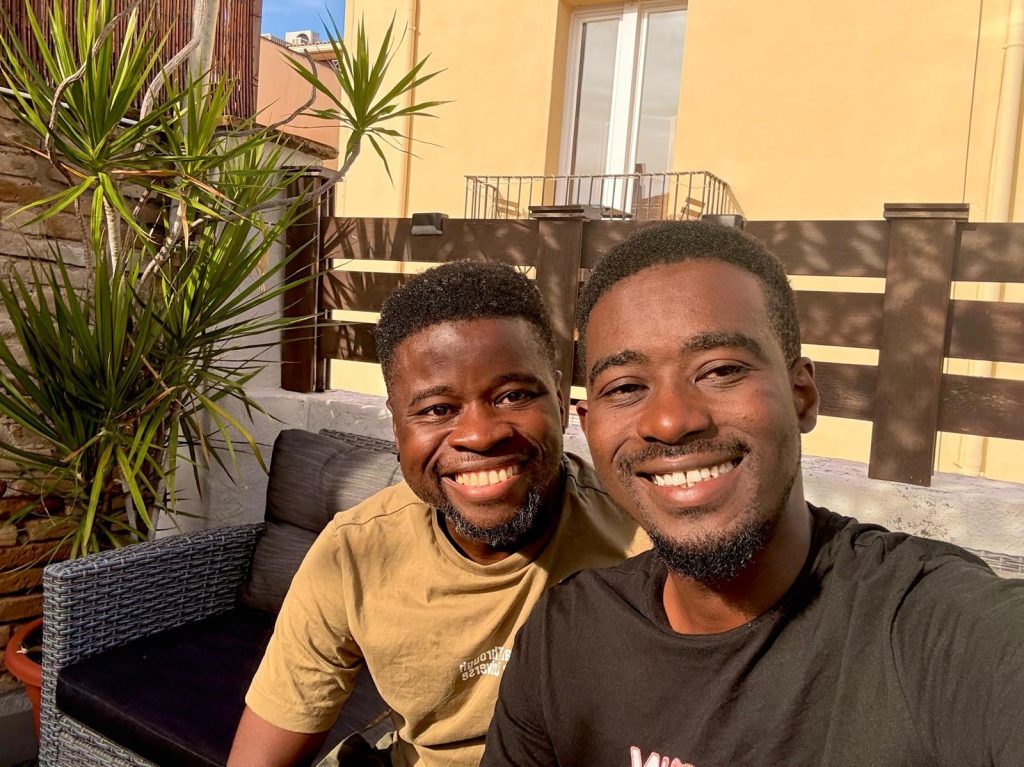
Two LGBT rights activists in the nation of Sierra Leone in West Africa say they decided it was time to flee the country when they narrowly escaped arrest in an Aug. 30 police raid, shortly before the local newspaper published warrants for their arrest.
In a recent interview with Erasing 76 Crimes, activists George Freeman Browne and Edwin Bolaji Deen described how they made their way from English-speaking Sierra Leone to French-speaking Guinea-Conakry, then had to wait nearly three weeks before winning permission to fly to Spain on Sept. 19.
By Freeman’s account, the couple’s troubles began when Sierra Leone police raided a private party for gay men at the Hill Valley Hotel in Freetown, the nation’s capital city, Freeman. the executive director of LGBT rights advocacy group Pride Equality, said they were invited to the party, but did not organize it.
According to documents posted on the website of the Sierra Leone newspaper Daybreak News, police issued warrants for the arrest of Freeman and Deen on charges of “homosexuality (gay) and LGBTI [or LGBTQ] social activity”, which police claimed was “likely to cause the breach of the peace”. Police offered a “handsome” reward for information leading to their arrest.
Sierra Leone still has a Victorian-era law dating back to 1861 that criminalizes sexual relations between individuals of the same gender. Although that law has seldom been enforced, homosexuality is even theoretically punishable by life imprisonment.
It is unclear exactly what happened on Aug. 30 and the following days. A second human rights organization, the Human Rights Defenders Network-SL, has claimed that the reported raid did not occur and the arrest warrants did not exist. Daybreak News removed the article about the raid and related documents from its website. Editorial staff there said they were investigating.
While Freeman and Deen were in Guinea, Jean-Marc Berthon, the French ambassador for the rights of LGBT people, contacted Spanish authorities to encourage them to issue a visa to Deen. Freeman is a Spanish citizen, so he did need a visa.
Currently living in the Barcelona area, the couple stood by their account of the events leading up to their decision to go into exile in Spain. In the following interview, they explained how their journey unfolded.
Fleeing Sierra Leone at all costs
George Freeman Browne: “As an activist with an LGBT+ organization that is registered with the authorities, my first instinct was to go straight home after the police raid. We had time to grab a few belongings, which we took with us.
‘We received logistical and financial help from relatives who hid us in Freetown before we decided to flee the country. We opted to flee via [French-speaking] Guinea-Conakry, which is closer to Freetown, rather than heading to Liberia, which is farther away, even though Liberia is English-speaking.
‘Faced with these dangers, we got into a taxi on the outskirts of the capital near Allen Town Junction. We were then dropped off in Kambia before crossing the border. We decided to take forest trails and back roads to sneak into Guinea-Conakry. Otherwise, the risk of being handed over to the Sierra Leonean security forces would have been too great, and our plan would have fallen through.”
Guinea: Keeping a low profile
George Freeman Browne: “Having arrived illegally in Pamélap, Guinea-Conakry, we had managed to leave Sierra Leone—which was the first part of our plan—but then we had to keep as low a profile as possible so as not to risk being sent right back to square one.
“Throughout our nearly three-week stay in Guinea in the Conakry metropolitan area, we had to deal with the language barrier and the financial necessities essential to an escape whose final destination was still far off. We stayed in guesthouses listed on Booking.com. Sometimes, we had to pay for hotel stays in cash.
“My partner Edwin and I stayed mostly in Sonfonia or Ratoma, where we lived off my savings in a bank account I had opened in Spain, since all of our assets in Sierra Leone had been frozen. At least, that’s what I gathered from the fact that our local bank cards didn’t work in Guinea.
“This stay in Guinea was also marked by my partner’s suffering from malaria. Furthermore, he learned of his father’s death in the days following our defection. I, for my part, had to look after him, even though I was exhausted from a lack of sleep.
“We were relatively isolated there, with limited cell service and internet access to communicate with friends or allies, while our families back in Freetown had turned their backs on us: they are Christians, [who believe] we ‘only cause problems,’ we ‘bring shame to the family name.’ ”
Edwin Bolaji Deen says he was outed to some friends and family members when his photo appeared in the Daybreak Newspaper: “It was a shock to my family; some felt free to express their disappointment upon learning of my homosexuality. It caused a stir among my friends and a commotion within my family circle. I wasn’t prepared for the backlash.”

George Freeman Browne:: “Fortunately, I was able to count on the support of an aunt living in the United States who sent me money to my Spanish bank account, from which I transferred funds to Guinea via the RIA platform so I could get cash. Without that, my partner and I wouldn’t have been able to survive.”
Returning to Spain and building their future there
George Freeman Browne: “The reception we received from the Spanish Embassy was initially very formal, even though I myself am a Spanish citizen.
“Later, the relationship became more practical once the embassy was made aware of our situation through another channel. And we are grateful to everyone whose efforts made it possible for Edwin to obtain a visa. Nevertheless, that wasn’t the end of our troubles.
“In addition to the cost of the plane tickets, we had to repeatedly bribe security officers to get through airport checkpoints, since we did not enter Guinea through a border crossing. Furthermore, Guinea had imposed restrictions on airport transit for Sierra Leonean nationals on its territory.
“Since Sierra Leone is one of the hubs of cocaine trafficking in West Africa, neighboring countries are implementing measures to curb movement and travel at the subregional level.
“All of this was very difficult for Edwin to deal with because he is Sierra Leonean, and we had to buy him a return flight so he could enter the Schengen area [the 29-nation area of Europe with no internal border controls].”
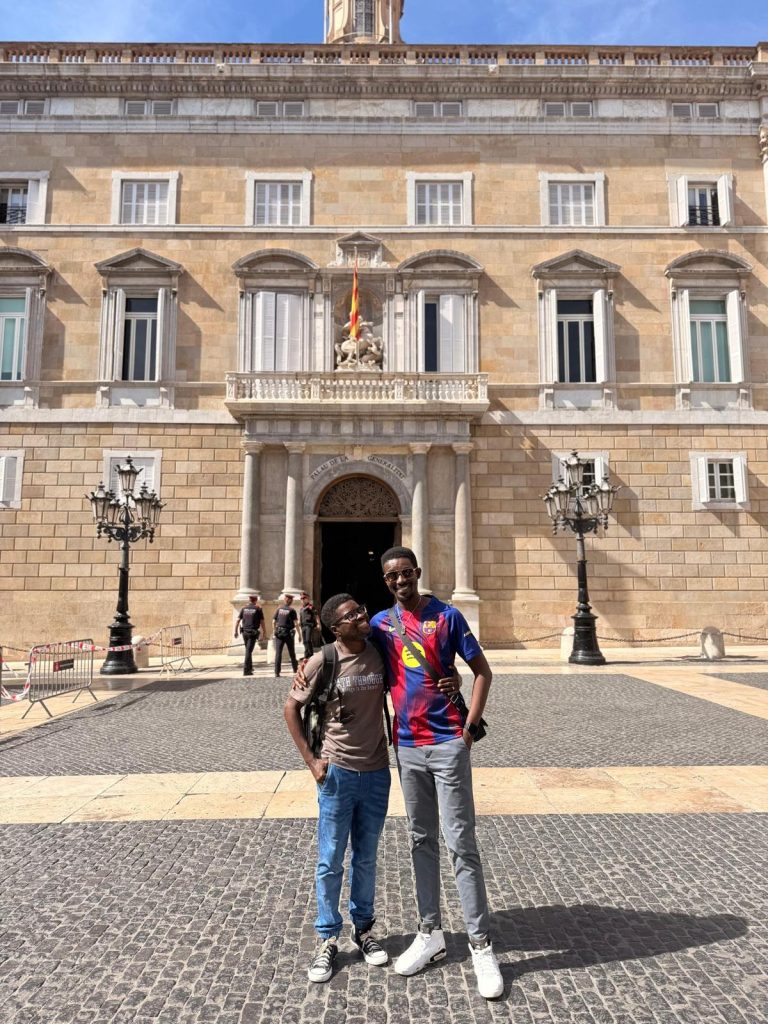
Edwin Bolaji Deen: “Today we live in the Barcelona metropolitan area in Spain, where I was able to receive treatment for the malaria I had contracted. I am currently recovering, and although I have lost my family, this painful experience has strengthened my relationship with George.”
George Freeman Browne: “We’re going to get married in the near future—we’ve been a couple since 2018. However, to get to Spain, I took out several loans from people I know, and I’m eager to start a new job so I can pay them back—if anyone is willing to hire me.”
At present, still reeling from the shock of having been the subject of arrest warrants for homosexuality in Sierra Leone, neither man plans to return there in the short or medium term.
