

Senegal Police admit using anal exams on female suspects


The tests, widely seen as human rights abuses, were consensual, Senegal Police claim.
The Senegalese National Police have issued a statement in which, for the first time, a local public authority confirms the use of anal examinations as an investigative procedure against cisgender heterosexual female suspects.
That acknowledgement came just hours after the publication of an article in Erasing 76 Crimes revealing that Senegal had started using the procedure, which is widely condemned as cruel and degrading.
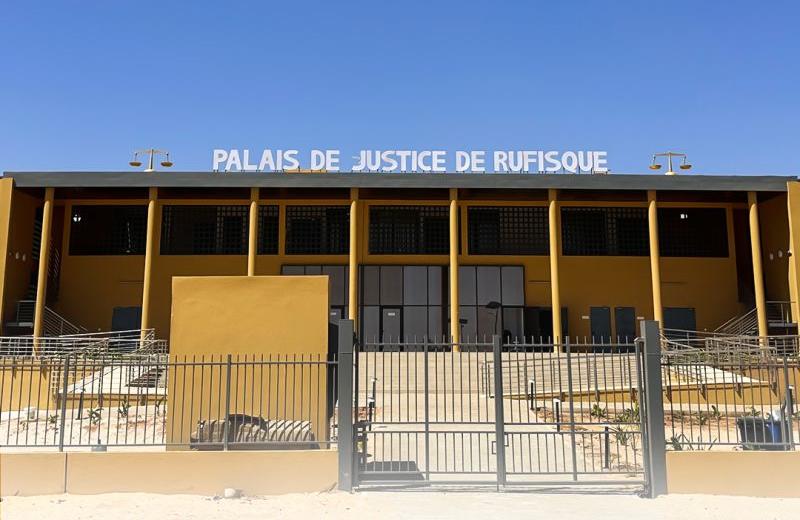
After arresting seven people on July 28 in Rufisque Est in Dakar in connection with a case involving sextortion and online prostitution, police subjected several suspects to anal examinations and HIV tests.
But in a statement released on Facebook, the Senegal National Police say that the tests were conducted consensually.
“Requests for the purpose of medical expertise on serological status as well as a rectal examination with the consent of the respondents, were addressed to the Director of the Hospital Center Youssou Mbargane DIOP of Rufisque. The operation of the serological test results concluded that only one of the ladies involved in this case tested positive for HIV1,” the Senegal National Police statement says.
This marks the first time that the Senegalese National Police acknowledged the use of anal examinations to collect medical evidence of the commission of an offense involving “unnatural acts.” In this case, only one of the five men ultimately admitted to being bisexual, while the other defendants—including the two women charged with online prostitution—have consistently and vigorously maintained that they are heterosexual.
While the statement describes the examinations as being performed “with consent,” it is not clear how this consent was obtained.
Were the individuals informed of the precise nature of the medical examination and its purpose? Was consent given verbally or in writing? Who obtained this consent? Could the suspects have refused an anal examination? What consequences might a refusal have entailed for them? Were the individuals implicated in the legal proceedings able to consult with a lawyer?
While the Senegalese National Police has not yet answered these questions, it has not refuted that cisgender heterosexual women may have been subjected to these examinations, nor has it explained the basis for such a measure against them.
All individuals involved in this case were brought before the Rufisque Public Prosecutor’s Office on Aug. 3, although the Senegalese press and media did not report on subsequent legal proceedings.

Erasing 76 Crimes first documented the use of forced anal tests in Senegal carried out under police coercion. If a suspect is convicted of having participated in same-sex activities in Senegal, they can be face penalties up to 10 years in prison and a fine up to CFA 10 million (approximately $18,000 USD).
This case is, to our knowledge, the second country, after Afghanistan, where forced anal examinations of cisgender heterosexual women have been documented as part of a criminal investigation.
The World Medical Association adopted a resolution in October 2017 calling for a ban on forced anal examinations, urging physicians to refrain from participating in them, especially when the subjects are heterosexual women.
The tests have also have been recognized as cruel and degrading and a violation of human dignity as set forth in the international Convention Against Torture, the African Charter on Human and Peoples’ Rights, and Article 7 of the Senegalese Constitution, which stipulates that “every individual has the right to physical integrity.”
Human rights groups have documented the use of these tests in at least 10 countries: Afghanistan, Cameroon, Egypt, Kenya, Lebanon, Tunisia, Turkmenistan, Uganda, Zambia, and Senegal.

