

Nations with anti-LGBT laws: 55% Muslim, 39% Christian
This article was updated in June 2026.
More than half (36) of the world’s 66 countries that have anti-LGBT laws are nations where a majority of the citizens are Muslims.
By comparison, 26 Christian-majority countries account for 39 percent of the countries that still have anti-LGBT laws on their books.
Two years ago, in contrast with the current 55%-39% split, the tally of countries with anti-homosexuality laws was 50%-44% Muslim to Christian.
In recent years, the number of Christian-majority nations with anti-homosexuality laws has shrunk.
Many of those laws were overturned through court rulings (Dominica in 2024; St. Lucia in 2025; Namibia in 2024; Mauritius in 2023; Barbados, St. Kitts and Nevis and Antigua and Barbuda in 2022; Belize in 2016.
Others were repealed by through legislative action (Niue in 2024; Cook Islands in 2023; Singapore in 2022; Angola and Botswana in 2019; Seychelles and Nauru in 2016; Mozambique, São Tomé and Príncipe, and Palau in 2014).
In Trinidad, a court in 2018 overturned the nation’s anti-gay law, but an appeals court reversed that decision in 2025.
Similar laws have been dropped in Hindu-majority Mauritius (2023), Buddhist-majority Bhutan (2021) and in Hindu-majority India (2018).
No Muslim-majority nation has repealed an anti-LGBT law recently. In fact, Muslim-majority Burkina Faso, Mali and Niger all enacted anti-LGBT laws in the past two years.
Explanations for that trend include:
- African nations’ unflagging resentment toward their former colonial masters in Europe, where LGBT rights are widely accepted, and
- Islam’s traditional hostility to homosexuality. As the Middle East Forum website stated last year:
“Homosexuality is a sin punishable by death, according to the Quran, hadith, and Islamic Law.
“Within many Islamic societies, such a stance on homosexuality is unequivocal: It is a major sin with no room for reinterpretation. … The Australian National Imams Council, representing over 200 imams in a country that prides itself on its liberalism, asserts that homosexuality is a forbidden action and anyone who partakes in it is a disobedient servant to God. Their view represents the rule rather than exception among Islamic scholars and institutions. …
“While some argue for a re-examination of Islamic teachings on same-sex relationships, suggesting that traditional interpretations may be misinformed or contextually outdated, these perspectives remain marginal within the broader Muslim community.”

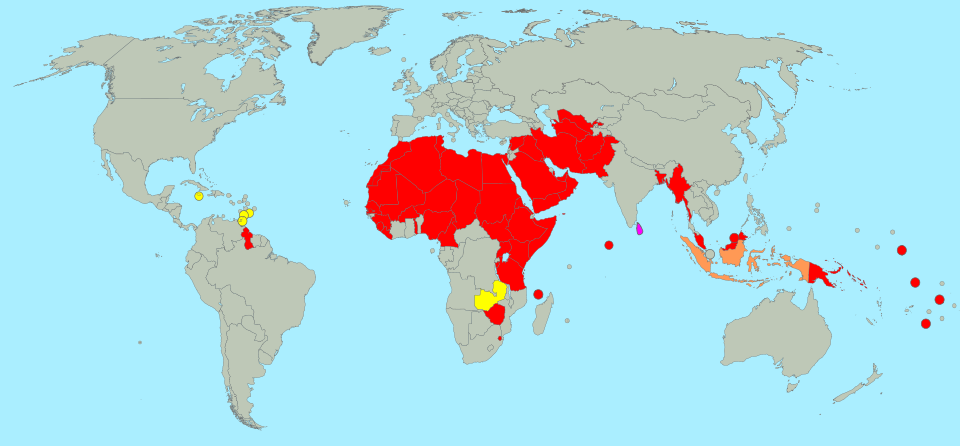
Here are the nations in each category:
Muslim majority
- Afghanistan
- Algeria
- Bangladesh
- Brunei
- Burkina Faso (64% Muslim, 26% Christian)
- Chad
- Comoros
- Egypt
- Gambia
- Indonesia (Aceh Province and South Sumatra only)
- Iran
- Iraq
- Kuwait
- Lebanon (law ruled invalid in one court in 2014 and disqualified for use against same-sex intimacy in another court in 2017)
- Libya
- Malaysia
- Maldives
- Mali
- Mauritania
- Morocco
- Niger
- Oman
- Pakistan
- Palestine/Gaza Strip — lacking broad international recognition as a country
- Qatar
- Saudi Arabia
- Senegal
- Somalia
- South Sudan
- Sudan
- Syria
- Tunisia
- Turkmenistan
- United Arab Emirates
- Uzbekistan
- Yemen
Christian majority
Most of these countries inherited their laws from the period when they were British colonies.
- Burundi
- Cameroon
- Ethiopia
- Ghana
- Grenada
- Guinea
- Guyana
- Jamaica
- Kenya
- Kiribati
- Liberia
- Malawi
- Papua New Guinea
- Samoa
- Solomon Islands
- Sierra Leone
- St Vincent & the Grenadines
- Swaziland / Eswatini
- Tanzania
- Togo
- Tonga
- Trinidad and Tobago
- Tuvalu
- Uganda
- Zambia
- Zimbabwe
Other
- Eritrea — roughly 50-50 Christian-Muslim. Some surveys give a edge to Christianity; others, to Islam.
- Myanmar
- Nigeria — roughly 50-50 Christian-Muslim
- Sri Lanka