

Wave of arrests of gay men in Senegal fuels hysteria about HIV


Authorities and media frequently link gay sex to HIV, leading to additional charges
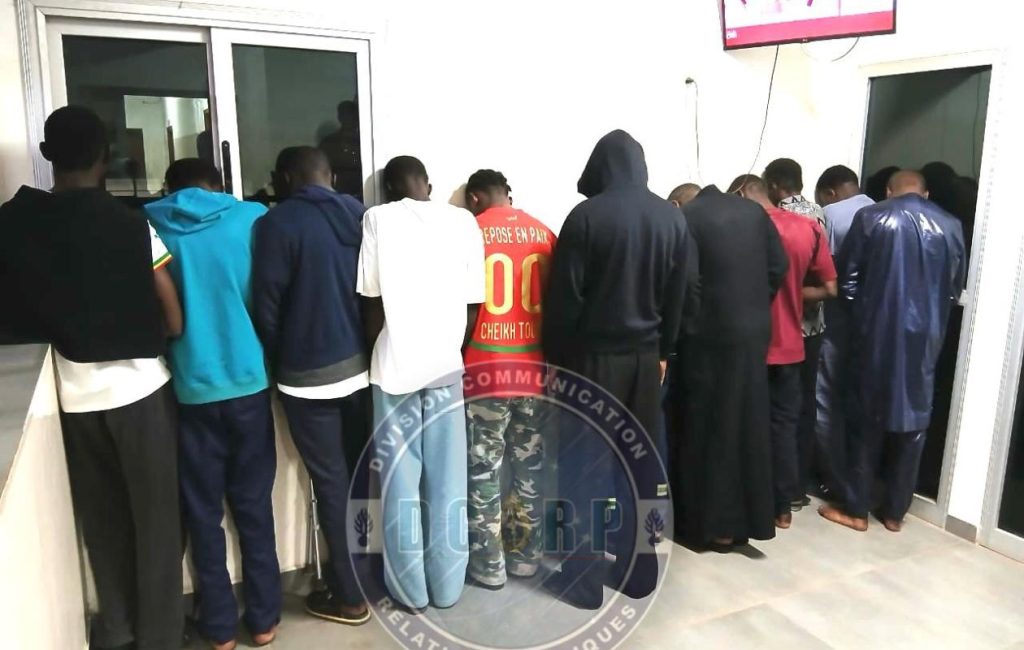
Amid a deepening crackdown against queer people in Senegal, a pattern is emerging where authorities conspire with police, health services, and the press collaborate to whip up panic about gay men and HIV, often with the result that accusations and charges of “voluntary transmission of HIV” are increasingly being added to prosecutions for “unnatural acts.”
Since March, consensual same-sex relations in Senegal have become punishable by 5 to 10 years’ imprisonment, with fines reaching to 10 million CFA francs (approximately $18,000 USD) in a country where the median monthly income is only around 170,000 CFA francs ($300 USD). Previously, the maximum penalty was only 5 years in prison and 1.5 million CFA francs ($2,700 USD). The law also prevents the granting of reduced sentences or even suspended sentences.
More than fifty men have been caught in a wave of arrests since the law was passed, including well-known figures from the country’s television, music, and religious scenes. In many cases, these men have been charged with both unnatural acts and transmitting HIV.
Reflecting the hysteria around HIV and gay men, the National Blood Transfusion Centre in Dakar put out a press release reiterating the safety of the blood supply after one of the centre’s doctors was the focus of a high-profile arrest and charged with unnatural acts as he attempted to flee the country at the Blaise Diagne International Airport.
On Thursday 2 April at 10.00 pm, the case of a brilliant doctor from the National Blood Transfusion Centre (CNTS) in Dakar, who attempted to take his own life within the grounds of Blaise Diagne International Airport upon learning the reason for his arrest for “unnatural acts,” fuelled the worst homophobic fantasies among the Senegalese public regarding a homosexual conspiracy aimed at contaminating and poisoning blood bags intended for transfusion, in order to infect the Senegalese population with HIV.
Science in the service of homophobia in Senegal
Men alleged to be homosexual in the press are simultaneously arrested on the basis of denunciations or circumstantial evidence, even though they had previously led perfectly peaceful lives, chatting anonymously on private messaging platforms, sheltered from prying eyes.
Then, in a second phase, the medical profession is mobilised by the authorities to supposedly prove homosexuality beyond doubt, using the discredited and humiliating practice of anal tests. Armed with pseudo-scientific backing for criminal charges of homosexuality, authorities leak the suspects’ medical reports to journalists who whip up public sentiment against the ‘goordjiguen’ (men-women in Wolof).
Finally, the public health authorities are also called upon to protect Senegalese society, and any detainee suspected of homosexuality who tests positive for HIV is immediately charged with the “willful transmission” of the virus, facing a potential sentence of 5 to 10 years’ imprisonment and a fine of 2 to 5 million CFA francs ($3500 to $9000 USD). Once again, names are publicly dragged through the mud, fuelling the headlines of local newspapers linking HIV, homosexuality and public health risks.

An unprecedented setback for public health
The consequences of this stigma are already being felt on the ground.
“People living with HIV are coming to hospital less and less for check-ups, tests or treatment. This is an unprecedented setback because the people who need it most are no longer seeking care, yet the virus can affect anyone regardless of their sexual orientation. It’s a disaster,” says Sadio (a pseudonym), a Senegalese researcher who wishes to remain anonymous.
“It will take several years to regain the trust of the people and groups that took decades to build, in order to integrate them into the care pathway for people living with HIV. In just a few days, years of on-the-ground prevention campaigns have been shattered, and we now need to rebuild the entire Senegalese preventive healthcare system to avoid an explosion in HIV cases in the coming months,” he says.
Mya, a Senegalese woman living in Canada, agrees.
“The Senegalese government is paving the way for stigmatisation. The message being sent to the public is that if you are living with HIV, you are gay, and that a gay person is a criminal,” she says.

