

Cameroon ‘murder music’ artist apologizes for anti-LGBTQ lyrics


Adopting a new identity, Cameroon artist Mélo du Quartier says he wants music to bring people together
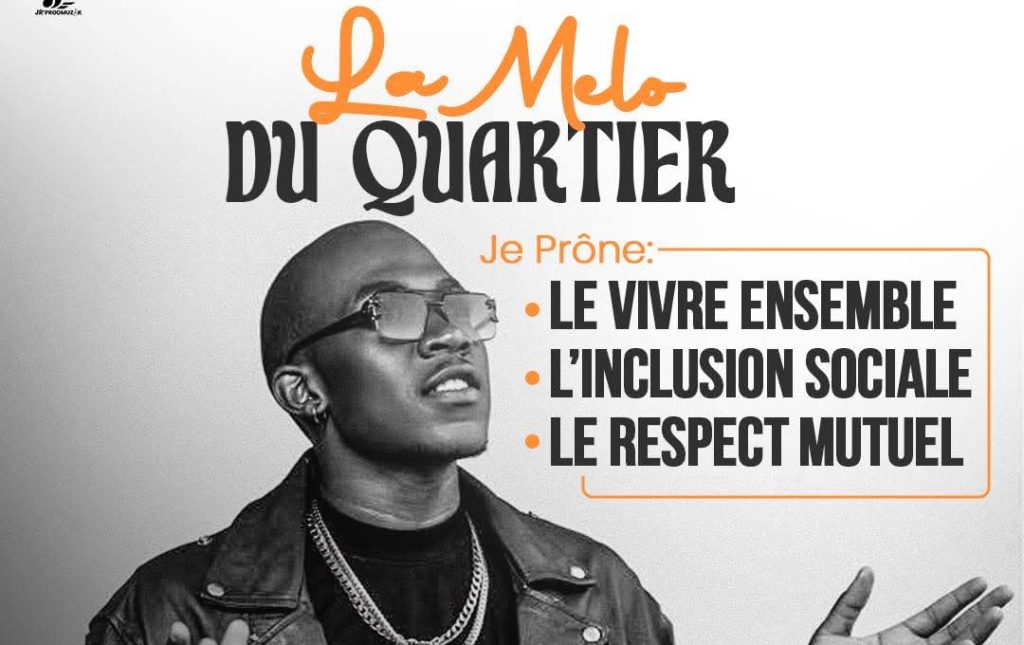
Facing two legal proceedings since 2024 for incitement to hatred—one in France brought by ADHEOS and the other in Cameroon brought by ADEFHO—the mbolé singer Snoopy la Mélodie is trying to distance himself from his past as a homophobic artist in order to continue his career.
Snoopy, whose real name is Dayan N’Téni and was formerly known by the stage name Capitaine du Ghetto, is known for a song “Les nerfs des boys,” whose chorus line is “Stab the fags.”
New identity, new stance
Since 2025, he has once again changed his musical identity and now goes by the name Mélo du Quartier (“Neighborhood Melodrama”). The strategy has paid off, as he was able to travel to Europe with a visa in the hope of performing concerts for the Cameroonian diaspora and newcomers to the musical genre mbolé—a style for which he is seeking to broaden his audience.
However, as Didier Daeninckx once said, “time does not erase the past,” and African LGBT+ activists in exile in Europe have been sounding the alarm for the past month, taking to social media to protest.
This situation recently led to a new development that may mark the conclusion of this affair, as Mélo du Quartier has decided to apologize to the entire LGBT+ community and to those who were offended. He voluntarily canceled his May 30 concert in Liège, Belgium, and has said he is open to dialogue with human rights organizations.
He is still scheduled to perform in other European countries, although the dates and venues of the shows have not yet been publicly disclosed.
While the African music industry is experiencing a meteoric rise around the world, driven by its youth, Black diasporas, and the Francophone community, a controversy that has been ongoing for two years is beginning to tarnish this success story, even as the latest concert by Fally Ipupa—nicknamed the King of Congolese Rumba—at the Stade de France, over two days, on May 2 and 3, drew nearly 110,000 fans.
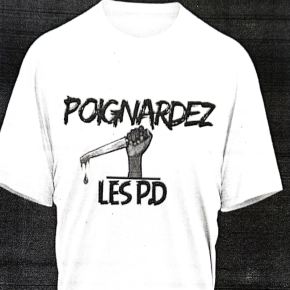
La Mélo du Quartier, a Cameroonian mbolé singer, is being accused by human rights organizations of inciting murder, hate speech, and macabre merchandising related to physical harm against homosexuals. He is being charged under Article 267 of the Cameroonian Penal Code, following legal proceedings initiated by Attorney Hugues Arsène Medou and Attorney Alice Nkom, the iconic and passionate long-time advocate for the LGBT+ cause in Cameroon, through the Association for the Defense of Homosexual Rights (ADEFHO) she founded.
This controversy is reminiscent of many others that arose 20 years ago surrounding the English-speaking Caribbean music industry, which at the time presented homophobia as an entertaining diversion aimed at youth of African descent in Caribbean societies where homosexuality was largely criminalized and denounced as a white Western vice. At the time, the term “murder music” was used to describe this musical repertoire, whose promoters paradoxically saw no contradiction in its emergence in countries they deemed deviant and morally decadent.
These discourses even found echoes through mimicry in the Francophone Caribbean, via the leading figures of Admiral T and Krys, whose musical influence was never able to sustainably extend beyond the French departments of the Americas, due to the repeated LGBT-phobic controversies that persist to this day.
La Mélo du Quartier apologizes
Faced with economic risks and in order to avoid a domino effect of program cancellations, and under pressure from African LGBT+ activists in Europe, after nearly two years of controversy surrounding these lyrics, La Mélo du Quartier issued an explanation in a video posted on Facebook, in which, with a serious expression, he apologizes to everyone he may have offended. Below, 76crimes provides a verbatim transcript.

Dear friends, fans, and the entire community, my name is Dayan N’téni, better known as La Mélo du Quartier. And today, I want to speak to you directly and with sincerity.
Some of my past lyrics, particularly in older songs, were very hurtful and incited violence. I deeply regret this, as those words were unacceptable; I unequivocally condemn them today, because as I’ve grown up, I’ve reflected on them.
I’ve come to understand that music should bring people together, not divide them. No one deserves to be insulted, threatened, or excluded because of their sexual orientation. I apologize to the entire LGBTQ+ community and to everyone I may have hurt.
I pledge to be more responsible in my lyrics and public statements going forward. Music is a means of expression, but it must also convey values of respect and peace.
Thank you for listening. I continue on my path with humility, and I hope that my music will now bring joy and love. We are together—this is the Family, La Mélo du Quartier. Thank you.

