

Haiti’s wary LGBT+ activists brace for first elections in 10 years


Can gang-dominated Haiti really pull off meaningful elections?
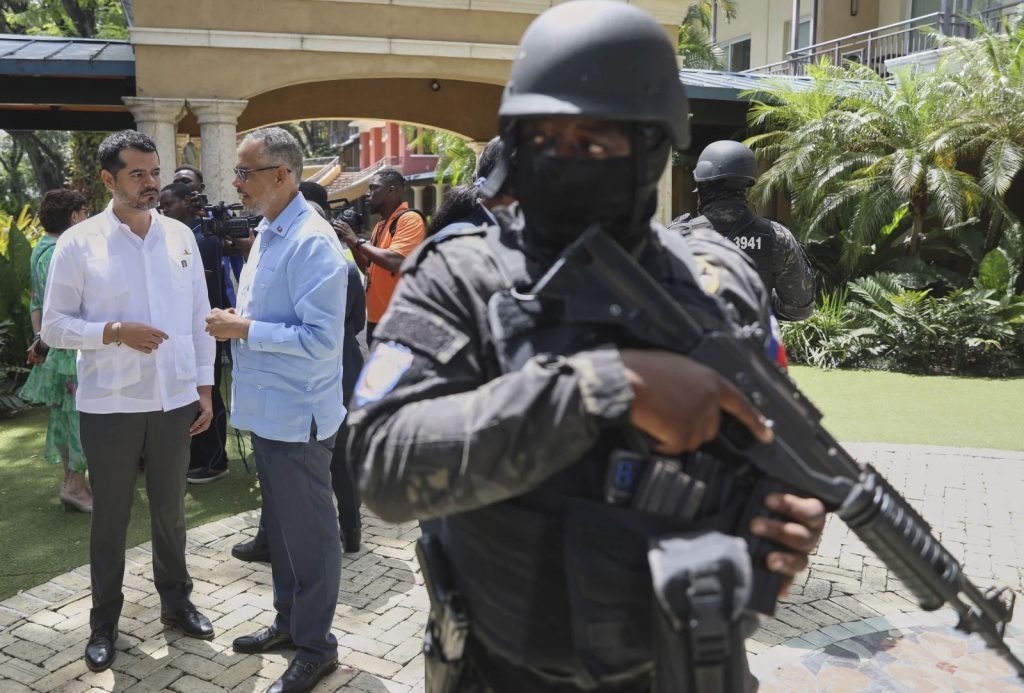
Haiti’s Provisional Electoral Council, appointed in 2024, has decided that, after a 10-year hiatus, the next Haitian presidential election will be held on Sunday, Dec. 13.
On the same day, Haitians will be called upon to elect representatives to the next Parliament. A potential runoff election has already been scheduled for Sunday, Feb. 21, 2027.
If those elections actually occur, the elected president and legislators then will face the challenge of leading the nation out of its abyss of gang-ridden violence while also tackling the more mundane task of building a majority capable of voting in favor of a budget that a new government administration could implement.
For Haitian LGBT+ activists, the news of the scheduled elections has been met with skepticism, given that gangs control an estimated 70 percent to 90 percent of Port-au-Prince, the nation’s capital, and the country has been governed by interim leaders and squabbling transitional councils since the assassination of President Jovenel Moïse in 2021.
Observers say that voter registration, political campaigning and polling stations will be difficult or impossible in gang-controlled areas of the country.
As about 1,000 international troops from a U.N.-backed Gang Suppression Force seek to restore order, yet another murderous incident occurred on the night of Aug. 23–24 in the town of Kenscoff in the hills above Port-au-Prince. Armed irregular groups executed 47 people that night and wounded 22 others, according to the United Nations.
In response to the news about the planned elections, Erasing 76 Crimes asked Haitian LGBTQ rights activists what to expect.
Johnny Clergé, executive director of the Port-au-Prince-based Arc-En-Ciel d’Haïti organization replied:
“I’ll have to wait and see how it plays out, because security conditions in the country continue to deteriorate. Furthermore, voter rolls need to be finalized, and voters must have their voter ID cards to cast their ballots. Logistically speaking, and given the current context, I have serious doubts about the country’s ability to hold free and transparent elections.
“For now, Haitian LGBT+ organizations have not yet truly begun advocacy efforts targeting the various candidates.”
[Editor’s Note: Currently, the Provisional Electoral Council (CEP) has not yet released a list of candidates registered for the upcoming presidential election. Political hopefuls have until Sept. 20 to declare their intentions].
Guillaume Guy-Luly, attorney for the Trans Organization of Haiti: stated:
“Like many Haitians, for security reasons, I left the country and now live in Miami, Florida. On Dec. 13, I won’t be voting, because for me, it doesn’t make sense. My life is no longer in Haiti, and the country has no future. For Haitians, daily life means scraping together 5,000 gourdes (33 euros or 38 U.S. dollars) every day just to have enough to eat.
“However, I’m keeping a close eye on current events, and I’ve noticed that former President Michel Marthelly of the Haitian Tèt Kale Party (PHTK) returned to Haiti on July 15”. [Editor’s note: He then flew back to Florida on July 30].
Merlin Jean, executive director of the association Héritage pour la Protection des Droits Humains, based in Ouanaminthe in the Northeast Department of Haiti, stated:
“The upcoming election must serve as a catalyst for sustained advocacy efforts with the candidates, which involves identifying key figures within the political parties.
“There is no shortage of issues: access to public services (health care, education, justice), and recognition of the role and involvement of civil society actors and organizations. If we don’t do this, the LGBT+ activist community will be further weakened.”

What is the risk of increased homophobia?
Erasing 76 Crimes: “Are you concerned about a resurgence of homophobia in Haiti as the election approaches?”
Johnny Clergé: “Elections are traditionally a time when homophobia spikes sharply in Haiti. But there’s no magic solution, and LGBT+ people are just like everyone else. They must form a coalition with other civil society organizations to prevent messages of hate from dominating the entire public discourse, including on social media.
“In Latin America and Europe, we’re seeing a rise of the far right, while conservative evangelical groups are gaining ground almost everywhere, including in Africa. Haiti is susceptible to international trends, but LGBT+ people can vote, and we must encourage them to do so.”
Guillaume Guy-Luly: “There are influencers on YouTube spreading calls for murder—more specifically, incitements in Haitian Creole to burn homosexuals This is notably the work of ‘Pastè Pass.’ ”
[Editor’s note: “Pastè Pass” is an agitator who uses an anti-mixed-race, anti-elite “noirist” aesthetic, wearing a traditional West African Yoruba fila cap while haranguing his online followers in Haitian Creole. In May, Dominique Xavier Saint-Vil, executive director of the Trans Organization of Haiti (OTRAH), in an article in 76 Crimes en français lambasted YouTube for its lack of moderation, which allows unrestricted access to YouTube for purveyors of hateful and LGBT-phobic content in Haitian Creole.]
Johnny Clergé: “The LGBT+ communities are not entirely without resources, and we can always rely on Article 19 of the 1987 Constitution, which guarantees the right to life—despite calls for violence online—in a country that is already, as a rule, extremely violent:
[Article 19 of the 1987 Constitution –“The State has the imperative obligation to guarantee the right to life, to health, and to respect for the human person to all citizens without distinction, in accordance with the Universal Declaration of Human Rights.”]
This text remains in force to this day.”
