

Study finds that Trump’s funding cuts led to closing 1,700 HIV treatment sites


But U.S. senator says Trump administration has now vowed to continue anti-HIV funding
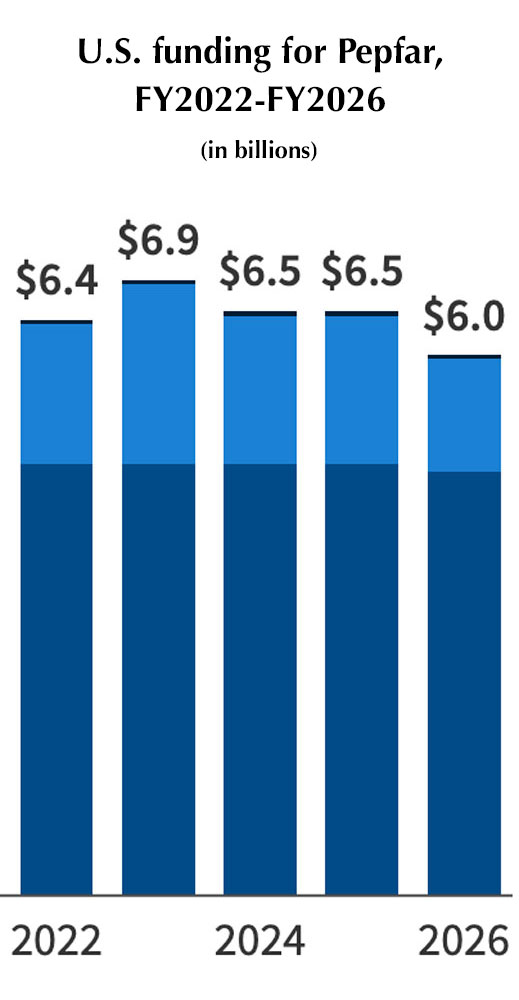
On the heels of a report that U.S. foreign aid cuts last year resulted in sharp drops in HIV prevention work, a lame-duck Republican U.S. senator says he has secured a promise from the Trump administration to release funds the U.S. owes the President’s Emergency Plan For Aids Relief (Pepfar).
Sen. John Cornyn (R-Texas), who this year fell out of favor with Trump and lost a primary election he needed in order to win re-election in November, had threatened on Tuesday to vote to block Trump’s ambassadorial appointments until the administration frees up $1.3 bilion for Pepfar, Semafor reported. Cornyn also had said he wants wants more details on the roughly $10 billion lawmakers have appropriated for the program over the past two years.
On Wednesday, Cornyn said his pressure campaign had worked. The Hill reported that Cornyn voted for the appointments. A Cornyn spokesperson said the senator “will be closely watching future action on Pepfar to ensure they make good on these assurances ahead of a floor vote on these nominations.”
The devastating effects of the Trump administration’s cutbacks in anti-AIDS funding came into sharper focus earlier in the week.

The Trump administration’s cuts to the largest global H.I.V. program last year resulted in sharp drops in both prevention efforts and treatment for the people most at risk from the disease, according to the first large survey of organizations that had received the funds.
The findings show a grimmer picture of the impact of the cuts than the State Department’s data, released in April, which seemed to suggest that the program had helped to treat about as many people last year as it had in 2024.
To comply with the administration’s policies, the new survey, conducted by the H.I.V. charity amfAR, found, three-quarters of the organizations stopped providing services to those at highest risk from H.I.V. — sex workers, men who have sex with men, transgender people and people who inject drugs. The results are scheduled to be presented next week at a large international AIDS conference in Rio de Janeiro.
“We have not verified this specific report, but we can categorically say that its methodology is flawed,” the State Department, which oversees Pepfar, said in an emailed statement that defending the administration’s record.
A second study, conducted by a multinational group of scientists, which will also be presented at the conference, found that the cuts had disproportionately affected children with H.I.V. The program, called the President’s Emergency Plan for AIDS Relief, or PEPFAR, supported treatment for about 77,000 fewer children in 2025 than it had the previous year, representing a 14 percent decline, the study found.
Worldwide, nearly half of all children living with H.I.V. do not have access to treatment, according to UNAIDS, the United Nations program.
President George W. Bush started PEPFAR in January 2003, when H.I.V. medications were still unavailable in many parts of the world. The program is credited with saving 26 million lives, across more than 50 countries, making it the most successful endeavor of its kind.
But last year the Trump administration reshaped the program, saying the low-income nations that benefited must take on more of the costs of treating and preventing H.I.V. among their own citizens.
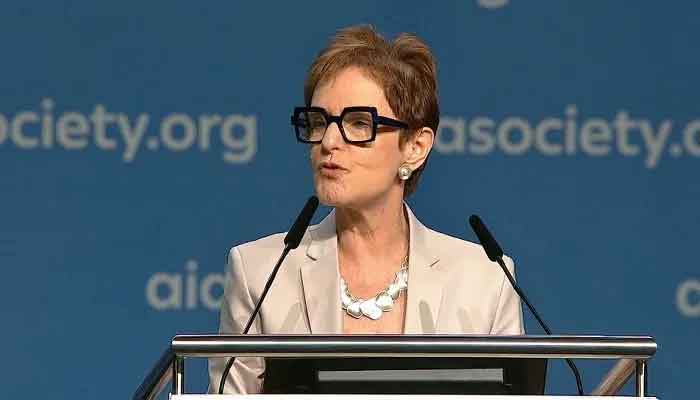
The International AIDS Society (IAS) this week announced the findings of two studies on HIV prevention and treatment, which stated:
- More than half (52%) of all Pepfar ‘s local AIDS-fighting partners had cut back services in response to U.S. funding cuts and 77% had been asked to restrict their work to comply with an additional U.S. policy. Terminations led to 1,714 closed HIV service sites, including 1,010 public health facilities and 126 drop-in centers.
- Among organizations providing HIV treatment, more than one in five (21%) had permanently stopped at least one HIV clinical care activity.
- Organizations were most likely to have permanently stopped providing services for key populations, the groups most vulnerable to HIV, including men who have sex with men.
- Many partners reported that they were unable to obtain condoms (23%), lab commodities (23%), PrEP (22%) or antiretroviral drugs (20%).
- Among organizations that did not lose funds, the majority had censored language (61%), stopped a service (61%) or stopped services to specific populations (44%) to continue receiving funding.
- Globally, 77,163 fewer children living with HIV received Pepfar-supported treatment in fiscal year 2025 compared to 2024 – a decline of 14.2%.
- South Africa recorded the largest decline, with 30,880 fewer children receiving treatment support from Pepfar – a 45% drop. The team also conducted an analysis that suggests that declines in five countries – Uganda, Haiti, Zambia, South Africa and Kenya – represent potential departures from historical trajectories.
“Science is moving fast, giving us more powerful HIV prevention and treatment tools. But these advances cannot save lives if they never reach the people who need them. That requires robust, stable financing and steadfast political commitment,” said Beatriz Grinsztejn, IAS President.
These are excerpts from this week’s IAS announcement:
PEPFAR, the US global HIV programme, has saved more than 26 million lives since 2003 and changed the trajectory of the HIV pandemic. PEPFAR was a success under the first Trump administration, with major progress toward the 95-95-95 goals. Since the start of the second Trump administration, however, it has undergone major disruptions.

Two presentations at AIDS 2026 … demonstrate the real-world impact of these disruptions. The first is based on the PEPFAR Pulse Study – the first large-scale survey of PEPFAR implementing partners to document the scale and scope of PEPFAR disruptions globally. The survey reached 166 implementing partners in 46 countries.
The results are deeply concerning. More than half (52%) of all implementing partners had at least one terminated award, and 77% had been asked to restrict their work to comply with an additional US policy. Terminations led to 1,714 closed service sites, including 1,010 public health facilities, 325 access points and 126 drop-in centres. Locally based partners were particularly impacted.
Partners were most likely to have permanently stopped providing services for key populations, the groups most vulnerable to HIV. Among partners providing HIV treatment, more than one in five (21%) had permanently stopped at least one HIV clinical care activity. Many partners reported that they were unable to obtain condoms (23%), lab commodities (23%), PrEP (22%) or antiretroviral drugs (20%). Among partners with no terminated awards, the majority had censored language (61%), stopped a service (61%) or stopped services to specific populations (44%) to continue receiving funding.
According to presenter Elise Lankiewicz of amfAR, the results make it clear that US funding and policy changes have caused PEPFAR-wide disruptions, with a disproportionate impact on local organizations and the populations most vulnerable to HIV.
The second study, based on a rapid analysis of newly released PEPFAR data for fiscal year 2025, examined shifts in PEPFAR-supported paediatric treatment following a year of disruption. To get an accurate picture, the study team limited the analysis to PEPFAR-supported treatment, meaning site-level service delivery and technical assistance.
The team found that globally, 77,163 fewer children living with HIV received PEPFAR-supported treatment in fiscal year 2025 compared to 2024 – a decline of 14.2%. The team also examined data for 21 countries that have substantial numbers of children living with HIV on PEPFAR-supported treatment. Among those countries, all but one reported a decline in the number of children receiving site-level treatment support from PEPFAR, with proportional declines among children living with HIV exceeding those among adults. South Africa recorded the largest absolute decline, with 30,880 fewer children receiving treatment support from PEPFAR – a 45% drop. The team also conducted an analysis that suggests that declines in five countries – Uganda, Haiti, Zambia, South Africa and Kenya – represent potential departures from historical trajectories.
According to presenter Ramona Godbole of Heidelberg Institute of Global Health, Heidelberg University Hospital and Clinton Health Access Initiative, these findings warrant urgent country-level investigation and restoration of public dissemination of routine age-disaggregated PEPFAR data.
“These studies provide compelling new evidence that PEPFAR disruptions have had negative, far-reaching consequences, particularly for those most vulnerable people,” Kenneth Ngure, IAS President-Elect and Associate Professor of Global Health at Jomo Kenyatta University of Agriculture and Technology in Juja, Kenya, said.

Ukraine LGBTQ people face sexual violence in Russia-occupied territories