

Niger adopts anti-LGBTQ law, threatens up to 20 years in prison


New law in the West African nation is ‘among the most repressive’

The wave of West African nations threatening LGBTQ people with ever-harsher penalties continued this week, as Niger enacted a law providing for up to 10 years in prison for same-sex intimacy and up to 20 years for joining an LGBTQ association.
Enactment of the new law was reported on June 11 in an article by Benin Web TV, which states that under the new law:
- Consensual same-sex intimacy is now punishable by five to 10 ten years in prison and a fine of up to 100 million CFA francs (about 152,000 euros or U.S. $176,600).
- Participating in a same-sex wedding is punishable by 10 to 20 years in prison.
- People convicted of managing, directing, financing, or just participating in clubs, societies, or associations labeled as homosexual or “LGBTQIA+.” would also face 10 to 20 years in prison.
An Associated Press article on June 12 states that the law punishes anyone who “commits or attempts to commit an immodest or unnatural act or practices lesbian, gay, bisexual, trans-gender, Queer, intersex, Asexual (LGBTQIA+) acts” with between five and 10 years in prison and a fine.
“This same penalty is applicable to persons who officiated the marriage, to the witnesses of the alleged spouses, as well as to persons who have given their consent for the celebration of the marriage and to the organizers,” the new penal code states.
The law apparently does not clarify the meaning of “intersex [or] Asexual” acts.
Predominantly Muslim Niger is led by Abdourahamane Tchiani, who seized power in a military coup in 2023 and has ruled as president since 2025.
Until now, Niger had no anti-homosexuality law, but same-sex intimacy was discouraged and sometimes led to arrests. According to unverified reports, dozens more arrests were under way even before the new law was enacted.
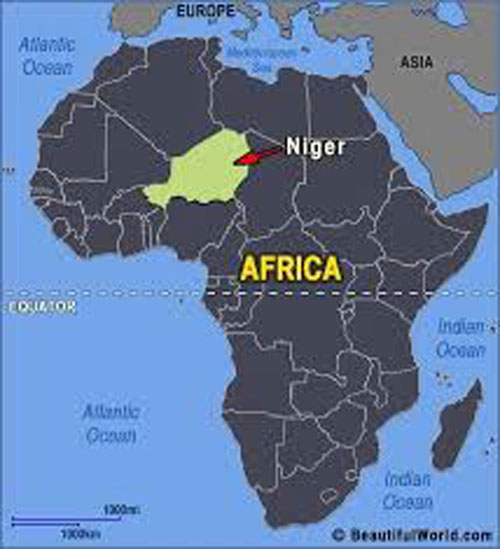
Niger’s new anti-LGBTQ law comes in the wake of Senegal’s enactment of a law in March that provides for up to 10 years in prison for gay sex and the Ghana parliament’s approval of a bill last month that, if approved by Ghana’s president, would imprison people for up to three years if they “identify” as LGBTQ. Two neighboring countries, Burkina Faso and Mali, also had no anti-gay laws until they criminalized homosexuality in 2024.
In the article from Benin Web TV, author Mohamed Issa states that, until now, “homosexuality was not explicitly penalized by Nigerien law. The penal code inherited from the colonial period only sanctioned, through article 282, sexual or indecent acts committed against a minor of less than 21 years of the same sex. Niger was thus one of the few countries in the region that did not penalize homosexual relations between consenting adults.

“[The region’s adoption of harsher anti-LGBTQ laws] has been described by human rights organizations as a setback for freedoms on the continent. Proponents of these texts, in contrast, present it as a defense of national religious and cultural values. In a predominantly Muslim Nigerien society, homosexuality remains a taboo subject even before its inclusion in the penal code.
“The new provision now places Niger among the most repressive legislations in the sub-region in this area, with a scale of penalties ranging from five years imprisonment for relations between same-sex adults to twenty years for organizing or financing related associations.”

