

Senegal’s anti-colonial legacy turns homophobic


Senegal’s turn against LGBTQ rights reflects the rise of the far right
Senegal, now at the forefront of homophobic populism in Francophone Africa, was also the native land of Léopold Sédar Senghor, a leading opponent of colonialism, racism and Eurocentrism. Senghor would become the father of the country’s independence from France and Senegal’s first president.
In this analysis, Rodolphe P. (pseudonym), a Central African intellectual involved in the struggle for LGBT+ rights, discusses what that bodes for Senegal’s future.
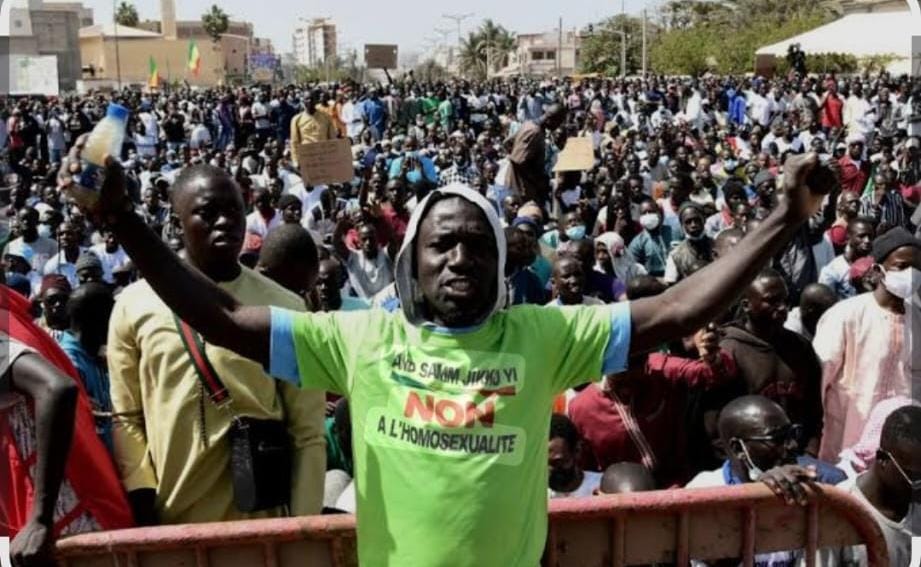
The Senegalese government is a far-right government, although people aren’t used to seeing a far-right African government with Black members.
Usually, the far right is Polish, Canadian, Austrian—it’s the MAGA far right of Trump or Brazil’s Bolsonaro. People aren’t used to a Black and African far right.
Right now, it’s LGBT+ people who are in the crosshairs, but in any case, they’ll have to find other scapegoats, because this won’t be enough. Senegal doesn’t have energy, food, or industrial sovereignty.
The economic figures aren’t good; they’re even manipulated. Anyway, they’ll find other scapegoats at some point. It might even be foreigners. It’s a classic tactic.
The major problem is that Senegal has had this pride of wanting to be a nation respected by the entire world, which is somewhat paradoxical because they have signed all the international human rights conventions, yet now they are swimming against the tide.
Conversely, Senegal, driven by national pride, has often had this pretension of wanting to influence a certain perception of Africa, even with the pretension of speaking on behalf of Africa.
There were already cultural, political, and social differences between West and Central Africa. However, even today, African media outlets from other Francophone countries covering the ongoing events in Senegal—with daily anti-LGBT+ arrests and the criminalization of same-sex relations—are asking what is happening and, above all, why things are going so far.
Thus, despite a certain diversity, homophobia in Africa is thriving. It’s no great mystery why. But there’s a difference between being homophobic and going so far as to harm two consenting adults in their bedrooms.
In half of African countries, homosexuality is legal or not criminalized, so this should raise questions when we see the current situation in Senegal.
Even leaving Africa and taking the time to observe the major countries of the world, while Russia has classified LGBT+ activist movements as terrorist groups, two men can live in the same apartment in Moscow because homosexuality is not illegal there.
In China, homosexuality is not illegal. Although the state apparatus there is homophobic and doesn’t want these issues discussed, it is not criminalized.
Currently, in Turkey, homosexuality is still legal, even if the lives of LGBT+ people are complicated. Similarly, homosexuality is legal in India, and it is also legal in Brazil.

What will the government do if it truly wishes to have a global impact?
For example, former Prime Minister of Luxembourg Xavier Bettel, was gay. What will the Senegalese authorities do if one or more European heads of state are gay or lesbian and Senegal wants to strengthen its bilateral relations with the European Union for trade?
A future pariah state?
The Senegalese authorities, driven by contradictions and homophobia, will end up in a dead end and will have no choice but to adapt or, failing that, join the ranks of countries ostracized by the international community, like Afghanistan, by severing ties with so-called moderate countries. I think that’s the only possible outcome, given the underlying influence of Islam.
Another example: Italian Prime Minister Giorgia Meloni, who leads a far-right party, has undermined the parental rights of lesbians regarding adoption, but she has in no way questioned the fact that homosexuality is legal in her country.
Even Trump, who has transphobic policies, didn’t question the legality of same-sex relationships.
So I conclude that the members of the Senegalese government who are celebrating, as well as the members of parliament, are representatives of a stupid, rancid far right. It’s simply that public opinion in the Global North is shocked to hear or see it, because it involves Black people and they’re not used to it. I’m sad for Senegalese society, but I’m not surprised at all.

How Nigeria cheers on homophobia while destroying young lives