

LGBTQI+ Ugandans are full of pride despite lack of Pride events


Pride goes online; anything else would result in arrests and violence.
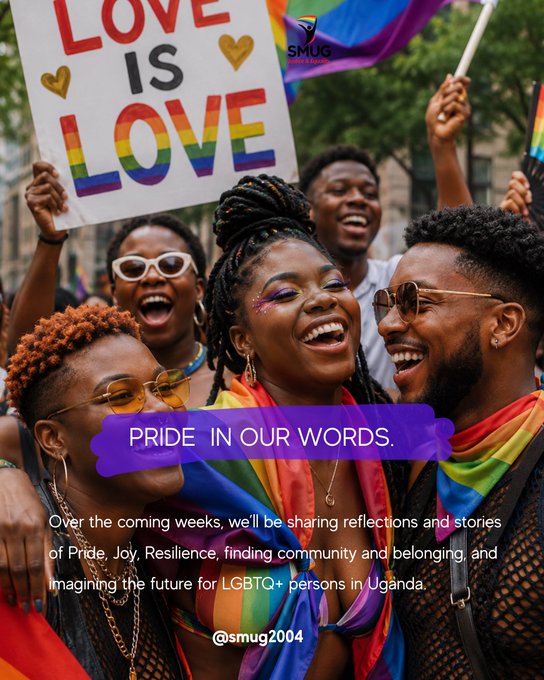
Colorful uplifting parades with floats and celebrities, joyous festivals, workshops, picnics, and parties are among the principal components of LGBTQI+ Pride Month, which often is celebrated in June in countries around the world.
It commemorates years of struggle for civil rights and the ongoing pursuit of equal justice under the law for the lesbian, gay, bisexual, transgender, and queer community, as well as the accomplishments of LGBTQI+ individuals.
But in Uganda, even low-key Pride events have always been suppressed by state security operatives, leading to arrests and physical assaults. In 2012, the LGBTQI+ community held a private pride event at a beach in Entebbe, but it was raided by police who detained about 10 people and later released them without charge.
In August 2016, more than 200 people were detained by police at a transgender pageant held in Kampala’s Club Venom to crown Mr/Ms/Mx Uganda Pride. The police claimed it was a gay wedding and that they were not notified in advance. The organizers, however, insisted that police had been duly informed, and that two earlier Pride events that month were conducted without incident.
One of the detainees was a lawyer from the Human Rights Awareness and Promotion Forum, a leading advocacy group that defends queer rights in Uganda.
Since then, all attempts to hold a public or private Pride event have been met with threats of arrests and violence. Organizers of Pride 2017 canceled the event after the then-Minister of Ethics Simon Lokodo threatened to arrest everyone associated with it.
The situation was made worse by the enactment of the Anti-Homosexuality Act 2023, which has extended the crackdown on LGBTQI+ advocacy and led to greater violence against queer people in Uganda.
Members of the LGBTQI+ community say they may have been beaten down by the anti-gay government but they are not defeated.
This year, they got creative and held a digital Pride event led by Sexual Minorities Uganda (SMUG) under the theme: Pride in our words.
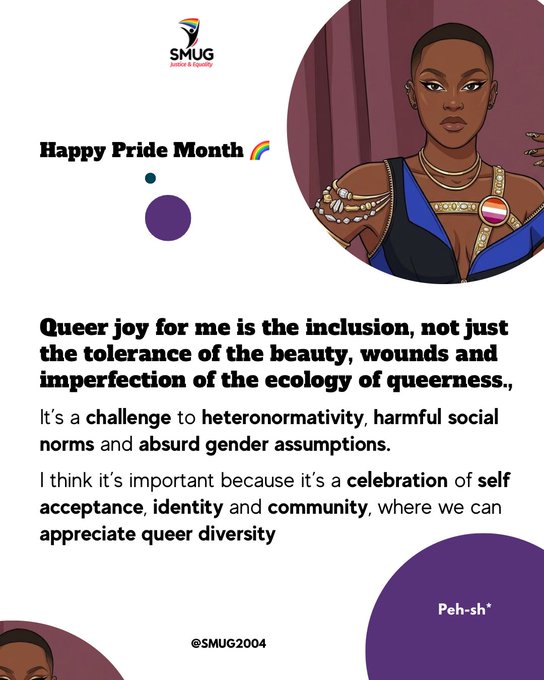
The goal is to allow LGBTQI+ Ugandans to express their true selves and celebrate their identities while assuring them that they are not alone.
Through Pride Month, different members of the LGBTQI+ community in Uganda celebrated by sharing reflections and stories of Pride, Joy, Resilience, finding community and belonging, and imagining the future for LGBTQ+ persons in Uganda.
Below are some of the reflections and stories shared by queer community members. For many of them, their full names are withheld for their safety.
Inno
“Pride, to me, is the choice to keep showing up as myself in a place where authenticity can come at a cost. It is resilience, survival, community, and hope.
“Pride is not something I perform for the world. It’s a quiet yet defiant act of refusing to disappear. It is choosing to exist fully despite fear, uncertainty, or rejection.
“Over time, Pride has come to mean dignity, the belief that I deserve to live, love, and belong just and in the hope that a more just and compassionate future is possible for all of us.” says Inno.
Eve
Pride is the rhythm of her life, said Eve — a refusal to shrink, a celebration of chosen love and a commitment to walk with her head high in a world that often tries to bend it low.
“Pride, for me, is not just a celebration it is survival, resistance, and self-affirmation.
“As an LGBT person in Uganda, Pride means daring to exist authentically in a society that often tells me I shouldn’t. It is the courage to claim space where silence is expected, and the determination to honor my truth even when it costs me family ties.
“Being disowned by my parents could have broken me, but my community became my adopted family. That act of love taught me that Pride is also about chosen kinship about finding belonging where blood ties fail. It shaped my resilience, reminding me that dignity is not granted by others but lived through self-acceptance.
“Finishing school, working in Africa’s leading mental health organization, and building a life with momentum are all extensions of Pride. They show that my identity does not limit me but instead it fuels me. Pride has taught me to transform rejection into purpose and to use my voice to advocate for compassion, safety, and authenticity.
“So Pride to me is the rhythm of my life a refusal to shrink, a celebration of chosen love and a commitment to walk with my head high in a world that often tries to bend it low.”
Samantha

“This Pride Month I’m reminded that joy itself can be a powerful form of resistance. As a Ugandan queer woman, I have learned that choosing joy in the face of exclusion, fear, and discrimination is not an act of denial—it is an act of defiance. Joy helps us endure, connect, and imagine futures beyond survival.
“Every shared laugh, every new connection, every moment of queer love and community becomes a reminder that our lives are more than the challenges we face. Pride is more than a celebration; it is a declaration that we deserve happiness, belonging, and the freedom to live authentically.
“Through joy, we reclaim our power, nurture hope, and hold on to the possibility of futures where our communities can thrive with dignity, love, and justice. And so, my wish this Pride Month is simple: that something gay happens—in the old sense of the word, something happy, bright, and full of joy.”
Diane
“Pride, to me, as a queer person living in Uganda, is not a parade or a party, it is a profound and deeply personal act of survival, resistance, and self-reclamation.
“Growing up and living in a context where my existence is criminalized, where my queerness and my faith are weaponized against me, and where visibility can cost you your safety, your family, and your community, Pride has come to mean the radical courage to say I am here, I am whole, and I refuse to disappear.
“My identity as a queer faith activist has been shaped by the specific tension of navigating spaces (religious social, and legal) that were never built to hold me, and yet I have had to find belonging within and beyond them.
“Self-acceptance, for me, has not been a moment of celebration but a long, sometimes painful excavation of my own worth from beneath layers of shame imposed by a society that continues to debate whether I deserve to exist.
“And yet, every time I show up openly in activist work, in faith spaces, in public life I am not just surviving; I am holding a door open for every young Ugandan queer person who believes they are alone. Pride, shaped by my experiences here, means choosing, against every pressure to shrink, to live loudly, love faithfully, and belong unapologetically to myself first.”
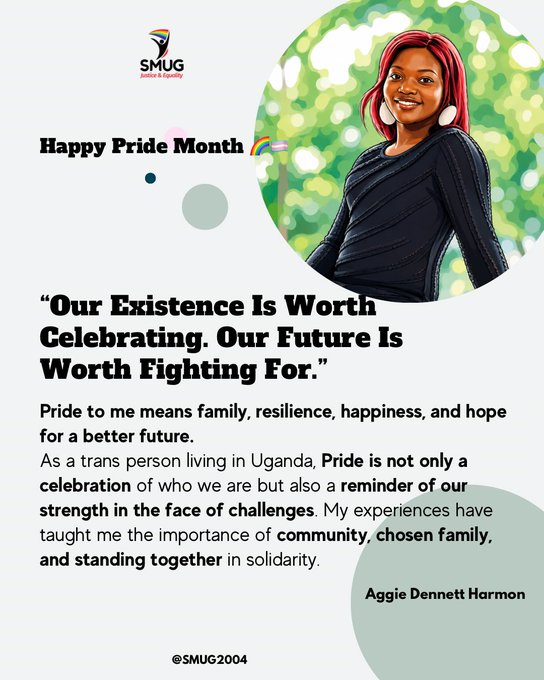
Arnie Yana
“Pride to me means surviving in a world that was seemingly not built for me and still choosing to live authentically. After being outed, I learnt how quickly acceptance can disappear. But also, I learned how powerful community, resilience, and self-love can be.
“Pride is a reminder that despite every attempt to silence us, we are still here, still worthy and still dreaming of a better future.”

