

U.S. rejects United Nations resolution against AIDS


Amid cutbacks, last year saw 1.3 million new HIV infections instead of the projected 370,000.
The Trump administration this week refused to support a United Nations resolution expressing concern about cutbacks in anti-HIV programs and vowing to keep trying to end AIDS by 2030
In voting against the resolution, the United States was in strange company: Russia, North Korea, Saudi Arabia, Niger, Israel, Burkina Faso and Burundi also voted “no”. Fourteen nations abstained and 149 voted in favor.
The development news service Devex explained:
By Andrew Green
Though a new political declaration on HIV/AIDS was adopted with the support of 149 United Nations member states on Tuesday, the United States and seven other countries voted against it during a high-level meeting in New York.
Adopted every five years since 2001, this was the first time the declaration was not approved by consensus, speaking to the politicization of some elements of the document. That includes support for sexual and reproductive rights, which the Trump administration has targeted since taking office, and for services for men who have sex with men and other marginalized — but also frequently criminalized — communities.
“We were prepared for the worst, even for the situation where we might not have a political declaration,” Javier Hourcade Bellocq, a civil society leader and a board member of The Global Fund to Fight AIDS, Tuberculosis and Malaria, tells me.
This year’s declaration recognizes that efforts to end AIDS as a public health threat by 2030, which was codified in the 2016 political declaration, are at risk of being completely derailed. Annual new HIV infections were supposed to have dropped to 370,000 last year. Instead, there were 1.3 million, according to UNAIDS.
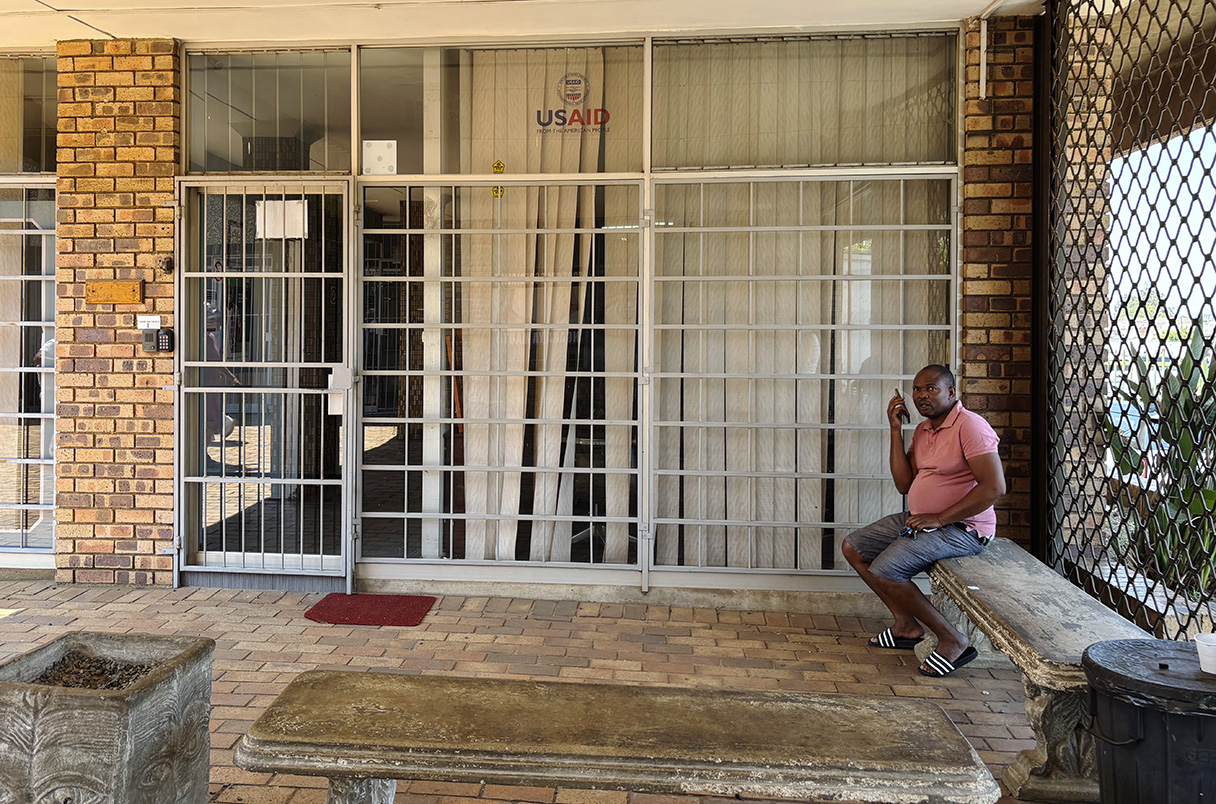
Those infections occurred as the U.S. and other major donors cut back on global HIV funding, creating what UNAIDS has called a “perilous moment” for the response. As a result, HIV testing programs actually fell by 22% between 2024 and 2025 in the countries hardest hit by the virus, according to new UNAIDS statistics. And prevention services are rapidly disappearing. That has some worried that this year’s numbers could be even worse.
But the effort to recover progress ran up against politics and a fear that global interest in the HIV response is waning.
Though Washington was involved in the negotiations up to the high-level meeting, according to UNAIDS officials, the Trump administration ultimately did not get on board with the final draft. In rejecting the political declaration, Deputy U.S. Representative to the U.N. Tammy Bruce said the document strayed too far from the targets for ending AIDS “by including divisive topics,” according to Health Policy Watch.

Russia, Israel, Burkina Faso, Burundi, North Korea, Niger, and Saudi Arabia also voted against the declaration, while 14 other countries abstained.
The European Union registered its frustration that this year’s document seemed to be watered down in response to the politicization of the process. On behalf of the EU, Cyprus said the “human rights-based approach” has been weakened in the 2026 version compared to the 2021 declaration. Cyprus also disassociated the EU from calls for greater sharing of intellectual property — a fraught topic as negotiations around the pathogen access and benefit sharing annex continue.
Civil society groups had also raised concerns in the lead-up to the high-level meeting that the document did not make more explicit how member states would make up the funding shortfall. And observers said they were disappointed by the poor turnout from member state representatives for many of the discussions during the high-level meeting.
“The absence was very loud,” Hourcade Bellocq says. Still, civil society ultimately voiced support for the declaration.
“In today’s political context, this political declaration is a major win,” Florence Anam, co-executive director of the Global Network of People Living with HIV, said in a statement. But will it be enough?

