

Senegal women subjected to degrading anal examinations


Senegal authorities used the tests despite their lack of scientific basis
Seven people arrested and accused of online fraud and blackmail in Senegal, on July 28 were subjected to forced anal examinations, including two heterosexual women involved in the case.
Anal examinations are typically imposed on men suspected of homosexuality to “prove” their guilt, but are considered an inhumane and pseudo-medical judicial procedure.
This case is, to our knowledge, the second country, after Afghanistan, where forced anal examinations of cisgender heterosexual women have been documented as part of a criminal investigation.

The seven arrests came after an alleged “sextortion” ring was uncovered in the Thiès region 45 miles east of Dakar, Senegal’s capital, which led to the July 10 arrest of four individuals charged with criminal conspiracy, unnatural acts, online prostitution, possession and use of narcotics, willful transmission of HIV, endangering the lives of others, identity theft, and fraud.
Further investigation led to the indictment on July 28 of the seven individuals, including two women, in Rufisque-Est, 16 miles east of Dakar, on the same charges except the charge of willful transmission of HIV.
The accused are alleged to have posed as a young girl on Instagram using a fake account, then offered paid sexual video calls via WhatsApp, using a pre-recorded video of a female accomplice to deceive their contacts.
Those two cases are part of Senegal’s widespread crackdown on same-sex sexual activity, including consensual relationships. That crackdown resulted in arrests of 99 men accused of homosexuality, with 71 facing continued charges and 28 of them set free on Aug. 7.
Cheikh Diakhoumpa, chief prosecutor of Rufisque, compelled the two heterosexual women implicated in online prostitution to undergo forced HIV testing. One of them tested positive for HIV but was not charged with willful transmission of HIV. This marked the second recorded case involving forced HIV testing of women in Senegal. The first case occurred in July, when eight alleged lesbians were also subjected to HIV testing.
Forced anal examinations of cisgender heterosexual women
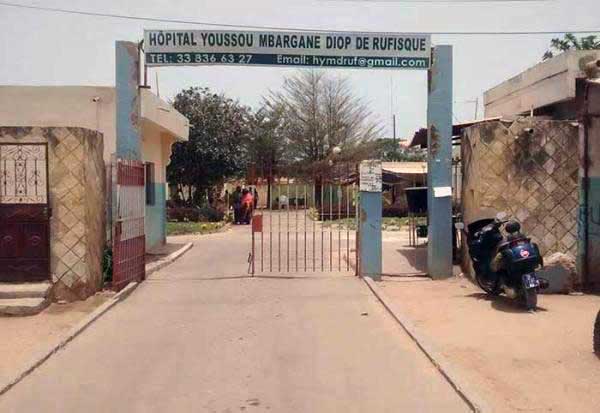
The seven defendants—including the two cisgender women—were forced to undergo anal examinations, including forced digital rectal exams, at the Youssou Mbargane Diop Hospital in Rufisque during medical examinations.
According to Seneweb, on that occasion, “the examining physician noted distinct physical characteristics, which were detailed under his official seal.”
In December 2025, Erasing 76 Crimes documented for the first time the use of anal tests in Senegal on men suspected of homosexuality.This is the second time internationally, after Afghanistan, where forced anal tests on cisgender heterosexual women have been documented.
As Human Rights Watch notes in its report “Dignity Debased,” “these examinations often involve the forced insertion of fingers or, at times, other objects into the accused’s anus by doctors or other medical personnel. Law enforcement officials and some medical personnel claim that this allows them to determine the tone of the anal sphincter or the shape of the anus and conclude whether the accused person has engaged in homosexual intercourse.”
Moreover, the World Medical Association adopted a resolution in October 2017 calling for a ban on forced anal examinations, urging physicians to refrain from participating in them, especially when the subjects are heterosexual women.
Popularized in the 19th century by the forensic pathologist Auguste Ambroise Tardieu (1818–1879), but now widely criticized, anal tests have no scientific value. Still, they have been documented in use in 10 countries: Afghanistan, Cameroon, Egypt, Kenya, Lebanon, Tunisia, Turkmenistan, Uganda, Zambia, and now Senegal.
Furthermore, they have been recognized as cruel and degrading and a violation of human dignity as set forth in the international Convention Against Torture, the African Charter on Human and Peoples’ Rights, and Article 7 of the Senegalese Constitution, which stipulates that “every individual has the right to physical integrity.”
Senegal’s legal authorities did not explain why they think such intrusive tests were relevant to the accused women’s cases.
One of the defendants, who reportedly was shown to be bisexual during the search of his phone, faces a prison sentence of 5 to 10 years under Senegal’s law prohibiting “unnatural acts,” along with fines up to 10 million CFA francs (approximately $17,600 USD), with no possibility of a reduced sentence or probation. A conviction may also result in permanent deprivation of many civil rights according to Senegal’s Penal Code.

This additional penalty can include a ban on the right to vote; a prohibition on holding public office; a ban on carrying or possessing weapons; disqualification from serving as a guardian, substitute guardian, or conservator; and prohibition on casting a vote in family deliberations.
As with other cases involving other defendants, one of the greatest risks is a sentence of 5 to 20 years of imprisonment for the charge of criminal conspiracy (Article 239 of the Penal Code).
The Senegalese press does not specify whether the seven people charged in Rufisque-Est have been remanded in custody; however, it is common practice in Senegal for defendants to be held in detention while awaiting trial, with all the associated risks of mistreatment by other inmates, given the nature of the charges.
The response of African women activists
The use of anal examinations has also drawn strong reactions from African activists, feminists, and women’s rights and human rights leaders.
For Mya Wélé, a Senegalese LGBT+ activist living in exile in Canada, these outdated practices reflect the fact that in Senegal, “forced vaginal exams are conducted before marriages—often arranged by families against the young women’s will, especially when they are lesbians.” She herself recounts having undergone such exams.
The Office of the United Nations High Commissioner for Human Rights, UN Women, and the World Health Organization called for an end to “virginity tests” in 2018, stating that there is no medical test that can prove whether a woman or girl has had vaginal intercourse.
Lucette (a pseudonym), an activist from Mali, is terrified at the thought that such intrusive practices might spread lacross West Africa, “with neighboring governments and states adopting the same approach by imitation,” even as lesbians are already facing numerous arrests in the region, including “searches of phone content, as in neighboring Senegal,” she says.
She calls for the launch of “an international petition to mobilize international solidarity and make women’s voices heard.”

