
Now Reading
Trump drops US support for human rights of LGBTQ Africans

Trump drops US support for human rights of LGBTQ Africans

Donald Trump won’t pressure African nations to stop targeting sexual minorities.

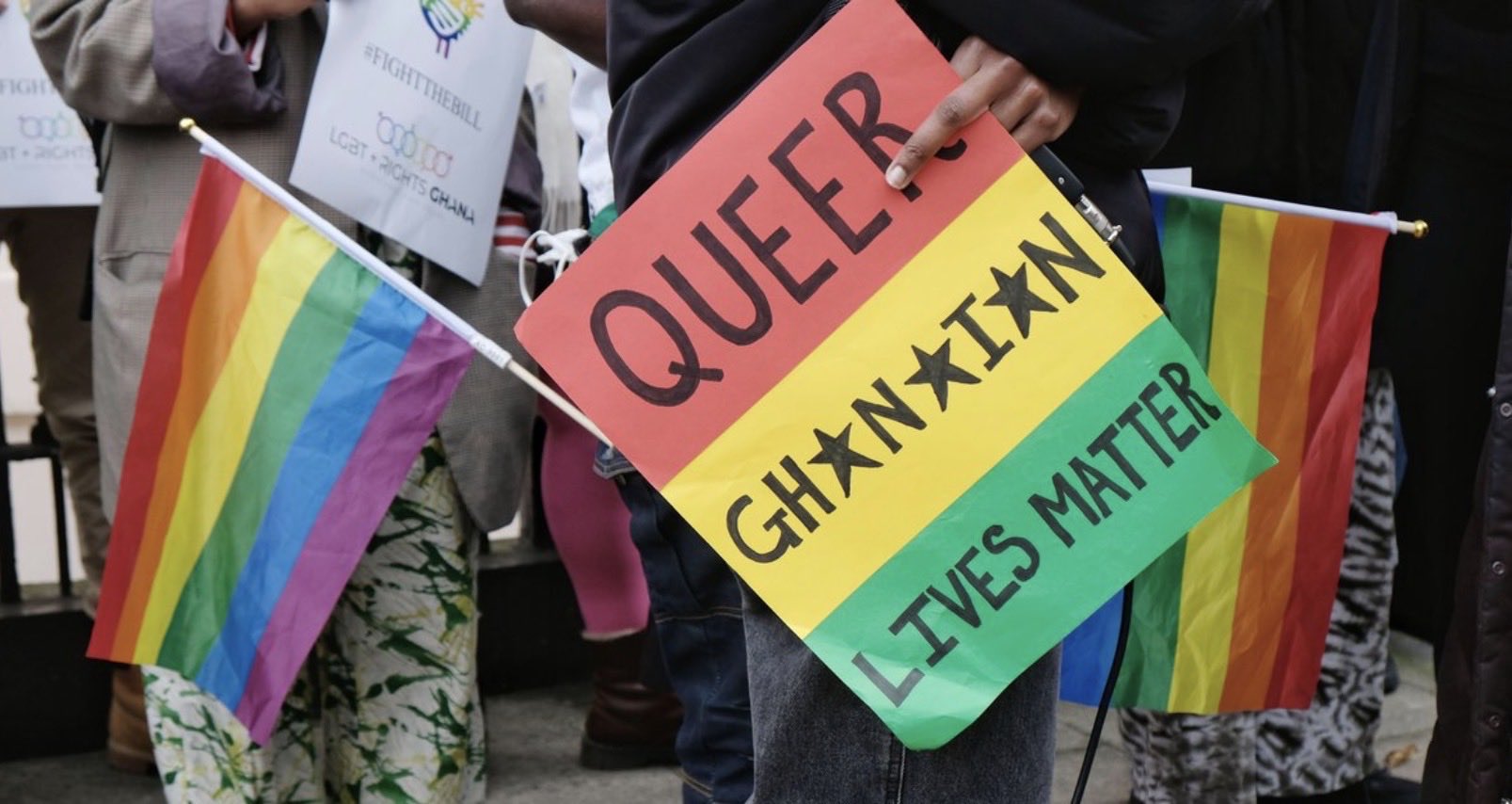
In October 2024, anti-LGBTQ protesters demanded a ruling from the Ghana Supreme Court on the anti-LGBTQ bill that Parliament passed in February. The bill expired without a presidential signature. (Photo courtesy of X/Twitter)

Conservative-leaning American newspapers have confirmed that the Trump administration has no interest in coercing African homophobes not to persecute LGBTQ people.

That White House position is a dramatic change from the stance of the Biden administration, which pressured African governments to protect their LGBTQ citizens’ human rights.

The story first broke in The Wall Street Journal in an article titled:
In About-Face, Trump Administration Drops Opposition to Africa’s Antigay Laws

The U.S. has been silent on a law passed in Ghana last month in a sharp shift from the Biden years

That article is here, behind a pay wall allowing only Wall Street Journal subscribers to read it.

The conservative and largely pro-Trump American media company Newsmax published a follow-up story making the same point —  that the current U.S. administration has no interest in persuading African homophobes not to persecute LGBTQ people.

Protest sign (Photo courtesy of X)

This is the Newsmax article:

Trump shifts US policy on Africa’s LGBTQ laws

By Nicole Weatherholtz

The Trump administration is taking a markedly different approach than the Biden administration toward anti-LGBTQ laws being enacted across Africa, choosing not to weigh in as several nations move to strengthen traditional values through new legislation.

Most notably, the administration has remained silent after Ghana’s Parliament passed a bill in May that would impose prison sentences of up to three years on people who identify as LGBTQ.

The measure now awaits the signature of President John Mahama, who has indicated support for the legislation.

The hands-off approach reflects President Donald Trump’s America First foreign policy, which emphasizes U.S. strategic and economic interests over efforts to pressure foreign governments on social issues.

The contrast with the Biden administration is significant.

After Uganda passed one of the world’s toughest anti-gay laws in 2023, the Biden administration removed the country from a key U.S. trade program, imposed visa restrictions on officials, cut defense assistance and redirected some HIV/AIDS funding. The World Bank also suspended roughly $5 billion in development funding.

Asked whether the U.S. would take a position on Ghana’s legislation, the State Department declined.

“We refer you to the governments of Ghana and Uganda regarding legislation in their countries,” a State Department spokesperson told The Wall Street Journal.

See Also
Bob doing construction work shortly after his release. (Photo by Steeves Winner)

Ghana is not alone. Across Africa, several governments have moved to reinforce socially conservative policies.

Senegal recently increased prison penalties for homosexual activity and criminalized the “promotion” of homosexuality, while Niger’s military government adopted a penal code imposing prison terms of up to 10 years for homosexual acts.

More than half of Africa’s 54 nations currently prohibit homosexual activity.

Analysts say the Trump administration is unlikely to respond with the type of sanctions and economic pressure seen under Biden.

“I think it’s very unlikely that Ghana’s legislation will trigger a similar response from Washington,” Anne Frühauf, head of political-risk research on Africa at advisory firm Teneo, told the Journal. “We’re in a different world now.”

While the administration has backed away from making LGBTQ issues a centerpiece of foreign policy, it has continued to take action on national security concerns, including sanctions targeting Sudan’s Rapid Support Forces and Rwandan officials linked to unrest in eastern Congo.

Ghana remains a key U.S. ally in West Africa. The country has hosted U.S. military exercises aimed at combating Islamic extremist groups and has cooperated with U.S. deportation efforts, a priority for the Trump administration.

Critics of Ghana’s bill argue it could further marginalize the country’s LGBTQ community. Leila Lariba, director of One Love Sisters Ghana, said social stigma remains widespread.

“Conversations about sexuality and gender diversity were either absent, heavily stigmatized or framed as something foreign and unacceptable,” she told the Journal.

View Comments (0)

Leave a Reply

Your email address will not be published.

© 2026 Erasing 76crimes. All rights reserved.
Scroll To Top

Discover more from Erasing 76 Crimes

Subscribe now to keep reading and get access to the full archive.

Continue reading