

Commentary: Victory for trans and intersex people at Kenya High Court


Kenyans gain the right to change gender markers on official documents,
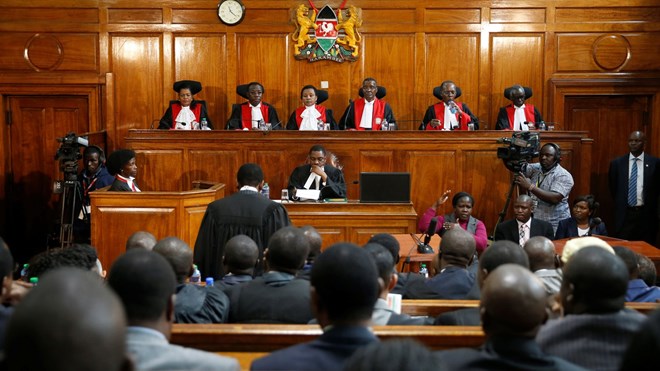
The LGBTQ rights advocacy group Outright International reports:
COMMENTARY
Kenya High Court Ruling Marks Landmark Victory for Trans and Intersex People’s Rights
A High Court ruling in Kenya on May 20 marks a historic step forward for the rights and recognition of transgender and intersex people. By affirming that Kenyans can seek changes to gender markers on official documents, the Court has recognized a fundamental truth: that dignity, identity, and legal recognition must go hand in hand.
For too long, trans people and some intersex people in Kenya have navigated daily life with identification documents that do not reflect who they are. This mismatch has not been a mere administrative inconvenience—it exposes people to discrimination, harassment, barriers to employment and healthcare, and even risks to personal safety. As the East Africa Trans Health & Advocacy Network noted in a 2025 UN report, 32% of transgender individuals in Kenya have been denied healthcare because of their identity. Legal recognition is not symbolic; it is essential to full participation in society.
This ruling signals a meaningful shift toward aligning Kenya’s legal framework with constitutional guarantees of equality, privacy, and human dignity. It underscores the importance of the judiciary as a space where marginalized communities can seek justice and where human rights principles can be translated into lived realities. Importantly, it also reflects the tireless advocacy of Kenyan trans and intersex activists, whose courage and persistence have brought this issue to the forefront.

The ruling builds on previous cases in Kenya that have recognized sexual and gender diversity, including cases dating to 2014 that recognized intersex people’s existence and upheld a trans person’s right to change her name on her school-leaving certificate, and more recently, a 2025 case regarding the rights of trans persons in detention. At a regional level, this decision contributes to a growing body of jurisprudence affirming the rights of trans people across Africa, in countries like Botswana, Zimbabwe, South Africa, and Tunisia. While progress remains uneven, each legal victory strengthens the foundation for further advances and provides a compelling example for courts and policymakers in neighboring countries, demonstrating that recognizing transgender people’s rights is integral to upholding constitutional and human rights obligations.
However, this moment of celebration must be matched by sustained commitment. The ruling takes place in a context in which governments around the world are systematically rolling back trans, nonbinary, and intersex people’s rights. Political will and effective implementation will determine whether this ruling translates into real change for trans and intersex people across Kenya. Administrative procedures must be accessible, transparent, and respectful. At a time when organizations working for the equality and inclusion of lesbian, gay, bisexual, transgender, intersex and queer people have faced unprecedented funding cuts, activist groups on the ground need to be adequately resourced to take on the advocacy and monitoring needed to safeguard these gains.
Today, we celebrate a milestone—one achieved through resilience, solidarity, and an unwavering belief in justice. Outright International stands with transgender and intersex Kenyans in honoring this victory and reaffirming our commitment to advancing rights, recognition, and equality for all.

