

As funding drops, Global Black Pride is accused of financial misdeeds


Too often, activists ‘are expected to absorb the difference,’ says Global Black Pride’s president
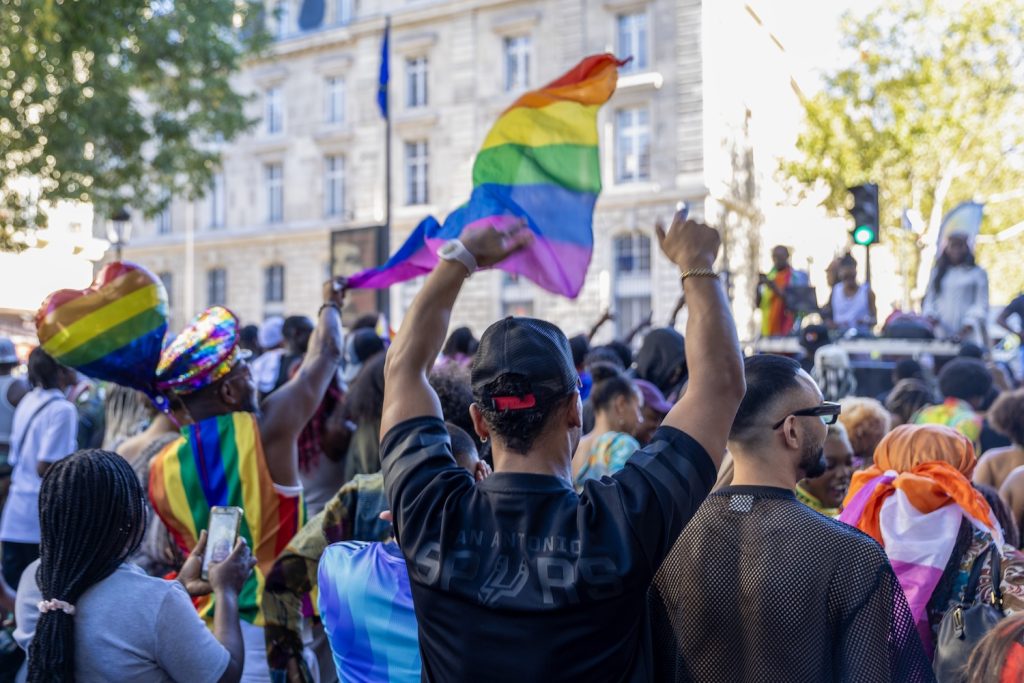
Mistreatment of LGBTQ+ rights activists by their own ill-funded organizations has re-emerged as a hot topic in LGBTQ communities, with Globe Black Pride accused of not paying its consultants and announcing scholarship awards that it had no money to pay.
Neglect of activists’ needs and rights is not a new problem. See, for example, the article “LGBTI activists at risk of burnout; what can we do?” from 2018.
The latest focus on the problem came from two people involved in preparations for Global Black Pride 2026, which was held last month in Paris. They say they were not fully paid for their work while also protesting that the Caribbean and its culture were adequately represented in the event.
Their accounts echo some of the criticisms voiced by Princess Jauan Durbin, a U.S.-based leader of vice president of Community Health and Partnerships for the Southern Legal Center for Youth.
In July, Durbin protested that Global Black Pride had offered scholarships without disclosing that the scholarships were contingent on successful future fundraising.
Last month, Durbin issued an appeal to Global Black Pride to reveal its financial situation and vow not to offer unfunded scholarships in the future. He wrote:
“I am calling on Global Black Pride and Global Black Gay Men Connect to publicly release their 2025 Form 990, so the community can better understand the organizations’ financial positions during the period in question.
“I am also calling on Global Black Pride to publicly commit that no future scholarships, grand prizes, or financial commitments will ever again be announced or awarded unless the funding to fulfill those commitments has already been secured or any contingency is clearly disclosed in advance.”
The two former consultants who are protesting Global Black Pride’s failure to pay them are Rebecca [a pseudonym, because she doesn’t want to be enmeshed in the controversy] and Moïse Manoël-Florisse, the author of this article, who covers French-speaking Caribbean and African nations for Erasing 76 Crimes.
As project managers for Global Black Pride, they had signed consultant contracts but say they were systematically denied payment for services rendered.
Rebecca says she hasn’t been paid for months, while Manoël-Florisse says he is owed €9,990.
The main argument that Global Black Pride gives for denying them pay is that subsidies and grants to the organization have fallen, along with a widespread drop in funding for many non-governmental organizations, particularly those working in the cultural field to promote the visibility of LGBT+ communities.
The decrease in funding is real. In fact, a third of LGBTQ groups say 2025’s drastic cuts will force them to close.
But Global Black Pride managed to hold events in Paris last month, even without a corporate sponsor. The festivities included a welcoming speech by the mayor of Paris; a gala featuring French and American artists; a march to the center of Paris via African immigrants’ neighborhoods; and panel discussions on queer organizing, on anti-gender backlash in Africa, and on black pride celebrations in Europe and the Caribbean.
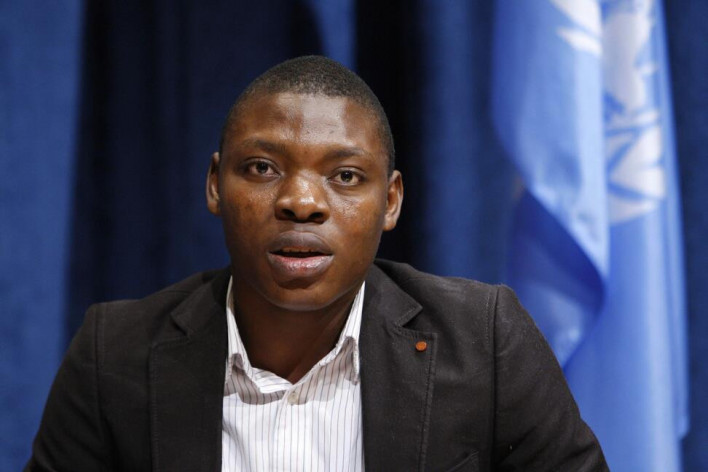
Shortly before those events occurred, Micheal Ighodaro, president of Global Black Pride, published a lengthy statement that acknowledged, but only in general terms, the damage that is being done to hard-working and under-paid activists.
As support for LGBTQ+ institutions falls, “the people responsible for holding these institutions together are expected to absorb the difference,” he wrote.
“… People I love, who did not choose to become participants in disputes about Pride politics, have been made collateral damage in conflicts supposedly occurring within a community organized around dignity, safety and inclusion. It has affected my mental health.”
“… The experience has forced me to confront a contradiction that extends far beyond my own circumstances. …. People who have experienced exclusion can exclude others. … People fluent in the language of harm remain capable of causing it. …”
“We have not been able to provide the kind of broad travel-scholarship program I would have wanted. That troubles me because welcome is not the same thing as access. …”
“When institutions do not have sufficient resources, the deficit does not disappear. Someone absorbs it. …”
Moïse and Rebecca are two of the people whom Ighodaro has apparently decided will absorb the cost of putting on a Pride event that he cannot afford to pay for.
Moïse states: “I have suffered significant economic hardship, which continues to this day. This also affects my health and overall well-being.” I am owed €9,990, and this includes the entire period from April to July 2025, during which I worked to connect Global Black Pride with Air France, which could have become the official sponsor of Global Black Pride 2026, although Michael Ighodaro didn’t take this seriously.
Moïse cites, in particular, a meeting that he set up in with Air France executives to discuss sponsorship for Globe Black Pride.
“Director of Diversity at the Air France Group, Ms. Agnès Solastiouk, had scheduled an online meeting with Micheal Ighodaro for July 2, 2025. She had sent the online invitation by email at least two months in advance, and on the appointed day, Michael did not log in, despite the numerous reminders I had sent him in the preceding days.”
In addition, he writes, “I was the one who connected Global Black Pride with institutional stakeholders such as the City of Paris, the Paris-Centre City Hall, the Ministry of Foreign Affairs, the Ministry of Culture, the Paris Tourist Office, and the International Gay and Lesbian Travel Association (IGLTA), among others.
“And so it was I who submitted the grant application to the City of Paris, which needed to be completed to secure public funding for Global Black Pride 2026. I have the emails that prove everything I’ve said.”
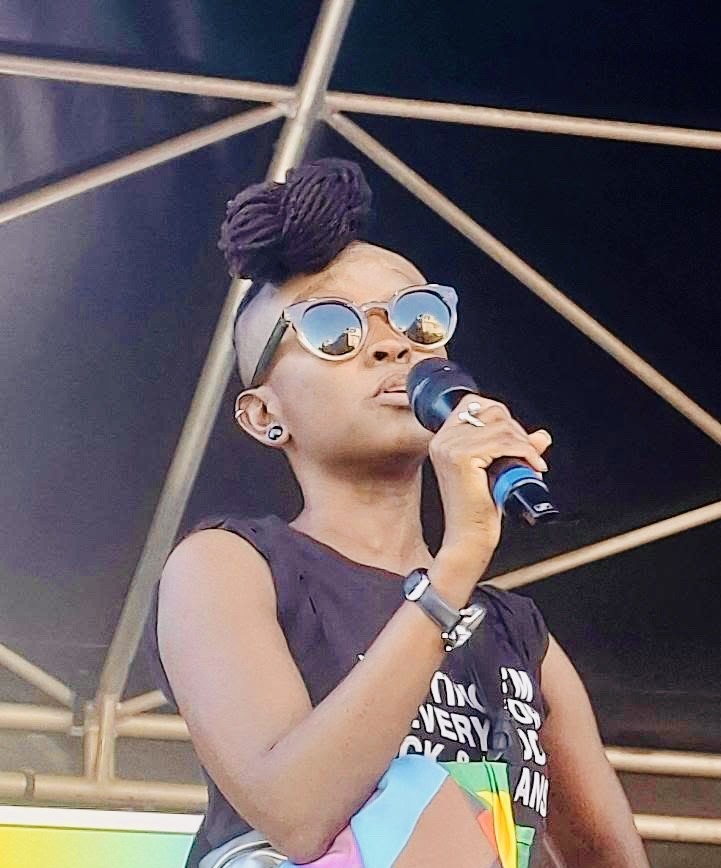
Rebecca added, sharing her feelings to Moïse: “Unlike you, I never resigned from the Global Black Pride project. However, we haven’t been paid for months [Editor’s note: The last payment to either of them was in November 2025], and little by little, I was sidelined with the appointment of Marame Kane as director in December 2025. She never seriously involved me in her work.” There were a few online meetings, but very quickly, I was swept up in the need to find another job to support myself.

“At the same time, I showcased my expertise at the first Kréyòl Pride in Guadeloupe on July 28th, using the same approach I would have liked to bring to the Global Black Pride program. And it was an undeniable success in the Caribbean.”
Moïse added: “I refuse to have my contracted work considered mere volunteer work, because the non-profit sector is riddled with this type of disguised volunteer relationship, which I do not wish to perpetuate.
“Substantial, ongoing, and traceable work must be properly compensated and fairly valued. And the morally reprehensible practices of organizations that encourage unpaid work by dangling equally convoluted contracts before them must stop.
“This is especially true when we’re talking about international organizations that claim to work for human rights, serving vulnerable communities, operating at the intersection of racism and LGBTQ+ phobia. Furthermore, Micheal promised to pay us upon receipt of the French subsidies, but he hasn’t done so to date.”
Rebecca added, “When I mentioned to Marame Kane the difficulties that the non-payment of your work had caused regarding your housing situation in the Paris region, she said it was none of her business, that she didn’t care, and that she was well aware you weren’t being paid, but that it didn’t matter to her, since it had been decided before she became director of Global Black Pride 2026.”
For Moïse, beyond the feeling of having been cheated, something deeper is at play: “Symbolically, as a West Indian and descendant of slaves, this non-payment particularly affects me. In the context of Global Black Pride 2026, an event meant to unite Black and LGBTQ+ communities, this situation awakens in me a kind of sorrow linked to our history. But this historical dimension should obviously not be confused with assessing individual responsibility in the financial dispute.”
On a non-financial issue, Rebecca protested the treatment of the French West Indies in Global Black Pride:
“There have also been blatant actions by Marame Kane to render invisible the founders of Kréyòl Pride, of which I am a part.” For example, during the Black Excellence Gala & Awards on Sept. 11, Global Black Pride presented the Global Community Impact Award to Bokantaj Inclusion French West Indies (BIFWI), which runs the Guadeloupe LGBT+ Center, for their contribution to Kréyòl Pride, instead of honoring the main organizations involved in Kréyòl Pride. “It’s surreal contortions,” she said.
Moïse said: “In terms of invisibility, I also note that several Caribbean artists from the LGBT+ community, such as Lycinaïs Jean, Casey, and Méryl, were not represented at the Global Black Pride music festival held at Place de la République.
“On the other hand, there were other, predominantly American, figures such as Billy The Goat, Lolita Leopard, Shaun Ross, and Giselle Palmer representing France.”
He also said that the parade route chosen by Global Black Pride did not include neighborhoods where most Caribbeans from Guadeloupe and Martinique live.
“Furthermore, the idea of a slightly earlier departure on the afternoon of Saturday, Sept. 12, for a procession going from Château-Rouge to République does not correspond to a route through neighborhoods with a Creole character. This choice of route personally raises questions for me about the place given to the different components of the Black population in France.
“People from the French West Indies are French, and the Black identities present in France are diverse, with very different histories, migratory trajectories, and relationships with France.”
Both Ighodaro and Kane have been invited to respond to this article.
Publication of the Tatiana Segala photo above is authorized by a Creative Commons license.
