

Uganda’s ‘Not Free’ rating partly due to anti-LGBT laws


Freedom House cites declining safety for Uganda’s queer people and political opposition
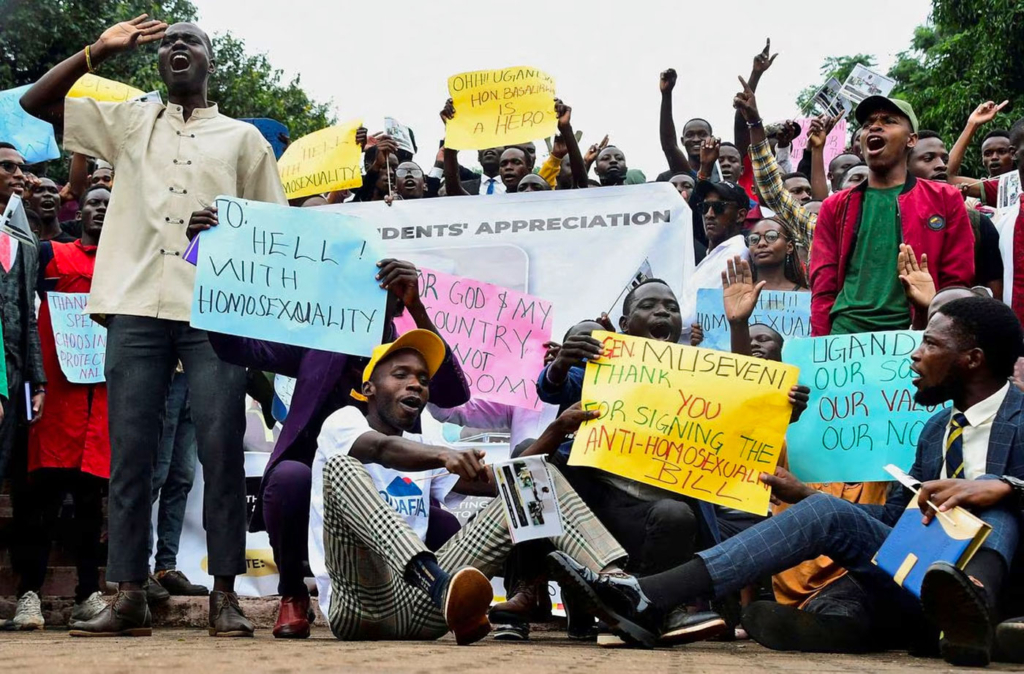
Freedom House, a U.S.-based organization that promotes democracy, political freedom, and human rights internationally, has classified Uganda as “Not Free” based on the organization’s evaluation of the real-world rights and freedoms enjoyed by individuals.
Part of Uganda’s rating is based on the systemic discrimination, severe legal restrictions, and escalating human rights challenges faced by the LGBTQI+ community following the enactment of the draconian Anti-Homosexuality Act (AHA) 2023.
“LGBT+ people in Uganda are not represented in politics and face pervasive discrimination, which became more severe after President Museveni signed the AHA in May 2023,” according to Freedom House’s “Freedom in the World Report, 2026.”
The ratings are based on the organization’s evaluation of the real-world rights and freedoms enjoyed by individuals, in particular those articulated in the Universal Declaration of Human Rights such as the rights to life, liberty, privacy; freedom from torture and slavery; and economic and social rights including education and an adequate standard of living.
In the latest Freedom House rankings, Uganda has an overall Global Freedom Score of 33 out of 100. With scores of only 10/40 in political rights and just 23/60 in civil liberties, Uganda’s rating has fallen from 34/100 in the previous years, an indication that all is not well for people’s freedoms in the country. On political rights, Freedom House notes that although the East African nation holds regular elections, the credibility of those elections has deteriorated.
“The country has been ruled by the National Resistance Movement (NRM) and President Yoweri Museveni since 1986. The NRM retains power through patronage, intimidation, and politicized prosecutions of opposition leaders. Uganda’s civil society and media sectors face legal and extralegal harassment and state violence,” the report says.
Civil society in Uganda has been active with several NGOs addressing politically sensitive issues, however, Freedom House notes that their operations have increasingly become vulnerable to legal restrictions, burdensome registration requirements, intimidation and of recent; total suspension of operations. Human rights organisations have reported office break-ins and burglaries which largely remain unexplained because police authorities have failed to adequately investigate the incidents.
The AHA imposes harsher penalties on same-sex relationships, notably making “aggravated homosexuality” punishable by death, and imposing severe sentences for “promotion of homosexuality”.
Severe human rights rollbacks, specifically the severe penalties imposed by the Anti-Homosexuality Act, have directly contributed to score downgrades in Freedom House’s overall rating matrix for Uganda.
In the “Freedom in the World Report, 2023,” Uganda’s score under B2 – Do various segments of the population (including ethnic, racial, religious, gender, LGBT+, and other relevant groups) have full political rights and electoral opportunities?, declined from 2 in 2022 to 1 in 2023 specifically because of the worsening human rights situation of LGBTQI+ persons shortly after AHA took effect.
The score has remained at ¼ in the 2026 Freedom in the World ratings.
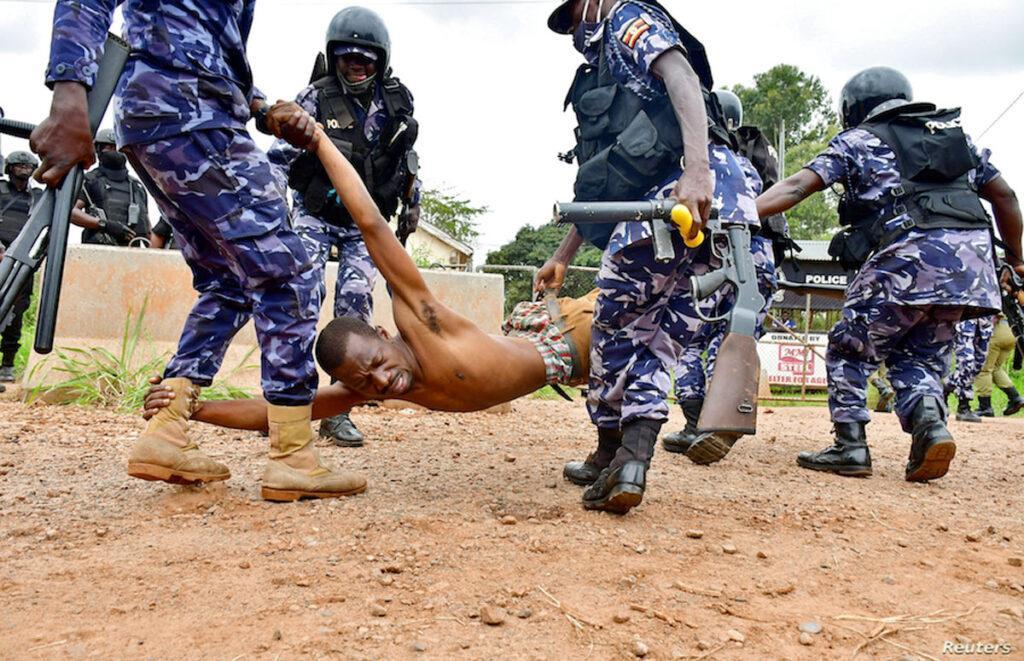
Ugandan laws prohibit discrimination based on ethnicity, religion, political affiliation, age, race, disability, color, and sex. However, with the enactment of AHA, LGBTQI+ people face overt hostility from the government and society.

Online Harassment and Surveillance is another area where Uganda is doing badly. Freedom House highlights online entrapment, doxxing, digital harassment, account hacking, and criminal prosecutions targeting LGBTQI+ individuals using social media platforms.
76Crimes has published a series of stories highlighting online attacks directed at LGBTQI+ persons in Uganda. Many LGBTQ+ Ugandans and some LGBTQI+ allies have decided to retreat from online spaces by deleting their accounts as a way of harm reduction while others have chosen to keep fighting.
Freedom in the World is an annual global report on political rights and civil liberties for countries and a select group of territories. The 2026 edition covers developments in 195 countries and 13 territories from January 1, 2025, through December 31, 2025.
Along with Uganda, 25 other African nations earned the “Not Free” rating, including Tanzania, Rwanda, Sudan, Egypt and Somalia. Only 7 African countries (South Africa, Namibia, Botswana, Lesotho, Malawi, Ghana and Senegal) are rated “Free” in the current report.
However, with the growing criminalization of LGBTQI+ populations on the continent, analysts fear that rating of countries like Ghana and Senegal that just enacted harsh anti-LGBTQI+ laws might fall in future reports.
