

After Trump cuts, 20 LGBT+ organizations in Haiti had to close


Anti-HIV care is vanishing; only pregnant women are still tested
The life journey of LGBT+ people is fraught with obstacles that hinder their ability to get decent work or, for the entrepreneurial-minded, to start a business. That’s especially true in Haiti, where homophobia works its devastation on gay lives againat a background of extreme poverty, governmental collapse and gang supremacy.
For Erasing 76 Crimes, Merlin Jean, executive director of the Haitian human rights organization Héritage pour la Protection des Droits Humains, explain what the Haitian LGBTQ community is enduring at a time when the withdrawal of U.S. international funding has brought a substantial part of his association’s activities to a halt.
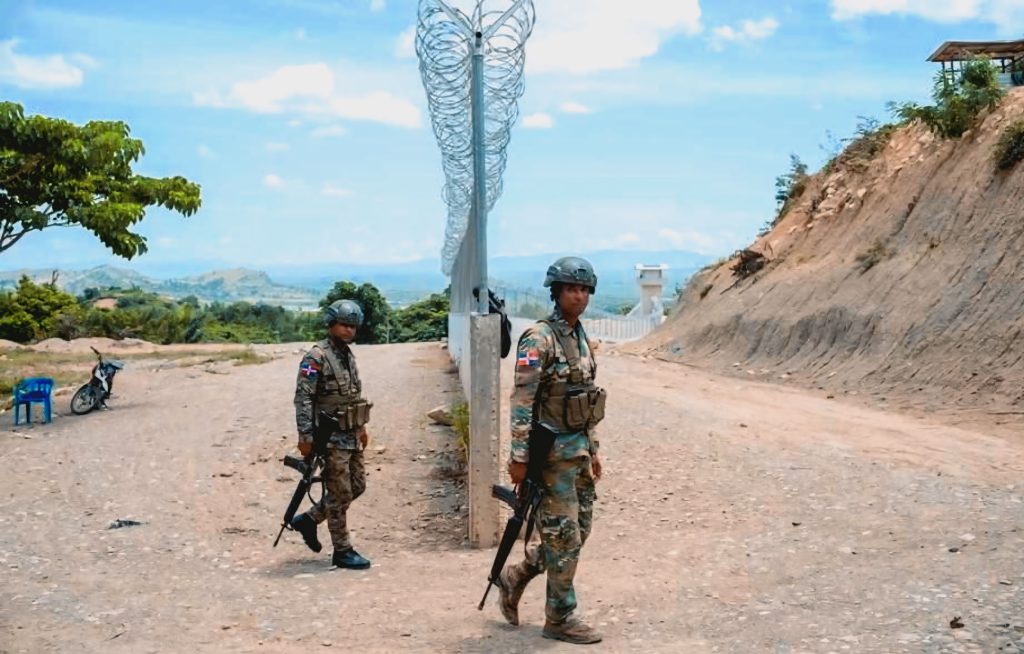
Héritage, which is located near the wall separating Haiti from the Dominican Republic, supports LGBT+ people deported from the Dominican Republic
Erasing 76 Crimes: What about the economic rights of LGBT+ people in the border areas between Haiti and the Dominican Republic?
Merlin Jean: For LGBT+ people, the violations of their economic rights to work and secure employment stem from the cultural, anthropological, political and social environment.
For example, I have friends who are privileged enough to work for banks in Haiti, within the formal economy, but often technical competence alone is far from sufficient.
Thus, it is still the norm to attend events organised by the Works Council accompanied by a person of the opposite sex.
As for those who are unmarried, who do not live with a wife and children, or who do not feign heteronormativity, the doors of commercial banks remain closed to them.
It is, so to speak, impossible to reconcile one’s sexual orientation with a position of power within Haitian society, unless one lives in hiding.
In some countries, companies go beyond local customs or laws by granting a certain degree of recognition to LGBT+ couples. But in Haiti, where LGBT+ couples are denied legal recognition, this is not the case.
LGBT+ economic rights are not in a protective bubble
Even as a civil society organisation supporting LGBT+ communities in need, we face difficulties in renting venues for meetings, and often the prices quoted – when we are even deigned a response – are prohibitive. They are typically double or triple the average rate.
And even if we reluctantly agree to pay more, we still face the risk of humiliating evictions when receptionists see effeminate or trans people.
It is less talked about in rural areas, but there are also cases of land grabbing and eviction, with LGBT+ people being driven from their homes by their neighbors. Yet without housing, there is no work.
In this sense, for me, LGBT+ economic rights are not a bubble. And in a country where we have experienced political and legal setbacks—since the new Penal Code, which came into force in 2025, does not recognise sexual orientation as an aggravating circumstance in cases of violence—it is the whole range of LGBT+ rights that is being eroded.
At present, we are legally invisible, and we are very afraid that the enactment of the recent draconian anti-LGBT law in Senegal [Editor’s note: a law providing for 10 years’ imprisonment for ‘unnatural acts’] will be emulated on this side of the Atlantic.
I am not even touching on the specific difficulties faced by LGBT+ people deported from the Dominican Republic in integrating into the economy, which were already discussed in another article a few months ago.
The economic and social consequences of the dismantling of US aid on the NGO sector
Finally, I would like to emphasise a point that has caused enormous harm to LGBT+ people. This concerns the dismantling of US development aid decided by Donald Trump and Elon Musk, with the abrupt withdrawal of USAID.
Indeed, through international funding, Haiti offered one of the very few opportunities for LGBT+ people to escape the extreme precariousness of the informal economy, whilst having the chance to work in the service of civil society, promoting human rights issues (such as access to healthcare).

Far from the isolation and prevailing poverty in Haiti, this provided a means of remaining connected to the global NGO ecosystem.
Since Trump came to power, with the drying up of funding for organisations, the LGBT+ community has been caught between two devastating forces.
Twenty LGBT+ organizations in Haiti have closed this year
On the one hand, many social worker posts have been cut outright, with no alternative employment opportunities to fill the gap. In total, nearly twenty LGBT+ organisations have ceased operations within a year.
Even Héritage pour la Protection des Droits Humains (HPDH) faces an uncertain future, and it is sadly possible that we may one day be forced to pack up and leave Ouanaminthe (northern Haiti). We used to have staff; now we have only volunteers, whom we must retain.
Anti-HIV care is vanishing
Furthermore, access to antiretrovirals for people living with HIV has become much more difficult. PrEP is in short supply, and testing is now restricted to pregnant women only.
With the drop in funding and the new criteria imposed by donors, testing is no longer carried out as it used to be; there is now a screening process regarding the profile of people who have access to care, and LGBT+ people are bitterly bearing the brunt of this. When even getting tested becomes difficult, we can talk of an economic and health disaster.”
Cutbacks in income-generating activities
Erasing 76 Crimes: Have you tried to develop income-generating activities for LGBT+ people within your organisation?
Merlin Jean: Between 2022 and 2024, to meet our communication needs, we launched a social integration project called ‘Nanchon Arc-En-Ciel Production’, with the aim of developing our social media activities, enabling us to take photos, shoot videos and carry out editing work. The aim was also to cast a wider net and find other clients. There were only very occasional clients. To do this, we recruited two people from the LGBT+ community.
But for financial reasons we had to relocate our offices, which were then based in Limonade, where the editing studio was located; furthermore, the emergence of artificial intelligence tools rendered the two jobs that had been created obsolete.

