

Community AIDS initiatives in jeopardy amid funding cuts


HIV / AIDS activist calls for more community-led interventions to fight pandemic
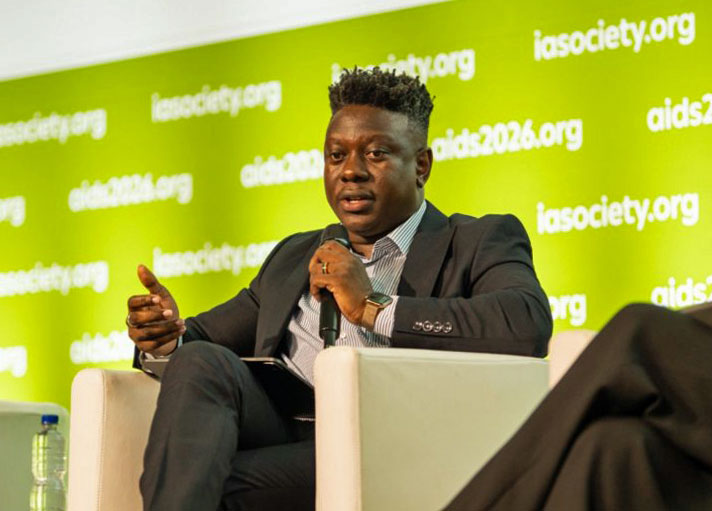
One of Uganda’s most renowned human rights activists and a prominent member of the LGBTQ+ community Richard Lusimbo is making headlines following his passionate plea for the rejuvenation of community-led interventions in the global AIDS pandemic response at the 26th International AIDS Conference in Rio de Janeiro in July.
Lusimbo heads the Uganda Key Populations Consortium (UKPC) and is a member of the Global Council on Inequality, AIDS and Pandemics. According to him, community led actions are the missing link in the campaign to end AIDS globally.
He says community-led organisations must be recognised as a core part of pandemic preparedness rather than a mere afterthought.
“Communities operate precisely in those spaces where formal systems are weakest. During the AIDS response, we have seen that community-led organizations have built trust, identified missing populations, supported treatment, and challenged harmful laws, demonstrating their crucial role in effective response. The same lessons apply to Ebola, Mpox, COVID, and the future outbreaks,” Lusimbo says.
Lusimbo believes that community-led interventions are in a better position to address the inequalities and gaps that exists in the global AIDS pandemic response.
“When community organizations collapse, trust collapses with them. But when communities are funded, protected and empowered, they can interrupt inequalities before an outbreak becomes a catastrophe,” he says.
He gave the example of UKPC, a community-based initiative that he leads in Uganda. Through an emergency response mechanism, UKPC and its partners have supported 1,185 members of the key populations facing violence, eviction, medical emergencies, legal threats and other crises that threatened their ability to remain in HIV care.
“A health system may provide treatment, but community based initiatives help people reach it safely. Laboratories may detect a pathogen, but communities detect fear, misinformation, stigma and resistance,” Lusimbo says.
Lusimbo’s plea for more community-led interventions in the fight against AIDS comes at a time when advocacy for gender equality and the rights of LGBTQI+ people is under increasing attack in many parts of the world, and as more countries adopt harsh laws against same-sex relations.
He says that without adequate and sustainable funding for community initiatives, the growing inequalities, anti-rights legislations and severe funding cuts could unravel decades of progress. Funding cuts by the Trump administration have already caused the suspension or permanent closure of vital community-led programs in Uganda.
UNAIDS shares Lusimbo’s concern. In a special report for the International AIDS Conference released in July, the Joint United Nations Program on HIV/AIDS stressed that communities play a critical role at the forefront of the HIV response, organizing, advocating, demanding and facilitating access to HIV services and the latest scientific advances.

“There is extensive evidence of the continued important role played by community-led organizations, especially those led by people living with HIV, young people, women and people from key populations. These organizations are uniquely positioned to reach the people most at risk for HIV and are crucial providers of HIV treatment, adherence support and prevention services in spaces that are free of stigma and discrimination including in humanitarian settings during crises, where community-led organizations are the links to reaching hard to reach communities affected by crises,” the UNAIDS report says.
The report says that as community-led services shrink, people from key populations are going into public clinics where stigma and abuse can be far more common.
A 2026 UNAIDS study surveying 79 community-led organizations across 47 countries showed delivery of PrEP by community-led organizations has reduced by 50% and support to people living with HIV has reduced by 50%. The study showed an 85% reduction in services for gay men and other men who have sex with men, an 82% reduction in services for sex workers, and a 72% reduction in services for people who have experienced gender-based violence.
According to UNAIDS country data, more than 60% of sex workers, gay men and other men who have sex with men, people who inject drugs and transgender people relied on nongovernmental organizations, including those led by people from key populations, for HIV prevention services. The ability of communities to keep doing this critical work hangs in the balance in many countries, as foreign assistance for HIV continues to decline
If the global HIV/AIDS response is to protect its gains and reach its targets in addition to effectively responding to future pandemics, Lusimbo says governments and international development partners must recognize, protect and sustainably finance community-led organisations as an essential part of health systems.

