

Ruling against Trinidad’s anti-gay laws sets precedent for others


Nearly two dozen other former British colonies criminalize homosexuality.
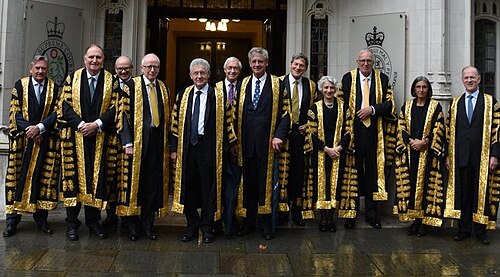
Rob Salerno’s LGBTQ Global newsletter reports below on what to expect in the wake of the overturning of Trinidad’s anti-LGBT laws. (Click here to subscribe to the LGBTQ Global newsletter.)
As reported on Wednesday, the Judicial Committee of the Privy Council (JCPC) in London has ruled unanimously in favor of Jason Jones in his case seeking to strike down Trinadad and Tobago’s laws banning gay sex (“buggery” and “indecency”), bringing a ten-year legal saga nearly to a close. The JCPC is Trinidad’s final court of appeal.
Contrary to some reports, the case isn’t quite finished yet – the JCPC is collecting submissions from both parties before issuing a final judgment on how the law ought to be interpreted going forward. But for now, the court has ruled that the T&T High Court ruling from 2018, which ruled that the laws do not apply to consensual acts between adults, is upheld. It had been reversed in 2025 but the Court of Appeal, which ruled that the laws were saved by a clause in the constitution which shields pre-independence laws from rights-based challenges.
You can read the full ruling here.
So what did the JCPC actually decide? Well, first, the court found that the laws were not shielded by the constitution’s savings clause because T&T had actually repealed and reenacted the pre-independence laws with significant changes in an attempt to modernize its sex offences laws. The court found that the intent of savings clauses was not to shield broad areas of the law, and that the savings clause must be read narrowly to protect rights.
The JCPC also found that the laws were not saved by a second constitutional procedure that allows parliament to pass laws that violate constitutional rights as long the law says so expressly and it passes with a 3/5 majority, “unless the Act is shown not to be reasonably justifiable in a society that has a proper respect for the rights and freedoms of the individual.” The JCPC ruled that although parliament followed the procedure, the buggery and gross indecency laws were not “reasonably justifiable.”
As the ruling says, “it is at the core of [Jones’] existence as a human being and of his identity as a gay man. The ability to form a deep connection with another person through an intimate and loving relationship is a vital interest for all human beings.” It was not reasonable to limit Jones’ right to a private and family life in this way.
So where does this put the fight for decriminalizing homosexuality worldwide?
Well, immediately, the number of criminalizing countries drops by one, to 65.
 |
But longer term, this ruling sets a precedent for several other former British colonies that inherited sodomy laws from the UK and use the JCPC as their final court of appeal.
In the Caribbean, that list includes Jamaica, St. Vincent and the Grenadines, and Grenada. A challenge to Grenada’s sodomy laws is still pending at the Eastern Caribbean Supreme Court, and this ruling should eliminate all doubt how the court will decide.

The laws in St. Vincent and Jamaica survived court challenge in 2023 and 2024, and I’ve heard nothing of appeals as of yet, but this decision ought to give fresh motivation to anyone seeking leave to appeal or start a fresh challenge.
Nearby in Guyana, the prime minister pledged during last year’s elections to repeal its sodomy law, but hasn’t yet done so. This ruling may give him additional impetus or cover to act, though Guyana isn’t under the JCPC’s jurisdiction.
The ruling may also spur on the movement among Caribbean nations to move their final court of appeal to the Caribbean Court of Justice in protest, but that court has shown itself even more suspect of constitutional “savings clauses,” which would mean challenges to sodomy laws in that forum would be pretty likely to succeed.
The JCPC is also the final court of appeal for Tuvalu and Kiribati, South Pacific micronations that still criminalize homosexuality. However, in the absence of an organized LGBT community in each of those places, it’s probably less likely that we see either political movement or a local legal challenge. Australian and New Zealand diplomacy had been quietly (and successfully) encouraging decriminalization among South Pacific nations through the last decade, and this may help revive those efforts.
And while the JCPC doesn’t hold jurisdiction over the nearly two dozen other former British colonies that criminalize homosexuality, its decisions are influential and build on the body of international jurisprudence that affirm LGBT peoples’ rights. This was a tremendous victory whose impact will be felt around the world.
