Ugandan scholar secures spot on UN human rights advisory panel


Josephine Ndagire will consult on human rights despite Uganda’s poor track record

Prominent Ugandan legal scholar Josephine Ndagire has secured an appointment to the United Nations Human Rights Council’s Advisory Committee after being recommended by the Ugandan government.
The appointment comes shortly after the government of Uganda nominated its longtime critic Olara Otunnu for the top UN job of Secretary-General.
Olara Otunnu’s bid is in jeopardy after the latest UN Security Council straw poll put him in fifth place, with only four responses “encouraging” his candidacy and eleven “discouraging” it.
The UN Human Rights Council confirmed Ndagire as a member of the UNHRC advisory committee on Oct. 7.
Members of the advisory committee are independent experts who serve in their personal capacities rather than representing their home governments. Ndagire and five other human rights experts from different regions were elected by acclamation because they did not have challengers.
In accordance with Human Rights Council Resolution 5/1, the Human Rights Council Advisory Committee comprises of 18 experts with geographic distribution of members as follows: Five from African States; five from Asia-Pacific States; two from Eastern European States; three from Latin American and Caribbean States and three from Western European and other States. The members of the Advisory Committee serve for a period of three years and are eligible for re-election once.
Ndagire’s election to the UNHRC Advisory Committee was greeted with excitement from Ugandans.
“We congratulate Dr. Josephine Ndagire on her election by @UN_HRC to its Advisory Committee as a member from African States. Dr. Josephine Ndagire is a Senior Lecturer in the Department of Public and Comparative Law at @MakerereLaw,” Makerere University wrote in a statement shared on X.
Professor Wilson Truman Okaka, a Ugandan research communication academic at Kyambogo University, says that Ndagire’s election creates an important opportunity to strengthen Uganda’s contribution to global human rights governance.
“Makerere University, government institutions, and research partners should support evidence-based collaboration, document policy outcomes, and translate international insights into practical human rights education and reform. Her contribution should be assessed through transparent, verifiable research and policy results,” he says.
Keith Mawanda, a business and market researcher, says Ndagire’s appointment is a welcome reminder of the importance of African representation in global or international knowledge production and decision-making.
She holds a Doctorate of Juridical Science (SJD) from Emory University (Atlanta, Georgia), a Master of Laws (LLM) from the University of Notre Dame (Notre Dame, Indiana), and a Bachelor of Laws (LLB) from Makerere University and is a senior lecturer in the department of public and comparative law at the School of Law, Makerere University. Her research focuses on governance and accountability systems in international and criminal law, with expertise in transitional justice, human rights, organized crime, and the legal implications of emerging technologies.
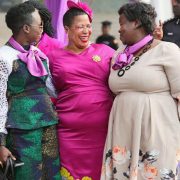
Alongside her academic work, she sits on the Board of Penal Reform International (London, United Kingdom), the Council of the International Society for Human Rights (Bonn, Germany), and the International Advisory Board on Gender and Justice at Bristol University Press (Bristol, United Kingdom). At Makerere University, she convenes the Faculty Colloquia Series.
She previously served as expert member of the Committee for the Prevention of Torture in Africa at the African Commission on Human and Peoples’ Rights (Banjul, The Gambia); head of the training department at the International Nuremberg Principles Academy in Germany; Director of Legal Services at the Foundation for Human Rights Initiative (Kampala, Uganda); and senior researcher at the Max Planck Institute for the Study of Crime, Security and Law (Freiburg, Germany).
Uganda’s human rights record is still deeply suspect, with the Anti-Homosexuality Act still harshly enforced, and ongoing persecution of opposition politicians, activists, and independent media.
On July 30, Ravina Shamdasani, a spokesperson for the UN Human Rights Office, spoke out against the crackdown on fundamental freedoms in Uganda.
“We are appalled at the crackdown on dissent in Uganda, alongside a gradual erosion of the rule of law, increased military involvement in civilian institutions, and shrinking civic space – all of which are creating a climate of fear throughout the country,” Shamdasani said.
Since the general elections on Jan. 15, OHCHR stated that it had received information that at least 50 opposition leaders and supporters, five human rights defenders and five journalists had been subjected to human rights violations. These include instances of enforced disappearance, torture and ill-treatment, and arbitrary arrest or detention based on legal provisions which do not comply with international human rights law.