

Fiji Christian group demands constitutional ban on same-sex marriage


Fiji’s government has resisted calls to restrict LGBTQ rights in new constitution
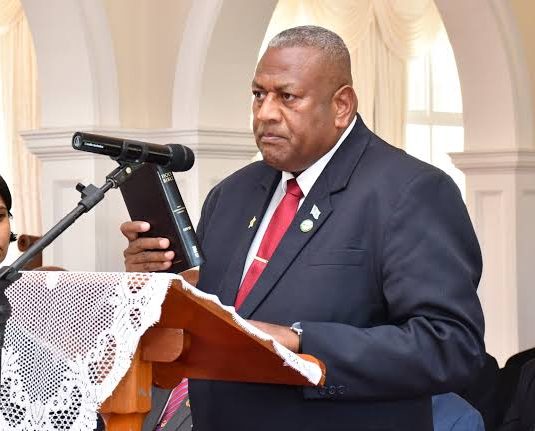
Christian groups in Fiji are calling on the government to put an explicit ban on same-sex marriage into the draft new constitution that it intends to put before voters in December. As written now, the draft constitution leaves the definition of marriage to parliament, with no recourse to challenge the definition through the courts.
Earlier, Christian groups had lobbied the government to remove a clause from the current constitution banning discrimination based on sexual orientation, gender identity, and gender expression, but that has stayed in the new draft constitution.
The government wants to put its draft constitution to a referendum on December 9.
In a news article that is edited and shortened below, Fiji Sun reported:
Fiji Church leader proposes constitutional ban on same-sex marriage
A church leader who is also a government health offiicial has called for Fiji’s Constitution to explicitly prohibit same-sex marriage, arguing that the proposed constitutional provisions do not adequately define marriage.
Apostles Fellowship International (AFI) president Penioni Ravunawa made the proposal during public consultations on the Constitution (Amendment) Bill 2026 at Kilaka Village in Kubulau, Bua yesterday.
The proposed ban was among eight recommendations he presented to the consultation.
Ravunawa, who is also the assistant minister for health, said constitutional protection was needed to preserve traditional and religious understandings of marriage.
“AFI requests an express constitutional provision defining marriage as the voluntary union of one man with one woman and prohibiting legal recognition of same-sex marriage,” he says.
He cited Genesis Chapter 2 and Matthew Chapter 19 of the Bible in support of his proposal.
Ravunawa argued that the existing and proposed constitutional provisions did not provide a clear definition of marriage.
“The marriage exception in section 26 of the 2013 Constitution and clause 29 in the proposed constitution does not itself provide this definition,” he says.
Clause 29 of the proposed constitution includes a section insulating laws defining marriage from court challenges.

“A law, or an administrative action taken under a law, is not inconsistent with the rights mentioned in this section on the ground that it… (e) makes provision with respect to adoption, marriage, devolution of property on death, and pension,” it says. It mirrors similar language used in the current constitution‘s section 26.
He also called for clarity on the relationship between the proposed marriage provisions and religious freedom under clause 25.
Ravunawa said churches and religious ministers should remain free to teach and solemnise marriages according to their beliefs.
However, he also called for protections against mistreatment.
“Every person must nevertheless be protected from violence, intimidation and degrading treatment,” he says.
National Day of Prayer
Ravunawa also supported the introduction of an annual National Day of Prayer.
He proposed that participation be voluntary and that the observance respect individual freedom of conscience.

