

Why LGBT rights activists oppose U.N. resolution against anti-LGBT laws


As a former colonial power, France ‘must recognize its role in exporting legal homophobia’
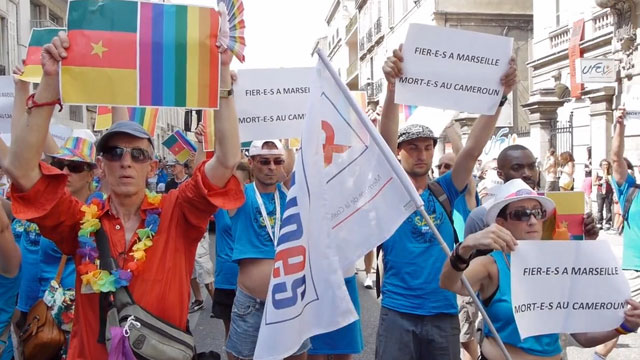
At first glance, it’s perplexing to learn that 141 organizations that oppose anti-LGBT laws have signed a petition calling on France not to seek passage of a U.N. Human Rights Council resolution against anti-LGBT laws.
But the petitioners clarify: “Our concern is not with the objective. It is with the strategy.”
Specifically, a strategy that’s likely to make the situation in their nations worse rather than better.
The signatory organizations, all from among the 66 nations with anti-LGBT laws, state:
“For many organisations working in criminalising contexts, the proposed resolution risks creating consequences that will be borne not by diplomats in Geneva and politicians in France, but by local activists and communities.
“State and non-State actors that already portray LGBTI people’s rights as a foreign agenda may use a high-profile international resolution such as the one proposed to intensify surveillance, further restrict civil society space, double down with punitive measures, legitimise acts of violence, strengthen the ‘foreign agenda’ argument, and, in certain scenarios, even re-criminalise homosexuality or strengthen laws and punishments.
“These concerns are based on our assessment of current political context, deep connection with on-the-ground realities, and the fact that many LGBTI human rights defenders face reprisals as a consequence of international advocacy.”
Working for change isn’t a matter of international diplomatic pressure, they say:
“In our contexts, change is often achieved through careful, long-term work: strategic litigation, engagement with parliamentarians, coalition-building with broader civil society, public education, dialogue with faith leaders and community actors, and persistent and sustained local advocacy. These efforts depend on trust, legitimacy, and local ownership. International initiatives that are perceived as externally driven can unintentionally make that work more difficult and, at times, jeopardise it.”
Local activists have been left out of plans for a U.N. Human Rights Council resolution, they say:
“We are also concerned that many organisations from criminalising countries have not been meaningfully consulted in the development of this initiative. Meaningful consultation requires not simply informing communities of decisions already made, but allowing affected communities to shape initiatives and guide whether and how such initiatives proceed. The principle of “nothing about us without us” should be central to any international initiative concerning decriminalisation.”
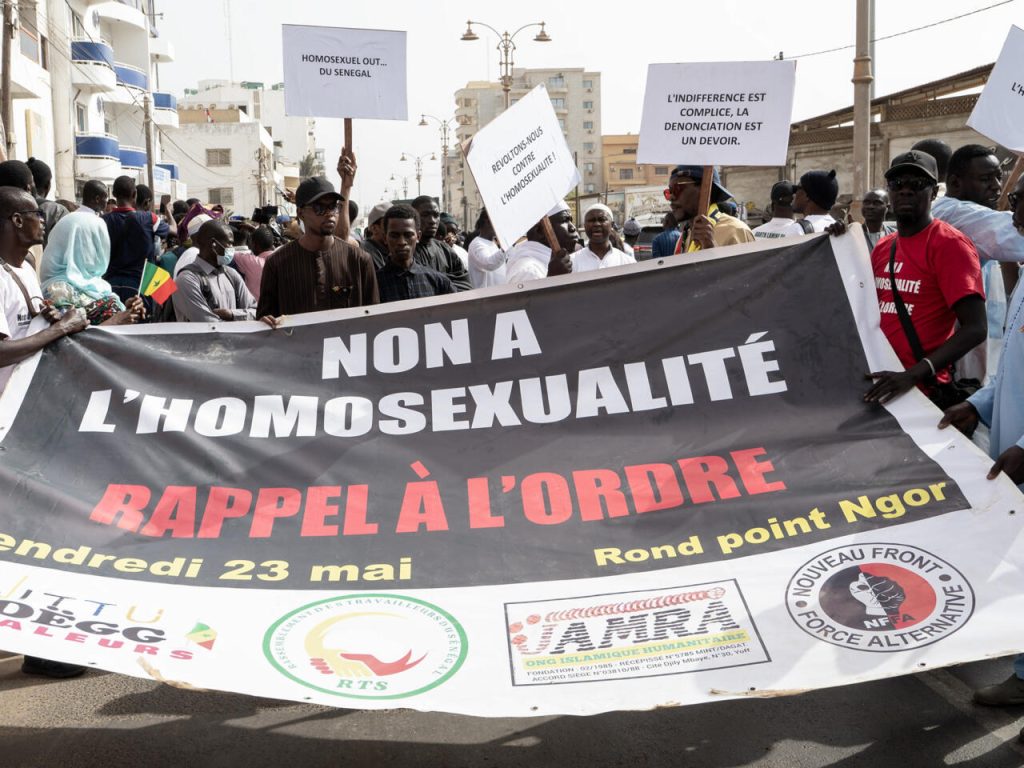
What France created in its colonies
The U.S.-based LGBTQ advocacy group Outright International went further, stating in an article that France needs to boost its support for LGBTQ communities in the Global South and acknowledge its past role in spreading anti-homosexuality laws to its colonies.
Colonial Homophobia: France’s Unexplored Legacy
In 1791, France became the first Western European country to decriminalize “sodomy.” Nevertheless, French authorities continued to police sexual diversity as a means to control colonial subjects. This legacy is alive in six former French colonies, mandates, or protectorates today—Algeria, Cameroon, Lebanon, Morocco, Senegal, and Tunisia—where existing laws that criminalize same-sex sexual acts can be traced, in one way or another, to French rule.
Homophobia is a colonial legacy. Four out of five countries that criminalize same-sex sexual acts inherited such prohibition from colonial times. This is the key finding of Outright International’s new map: among the countries in which same-sex intimacy is a crime today, 52 out of the 65 countries, or 80 percent, inherited these homophobic laws from colonial rule. These laws were imposed as a form of social control, and they persist in enabling discrimination and violence against lesbian, gay, bisexual, trans, intersex, and queer (LGBTIQ) people every day. While the majority of countries in this category inherited criminalizing laws from the British Empire, the underexplored role of French colonial authorities in criminalizing same-sex intimacy merits attention.
To right these historical wrongs, France must do more to advance the rights, safety, and inclusion of LGBTIQ people worldwide. At the same time, it must recognize its role in exporting legal homophobia and ensure that French “rainbow diplomacy” does not put sexual and gender minorities in danger. …
LGBTIQ groups in Francophone Africa are among the most underfunded in the world, receiving less than one percent of all LGBTIQ funding from 2013 to 2020 in an area inhabited by about five percent of the world’s population. As with other civil society groups that advance human rights and inclusion, some Francophone queer organizations were hit hard when the U.S. government terminated most foreign assistance in early 2025.

Canada is by far outperforming France in government funding for LGBTIQ movements, representing 0.24 percent of its official development assistance in 2023-2024, compared to just 0.025 percent for France. Due to this gap, Francophone LGBTIQ activists often approach Canada, not France, for support.
Beyond underfunding queer movements in its former colonies, France is further hindering the advancement of LGBTIQ equality by slashing development aid across the board. Development aid, even when it does not reach queer communities directly, strengthens the enabling conditions for the fulfillment of LGBTIQ people’s human rights: it contributes to good governance, democratization, protection of civil liberties, and improved attitudes toward gender equality. …
Pre-colonial sexual diversity
In the nineteenth and early twentieth centuries, French colonizers regarded the indigenous populations they violently conquered from a position of moral superiority, judging them as sexually decadent and perverse. From the novels of French author André Gide to military journals, there is a rich body of work that conjures an image of Africa and other colonized lands as a sexual free-for-all that permitted what social conventions back home could not.
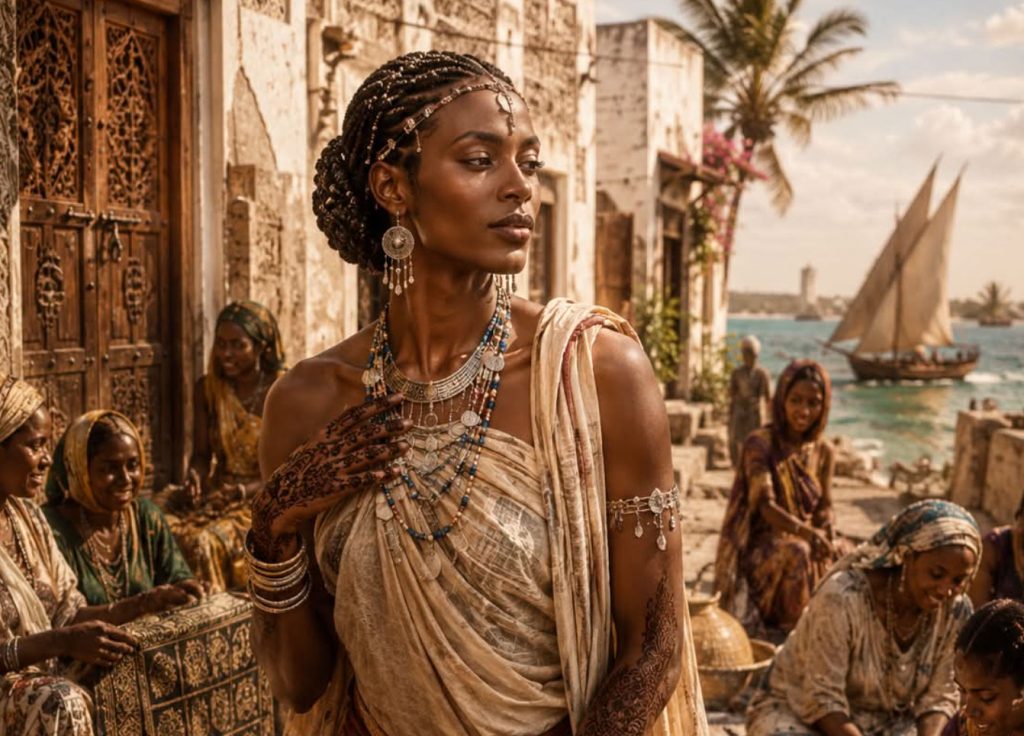
There is robust evidence of sexual and gender diversity on the African continent before the arrival of Christian missionaries and European colonizers. Some pre-colonial African societies embraced some forms of gender diversity, as demonstrated by the social status of the góor-jigéen (“man-woman” in the Wolof) in Senegal, the mudoko dako in Uganda, the mashoga in East Africa, and the bambomukunda of the Shona group in Zimbabwe, to name a few. Same-sex intimacy is widely documented in written accounts of French colonial rule. For example, French military doctor Georges Saint-Paul lamented that heterosexual men “become homosexuals” under the influence of colonized populations, “and sometimes remain so,” although it is certainly equally true that sexual diversity existed in France. …
However, today, some African leaders are flipping the narrative. The claim that queerness is “un-African” is gaining ground and being used as justification for laws that criminalize same-sex conduct and attempt to silence advocacy for equal rights. In the past two years, the military juntas in three former French colonies, Mali (2024), Burkina Faso (2025), and Niger (2026), criminalized same-sex intimacy for the first time. The Malian junta leader Assimi Goïta justified this move—framed as part of a broader pivot away from French and Western influence—by saying, “We will not accept our customs and values being violated by people from elsewhere.”
Activists are pushing back against these narratives. A critical part of this work is understanding the extent to which French colonialism robbed colonized peoples of the ability to shape their legal systems according to values that pre-dated colonization. Beyond its legal imprint, European colonialism shaped social structures, including by imposing binary gender norms and elevating the nuclear family as a model characterizing “civilized” as opposed to “savage” societies, while simultaneously “actively destroying the kinship systems of colonised peoples.”
For more information, read the full Outreach International article “Colonial Homophobia: France’s Unexplored Legacy”.


Really good explanation!