

Senegal: The tale of a gay capital turned homophobic state


Senegal once embraced men who defied gender norms
Senegal hasn’t always been as dangerous for LGBT people as it is now. For evidence of that, read the following edited excerpts from an article and transcript from Africa News and EuroNews titled “The tale of gay capital turned homophobic state” .
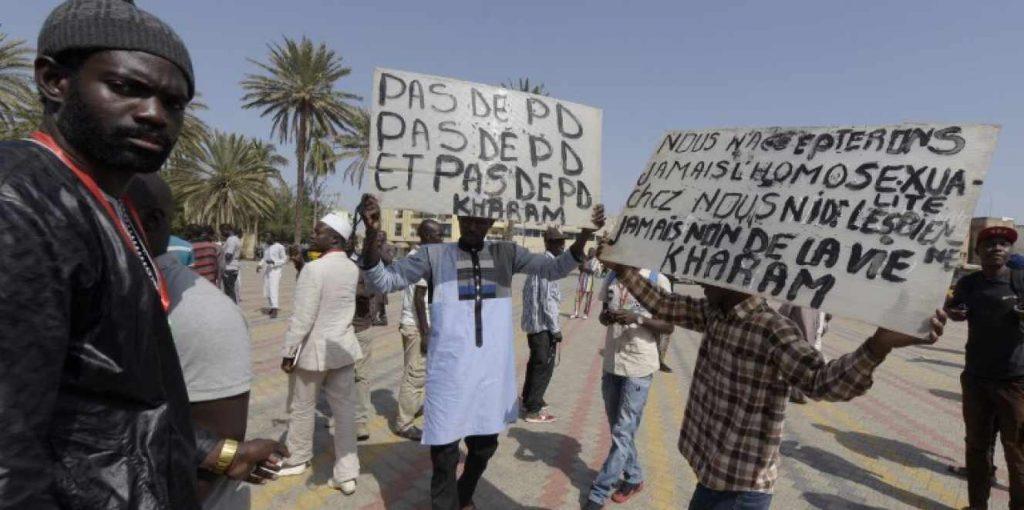
Junior is a young Senegalese man who lives with a secret. The truth is, Junior is gay. Just like every other gay person in Dakar, he is afraid of not only rejection, but of persecution, even imprisonment.
That situation is a far cry from a few decades ago, when some Senegalese men openly identified themselves as neither male nor female, but as an alternative gender – the “Góor-jigéen” or “men-women”.
“Góor-jigéens” or “gordjiguenes” is a pejorative term that means “man-woman” in the Wolof language. In the past, “góor-jigéens” used to move about freely in the streets of Dakar and other towns, dressed as women.
Now, Dakar is one of West Africa’s centers of gay oppression, where homosexuality is seen as un-African. This is the story of the colonial roots of homophobia in Senegal, told in the following episode from the EuroNews podcast series Cry Like a Boy, which chronicles men challenging universal stereotypes and fighting for gender equality. Transcript:
The Góor-jigéen in Senegal
Danielle Olavario: Senegalese wrestling has become popular since 1914. Sociologist Djibril Seck argues that it was a tool for recovering native African masculinity, wounded by colonisation. During colonial times, popular European representations of African men were feminised and infantilised.
But in the arena, the African warrior was back. Strong, muscular, narcissistic, and stoic in the face of pain. And of course, free of any feminine attributes.
That’s how Senegalese men are portrayed in the 1963 movie by Paulin Soumanou Vieyra ‘Lamb, la lutte senegalaise’ [“Lamb, the Senegalese Fight].
Welcome to Cry Like a Boy. I am Danielle Olavario, and this is the second part of our documentary on the góor-jigéen in Senegal.
In our previous episode, we met Junior, a 24-year-old Senegalese who lives with a secret. A taboo in Senegalese society.
As a young gay man, he lives in fear of being called Góor-jigéen, a “man-woman,” as they are pejoratively called in the local Wolof language. But it wasn’t always that way.
Junior: Góor-jigéen before meant something different, because they were men who dressed like women and talked like women.
Danielle Olavario: So how was the situation before? What changed?
Michael Davidson: In 1949, Dakar was already the “gay” city of West Africa. When I returned nine years later, the French rulers had gone, and Dakar was gayer than ever… For some reason, buried in history and ethnography, the Senegalese […] have a reputation in all those regions for homosexuality, and in Dakar, one can quickly see that they merit this reputation.
Danielle Olavario: This is an excerpt from the travel essay by English journalist Michael Davidson. He published it in 1970, but it reflects his experiences in his visit to the West African country between 1949 and 1958.
Senegal became fully independent on August 20th, 1960, after centuries under the French colonial rule. So when Davidson was traveling, the country was still a colony.
He wasn’t the only one to observe that the streets of Senegal were particularly welcoming to gender diversity.
Senegalese professor of Pan African Studies Babacar Mbaye from Kent University explains:
Babacar Mbaye: When I grew up, I mean, in the 70s, I was just a kid, couldn’t do anything. But in the 80s, suddenly, as I was, you know, a teenager, you know, I could see individuals, you see, you know, similar to those that are being described today as a góor-jigéen, you see. You know, I could remember, and I didn’t remember any violence perpetrated against those individuals.
Danielle Olavario: Let’s now go deeper. Let’s look a little further back through the words of another English anthropologist Geoffrey Gorer who wrote this in 1935.
Geoffrey Gorer: They are called in Wolof men-women, Góor-jigéen, and do their best to deserve the epithet by their mannerisms, their dress, and their make-up; some even dress their hair like women. They do not suffer in any way socially… on the contrary, they are sought after as the best conversationalists and the best dancers.
Danielle Olavario: In his time, the Góor-jigéen, men-women, were integrated in the Senegalese society.
Senegalese culture didn’t just tolerate them but accepted them as an important part of the community. They had a prominent role in life’s ceremonies, such as weddings and baptisms. They also often accompanied high society women and had an influential political position.
That memory is still there somewhere. Not only in studies, diaries, and books. Some Senegalese people like Professor Mbaye still remember it.
Babacar Mbaye: When they were dancing, everybody was just crossing their arms. And that’s in all watching. You see what nobody was turning their eyes away. You see, you know, and when those individuals walked by, you know, as a boy, I dare not, I did not, do anything to insult them. I did not laugh at them because we considered them our fathers, you see. We considered them like our fathers, that we gave them the same sense of respect that we gave to our fathers and our uncles.
Danielle Olavario: Like the Góor-jigéen in Senegal, we can find examples of people who don’t identify with the category of woman or man throughout Europe.
Historical examples of such figures include il femminiello who, just like the Góor-jigéens, played an important role in ceremonies such as weddings in the 19th century in Naples, Italy.
And some still very current, such as the “sworn virgins” from Albania. Born women but who decide to live like men. They are accepted only if they take a vow of chastity for life. Some do so to live more freely or to be able to provide for their families.
So what we’re seeing in Senegal is a transformation of the term “Góor-jigéen” from meaning gender fluid, or a third neutral gender, to meaning a pejorative term, strictly for gay men.
Today this nuance is lost, as French researcher Christophe Broqua from the French National Centre for Scientific Research explains here:
Christophe Broqua: They were considered to be men with feminine attributes. But the expression said nothing about their sexuality.
Danielle Olavario: What’s more, Cheikh Niang, a Senegalese Professor of medical and social anthropology at Cheikh-Anta-Diop university, says that the creation of these kinds of taboos is rooted in colonial influence:

Cheikh Niang: They took it from the colonial laws. And in the colonial laws, you have all these homophobic dispositions. The laws that you find in the texts and in Africa were not invented by Africans. It came as a result of the introduction of these same laws. We just copied and pasted. We extended laws that existed during colonisation.
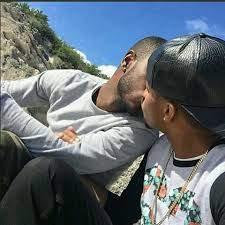
Danielle Olavario: Colonisation has represented a step back in respecting gender diversity and identity. And, in time, it created a void in the historic memory of the Senegalese.
Fast forward almost a century, we are back in 2020. Back in the streets of Dakar at rush hour. People here cannot freely experience their sexuality.
Everyone who is sexually diverse tends to hide it, because they’re afraid of punishment. The slightest hint of a female attribute in a man is seen as outrageous.
Christophe Broqua: There is a well-known Senegalese artist, Waly Seck, who was wearing a handbag in a clip and in photos. That was considered too feminine and he was extremely stigmatised for it. He even had to destroy it publicly at a concert to end the controversy.
Transcript from the episode of the “Friends” television show titled “The One With Joey’s Bag” (1999):
Joey: You think I should give up the bag.
Rachel: Wait Joey I’m sorry. As terrific as I think you are with it… I just don’t know if the world is ready for you and your bag.
Danielle Olavario: In societies around the world, in many languages, there are words to demean those who do not fit into traditional male or female patterns.
Femminuccia. Maschiaccio.
Nenaza. Marimacho.
тюфяк. Бой-баба.
Sissy. Tomboy.
Danielle Olavario: In Senegal, the word is Góor-jigéen. A word Junior has probably heard many times. But deep down, this word cannot hurt him.
Junior: Yes, being gay and masculine is possible.
Danielle Olavario: He knows his sexuality doesn’t affect his masculinity. Neither does the tone of his voice, his way of dressing, or his hairstyle. He says he is a proud man.
Junior: I have always lived my masculinity naturally because I played with my friends. I did everything that everyone else did was no different. Do you sometimes wonder when you tend to listen to the radio or TV, or even hear people talking? You can ask yourself questions, but it’s only for a few minutes. After that, it passes. You move on because it’s your life and you are the only one concerned.

Uganda: Study finds religious attitudes impeding fight against HIV