

Ghana’s president plays a double game on anti-LGBTQ bill


COMMENTARY: In Ghana, he vows to sign cruel anti-LGBTQ bill. In the U.S., he’s evasive.
By Melanie Nathan
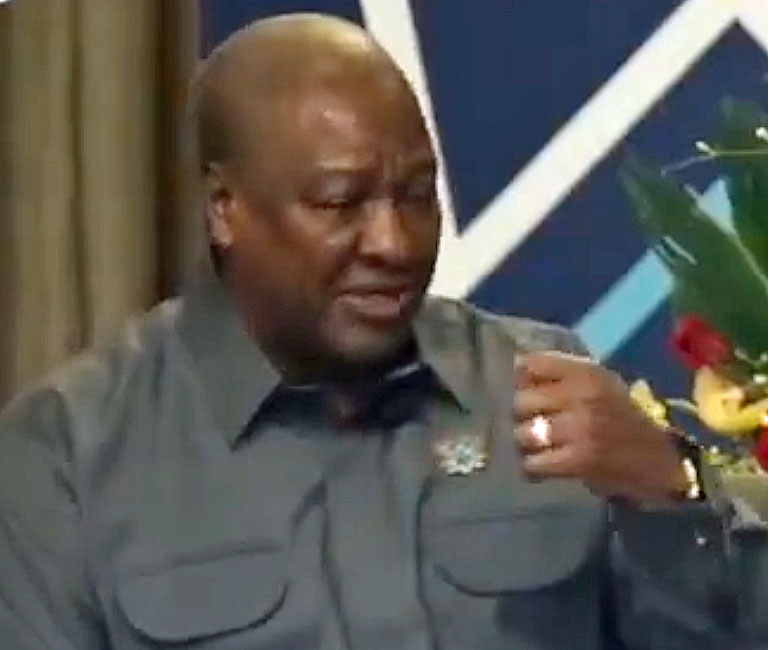
President John Dramani Mahama has presented two faces to the world: One tailored for Ghanaian voters, and another carefully curated for American audiences.
At home, he campaigned on an unequivocal promise, that he would sign into law the so-called “Family Values Bill,” formally titled the Proper Promotion of Human Sexual Rights and Family Values Bill, a piece of legislation that criminalizes the very existence of LGBTQI+ people, allies and shuts down organizations fighting for equal rights.
Abroad, however, standing before American institutions and audiences, his tone shifts. The certainty dissolves into procedural language, deflection, and appeals to democratic process. But for those with lived experience, for those already persecuted or fleeing Ghana, this is much more than mere nuance, it is life altering duplicity.
The record is clear. During the 2024 campaign, Mahama explicitly pledged that if the bill came before him, he would assent to it. Following his election, the bill, having previously passed Parliament but lapsed under President Nana Akufo-Addo amid legal challenges, was reintroduced as a private member’s bill. It returned to a Parliament where support for its passage remains overwhelming, reflecting a political climate in which anti-LGBTQI+ sentiment commands near-universal approval. Ghanaians were told exactly what to expect: that this law would pass, and that their President would sign it.
Yet on American soil, Mahama now distances himself. He emphasizes that the bill is not a government-sponsored initiative, gestures toward civil society input, and invokes the slow churn of democratic deliberation. This framing is deeply misleading. It obscures a political reality he knows well: that the bill enjoys broad parliamentary and public backing, and that its passage is not in doubt. By hiding behind process, he avoids taking responsibility while allowing the machinery of persecution to move forward unchecked.
All the while the very debate and mere introduction has already created havoc and panic for LGBTQI+ Ghanaians, as well as served as a catalyst for an uptick in the harms that the current anti-homosexuality penal code already delivers.
This is not a theoretical concern. The new bill imposes severe criminal penalties simply for being LGBTQI+, and extends liability to allies, advocates, and even those who fail to report suspected individuals. It is rooted in demonstrably false claims, that LGBTQI+ identity is “un-African,” that it is imported, chosen, or corrupting.
Such assertions forgives the neo-colonialism we have seen in the exporting of homophobia to Ghana by American hate groups. They deny both scientific understanding and the lived realities of African LGBTQI+ people across generations. They are no more credible than claiming that humanity itself differs in its biological essence across continents.
The African Human Rights Coalition (AHRC) has submitted a formal memorandum to Ghana’s Parliamentary Committee on Constitutional and Legal Affairs, centering the voices of those most affected: LGBTQI+ Ghanaians who have been forcibly displaced, as well as asylum seekers now scattered across the globe. Their testimony is unequivocal. Ghana’s existing legal framework and social climate already produce violence, exclusion, and fear. This bill will not introduce harm, it will codify and intensify it.

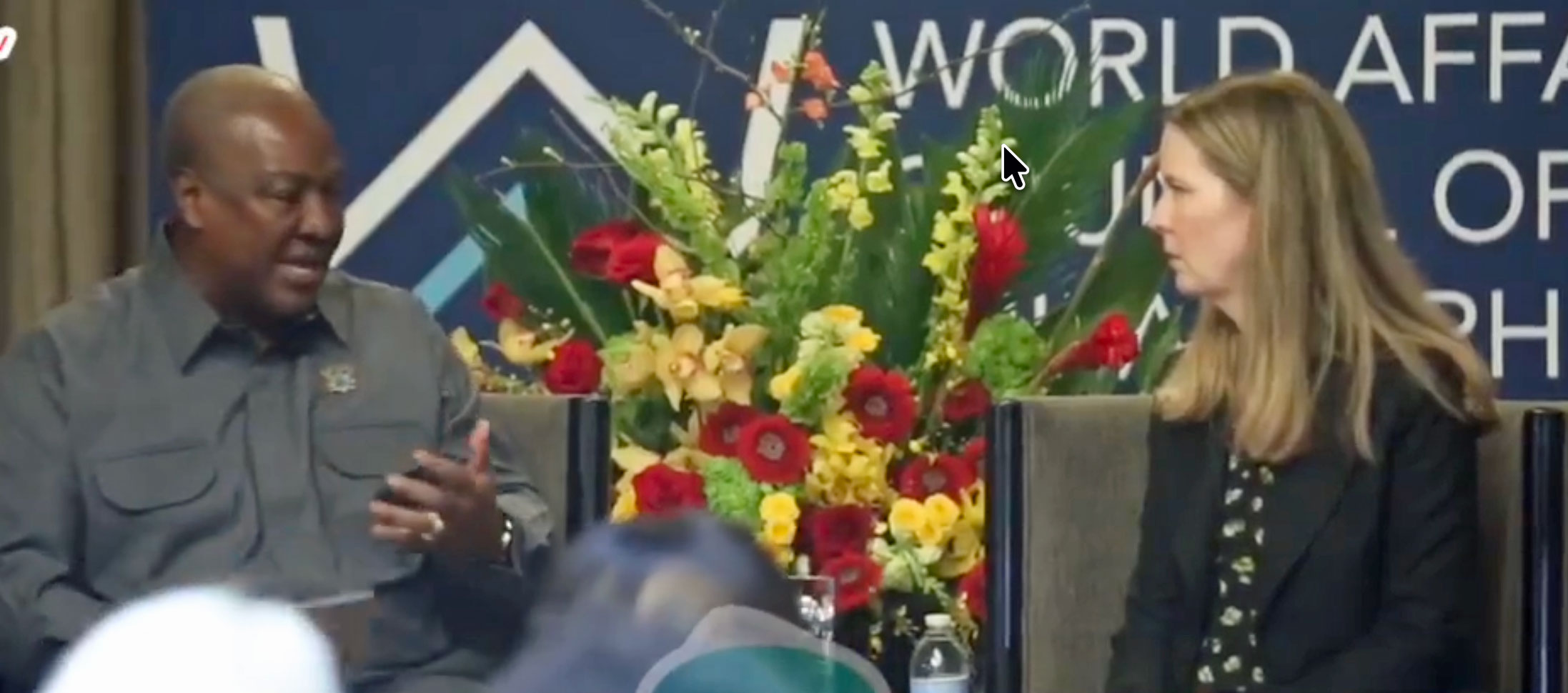
Against this backdrop, the decision by the World Affairs Council of Philadelphia to honor President Mahama is deeply troubling.
[Editor’s note: the council states that its International Statesperson Award honors “distinguished international figures and world leaders whose work has advanced the twin goals of peace and freedom and resulted in a significant positive impact on world affairs.”]
[The council’s action] follows the withdrawal of an honorary doctorate and cancellation of his visit by Lincoln University—a decision that acknowledged the gravity of the moment. Yet at Temple University Center for Anti-Racism, Mahama was hosted without meaningful inclusion of LGBTQI+ voices, effectively sidelining those most directly impacted by the policies he supports. It sends a dangerous message: that political theater can eclipse lived suffering, and that awards can be bestowed even as persecution is poised to deepen.The lesson here is simple, and urgent: when evaluating political narratives, look not to the polished words delivered on international stages, but to the people living, and fleeing, the consequences. They are the truth that cannot be spun.
Melanie Nathan, the author of this commentary, is the executive director of the African Human Rights Coalition. She is an internationally recognized expert on country conditions for LGBTQI+ people from African countries, serving as an expert witness in U.S. Immigration Courts and other international tribunals.
