

A year later: End of US PEPFAR leaves Cameroon HIV programs in critical condition


Patients feel abandoned as NGOs deal with loss of PEPFAR funds
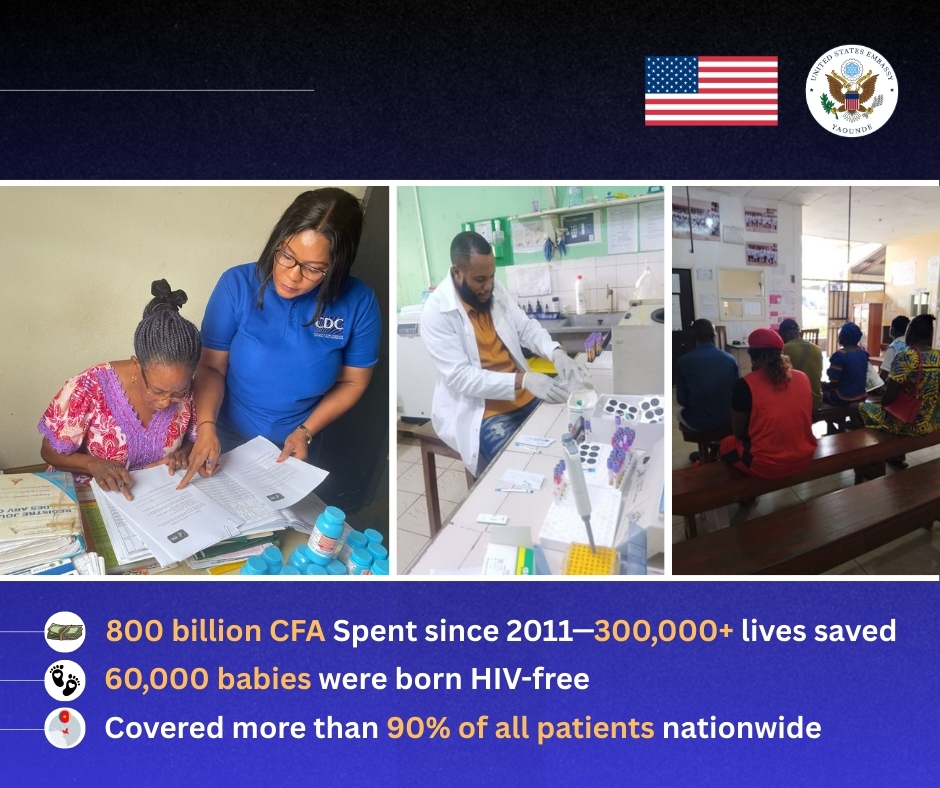
Last year, reporting on what the U.S. anti-AIDS program PEPFAR had accomplished in Cameroon before it was defunded by the Trump administration, the U.S. Embassy in Yaounde, Cameroon, stated on X (Twitter):
Since 2011, the U.S. Government has provided over 800 billion CFA [US $1.4 billion] in assistance to Cameroon, including 400+ billion CFA [US $720 million] through PEPFAR to fight HIV/AIDS. with the Ministry of Public Health. This partnership has saved 300,000+ lives, ensured nearly 60,000 babies were born HIV-free, and provided life-saving treatment to over 410,000 people—covering more than 90% of all patients nationwide.
COMMENTARY
By Steeves Winner
In February 2025, the Trump administration suspended U.S. funding for PEPFAR (the President’s Emergency Plan for AIDS Relief). For Cameroon, this decision had an immediate impact on programs to combat HIV/AIDS, tuberculosis, and malaria.
Cameroon, where nearly 500,000 people are living with HIV, relied heavily on this funding to ensure continuity of care. More than 2,300 healthcare workers were directly supported by PEPFAR, and its withdrawal created a significant gap in hospital and community healthcare facilities.
Impacts Observed One Year Later
1. Reduced Access to Care
In the Far North and Northwest regions, patients have seen their appointments spaced further apart due to staff shortages. Antiretroviral drug shortages have been reported in several health districts, leading to treatment interruptions.
Local associations estimate that nearly 15% of patients receiving regular follow-up care have dropped out of treatment during the year.
2. Increased burden on local structures
Public hospitals have had to reassign their staff, resulting in increased workloads and a decline in the quality of services.
Local NGOs, often funded by PEPFAR, have reduced their outreach and testing activities.
3. Community uncertainty
Beneficiaries fear a prolonged interruption of treatment, which could lead to a resurgence of infections and preventable deaths.
Young people and women, who are particularly vulnerable, are left without sufficient psychosocial support.
Community voices
“We have seen young people interrupt their treatment due to a lack of regular follow-up. The suspension of PEPFAR is not just a political issue; it is a matter of life or death for our communities,” says D. François, a community activist in Yaoundé.
“Local NGOs are doing what they can, but without resources, we are limited. Patients tell us they feel abandoned. We need international support that goes beyond political calculations,” says Maxome Nemi, a community leader.
Regional comparisons
Kenya: Despite a heavy reliance on PEPFAR, the country has diversified its funding by mobilizing the Global Fund and domestic resources. HIV services have been less disrupted.
Nigeria: The partial suspension of PEPFAR led to a 20% decrease in testing activities by 2025, but partnerships with the private sector helped mitigate the damage.

Cameroon: Unlike these countries, the near-exclusive reliance on PEPFAR has revealed structural fragility. Government mitigation measures remain insufficient to compensate for the loss.
Key data
- 500,000 people are living with HIV in Cameroon.
- 2,300 PEPFAR-funded healthcare workers have been suspended.
- 15% of patients are expected to have interrupted their treatment by 2025.
- Community screening activities have declined by 20%.
Critical Analysis
The withdrawal of PEPFAR funding has revealed the fragility of the country’s dependence on international funding. Although the government has attempted to fill the gaps through reallocations and internal mobilization, the reality is that communities remain the primary victims.
This crisis underscores the urgent need to:
- Diversify funding sources for public health.
- Strengthen local capacities to reduce dependence on international donors.
- Involve community stakeholders more in the design and implementation of health policies.
One year after the suspension of PEPFAR, Cameroon is experiencing a painful period of transition. The testimonies of D. François and Maxome Nemi remind us that behind the figures and strategies, there are human lives. The resilience of communities is admirable, but it cannot replace stable and sustainable funding.
The question remains open: how long can Cameroon hold out without a return to or a credible alternative to PEPFAR?
Steeves Winner, the author of this article, is a Cameroonian journalist who writes under a pseudonym. Contact him at steeves.w@yahoo.com.

