

Anti-trans officials and violence reverse progress for transgender Pakistanis


A wave of violence has left transgender people afraid to go out
Transgender Pakistanis are under attack, reversing progress that they had made in acceptance by the wider Pakistani society.
A 2018 law protected trans people against many forms of discrimination and allowed them to define their own gender identity.
However, because Pakistani law is subject to rulings by a combination of civil and Muslim courts, trans rights were undercut in 2023 when a federal Muslim shariat court ruled that the law’s definitions of trans people and gender identity were incompatible with Islam.
Now the trans community faces a wave of anti-trans propaganda and violence.
‘She narrowly escaped three bullets’: Pakistan’s trans community shaken by attacks and killings
A wave of violence has left transgender people afraid to go out, as experts say the global rise of far-right ideology is fuelling transphobia
By Zofeen T Ebrahim
Zofeen T Ebrahim is a Karachi-based journalist
It was past midnight but Zehrish Khanzadi and Bindiya Rana were still up, drinking tea, when the doorbell rang. Within seconds of Rana unlocking the door remotely from the kitchen, three shots rang out. “The men fled and she narrowly escaped all three bullets,” Khanzadi says of her colleague and housemate.
Both trans women work for the Gender Alliance Interactive (GIA), an organisation that advocates for transgender rights, Rapa as its head and Khanzadi as a rights activist.
By morning, they had filed a formal police complaint against the unknown assailants. As an activist Khanzadi is acutely aware of the risks that trans communities in Pakistan face but she never expected to become a victim herself in the safety of her own home in Karachi. “Those who protect others are now under attack,” she says.
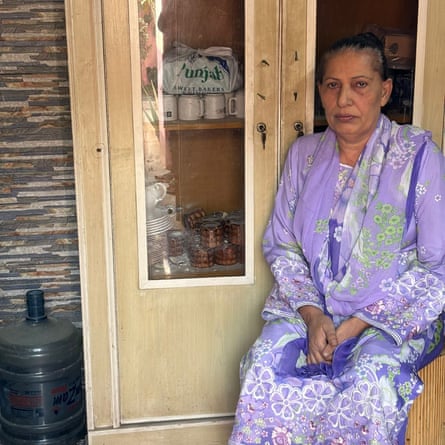
The shooting, which took place in the early hours of 19 January, is the latest in a series of brutal assaults and killings of transgender people.
In September, Nadira, a trans woman who had gone to beg at Karachi’s popular Sea View beach was attacked with a knife for rejecting a man’s advances.
“I told him I’m a beggar, not a sex worker, but he wouldn’t listen,” says Nadira, who is HIV-positive. She managed to save her bag containing 2,500 rupees (£6.60), but the attacker stabbed her in the abdomen. The eight-inch knife wound required 35 stitches and several blood transfusions.
Two days after her ordeal three trans women were shot at close range on Karachi’s outskirts, near a cluster of packed restaurants.
“They’d gone there to beg,” says Khanzadi. The alleged killers have since been arrested and admitted shooting the women after they resisted handing over money; the murders are still being investigated.
Violence against the transgender community in Pakistan has surged. GIA has documented 55 killings in Sindh province between 2022 and September 2025, including 17 in Karachi.
In Khyber Pakhtunkhwa (KP) province, elders in several districts have been ordering trans women to leave, accusing them of “corrupting the youth”. In September, about 200 people – including four transgender people – were arrested at a dance in Swabi.
“The transgender community had organised a dance event, and no one asked us to cancel it while it was being advertised,” says Farzana Riaz of the Transgender Community Alliance in Peshawar, the capital of KP. “It felt like people were just looking for an excuse to force them to leave.”
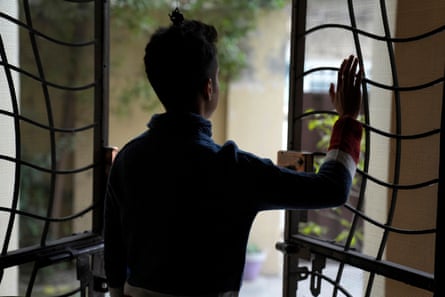
Many trans women are now too afraid to step beyond their doorsteps. “Begging or sex work is often their only income, and even that has been taken away,” says Khanzadi.
But the community is pushing back. Twenty-six petitioners have filed a case in Peshawar high court against the provincial police chief for harassment and humiliation. “No one can expel us from our homes or country,” says Riaz.

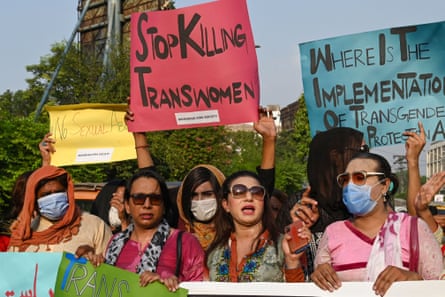
For now, the court has placed restraining orders on local authorities preventing anyone expelling transgender individuals.
Dr Mehrub Awan, a trans woman and central secretary for transgender affairs at the Awami National party in KP, believes community elders want seasonal trans individuals – who come for dances and sex work and sometimes clash with local communities – to leave the districts.
“In all frankness, [I think] this is a social reaction to sexualisation and vulgarity; there is a natural limit to how much any given society can take, and this is where the Pashtun society draws the line.”
Yet, Awan warns these local crackdowns are also fuelled by a wider trend, linking the rise in violence to a “global gender hegemonic wave”.
“Conservatism is on the rise and the right wing’s gender propaganda has been co-opted in many local languages, giving birth to anti-trans vigilantism,” Awan says.
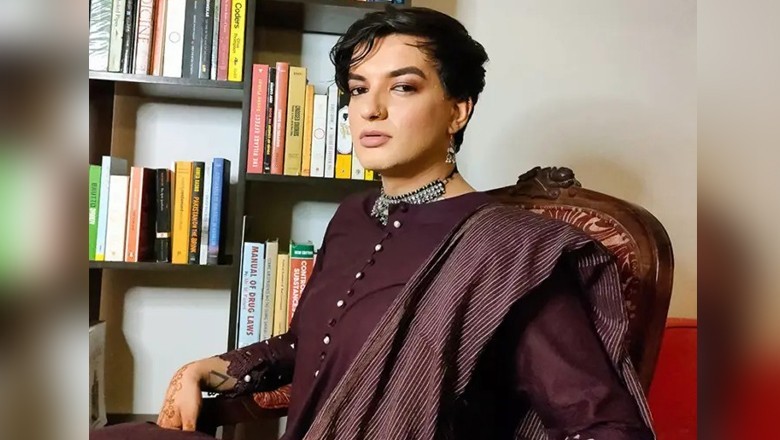
Echoing this, Shahzadi Rai, a city councillor in Karachi from the ruling Pakistan People’s party, says she faces constant threats online and offline, and blames US President Donald Trump’s “homophobic” policies for emboldening right-wing ideologies worldwide.
While there is no data linking the US “two sexes only” policy to rising transphobia in Pakistan, Rai believes it has emboldened local figures such as fashion designer Maria B, social media personality Qaiser Ahmed Raja and podcast host Raja Zia ul Haq (“Maulvi with an Attitude”) to openly spread vitriol online. “Pakistani society often mirrors the American discourse. It’s not that we weren’t hated before, but ever since Trump came to power, these elements have found validation.”
Muneeb Qadir, a law lecturer at Lahore’s Millennium Universal College, adds Senator Mushtaq Ahmad and the columnist and TV anchor Orya Maqbool Jan to the list of prominent transphobes. “These elite figures have copied the western right-wing playbook, removed Islamophobia and added an Islamic twist, spreading the same anti-trans, anti-liberal, anti-woke and anti-secular agenda as Trumpists,” says Qadir.
Ongoing anti-trans discourse has reignited debate in KP’s law department over the definition of “transgender person”. In a letter to the Peshawar high court, it argues that the US policy prioritising biological sex over gender identity shows that a self-declared third gender remains globally contested and politically sensitive.
This is despite the 2018 Transgender Persons (Protection of Rights) Act, which guarantees self-identity, inheritance, and protection from discrimination in health, education and employment.
In 2023, the federal shariat court ruled that some sections of the 2018 act, which was seen as a victory for Pakistan’s 50,000 transgender citizens when it came into force, are incompatible with Islam, specifically the definitions of gender identity, transgender person and provision of inheritance rights to all the genders.
Meanwhile, a new bill called the Intersex or Khunsa (Protection of Rights) Act, suggests scrapping the idea of self-identified gender and instead setting up a medical board to officially register a transgender person as male or female. However, the bill has yet to be passed and its future remains unclear, as it lacks backing from most political parties.

