

Musician Jann Halexander reflects on being queer in Gabon


Returning after 23 years, Jann Halexander considers what’s possible in Gabon
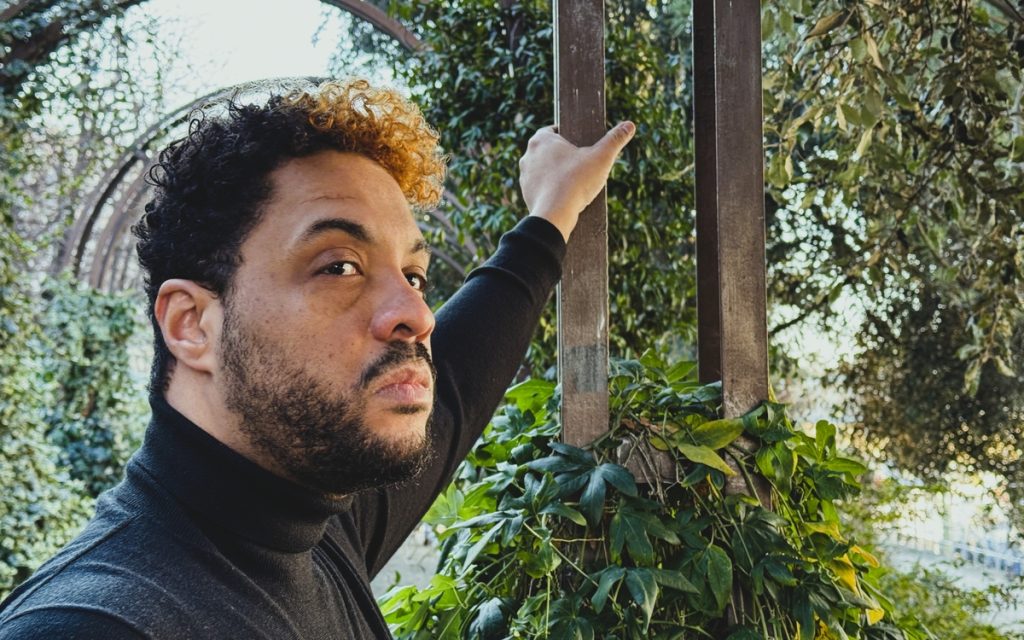
Gabonese-French singer, actor and director Jann Halexander wrote the following essay on his return to Gabon after a 23-year absence from his homeland. While he was away, Gabon passed a law against homosexual activity in 2019, then repealed it in 2020.
Being Homosexual in Gabon
Émèno ka yënô: That’s life (being homosexual in Gabon)
“Decriminalization doesn’t mean that homosexuality is permitted in Gabon. We all understand that decriminalization is a legal matter, but the act itself is something that offends public conscience. Decriminalizing doesn’t mean legalizing. That’s why today anyone who displays their homosexual orientation too openly in public can be prosecuted for indecency; it has to remain hidden.
“So if tomorrow there’s a reversal and homosexual relations are prohibited, people will still see each other. Because here, fundamentally, people don’t see each other openly; it’s always discreet. It won’t change the way Gabonese people live together. There isn’t an institution or place in Gabon where people know that homosexuals are found, etc., no. There are indeed mixed spaces with a large LGBT population, but nothing official. People meet in secret here, with or without laws. Even heterosexuals avoid flirting in public; it’s seen as exhibitionism.”
This is how Fabrice [a pseudonym], a 55-year-old teacher at a private high school in Libreville, paints a picture of the situation for the LGBT community in Gabon in 2025. It’s November 24th, late afternoon, he’s finished work, and we’re having drinks in a bistro, Carrefour Avorbam, Akanda, north of the capital.
Twenty-three years without returning to his homeland is a long time. But during this time, I never idealized Gabon; I always kept a close eye on the country’s news and continued to spend time with fellow Gabonese in the diaspora. So now I know one thing more clearly than ever: Gabonese reality is Gabonese reality. It’s not South Africa, it’s not Cape Verde, it’s not Botswana, and certainly not Denmark or Spain.
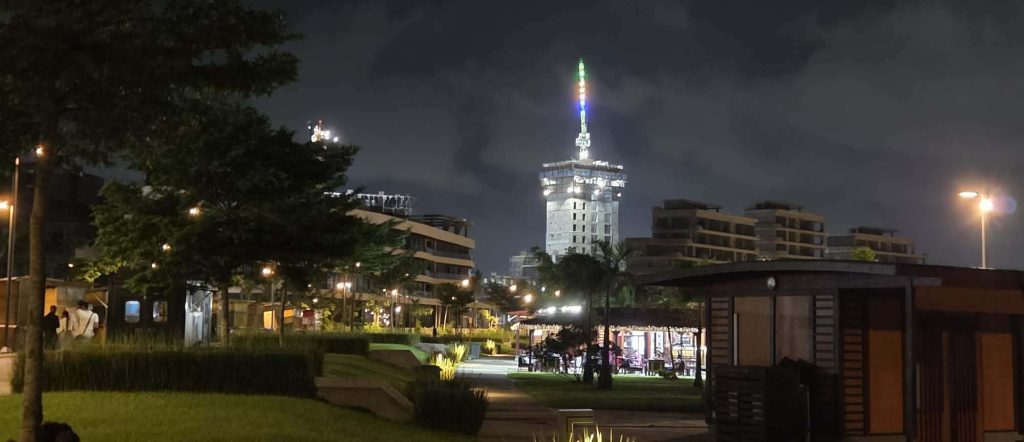
I’m even surprised at how quickly I can switch from the almost daily reality of France to Gabonese reality, with all its complexities, paradoxes, and even mysteries, in less than 48 hours. A close friend told me, “The Gabonese man in you was dormant; one trip was enough to reactivate him.”
While I’ve never hidden who I am, while I’ve always been true to myself, while I’ve often stood by my stances (and too bad for the enemies), I don’t walk around wearing a rainbow badge in the street. I don’t even think about it. So I have no reason to act any differently in Gabon. Moreover, the famous LGBT flag represents nothing for sexual minorities. But how could it be otherwise? This flag (which I find beautiful, I should add) has a Western origin; it was created in 1978 in San Francisco and is said to have been inspired by Judy Garland’s song “Over the Rainbow” from the film The Wizard of Oz. Here, LGBT people have concerns similar to most Gabonese: earning a living to eat, clothe themselves, and have a roof over their heads in a country where social inequalities are profound (they were exacerbated under Ali Bongo’s rule), where there is no social safety net, no minimum income paid by the state, and where family solidarity can perhaps compensate for the lack of state support in the daily lives of Gabonese people. You have to be there, feel the country, to understand how utterly foolish it would be to talk about same-sex marriage, assisted reproductive technology, surrogacy, non-binary identities—concepts that aren’t even understood by most people in my community. They just want to live, that’s all. And living in a country like Gabon, which has had such a turbulent recent history, is already a huge undertaking in itself.
Fabrice is lucky; he has a job, a roof over his head, and two children, a boy and a girl. His wife suspects he’s bisexual, but the subject is never explicitly discussed. He’s had the opportunity to go to Germany once for work, but he’s never been to France. During summer vacation, he goes to Lambaréné and has a friend there, who is married. Neither he nor his friend can stand effeminate men or transgender people. I would encounter this hostility throughout my stay in the community. Bisexual, gay, yes; effeminate, trans, no. With his children, who are in middle school, Fabrice never talks about sexuality, differences, etc. A practicing Catholic, he never misses Sunday Mass, preferring the Cathedral of Our Lady of the Assumption of Saint Mary. Is he happy? The answer is yes. Life is a process of improvisation, where, as best we can, we adapt to our environment. And where, if we can, we build our networks, our friendships, our acquaintances, where we set our boundaries. Fabrice is no exception. I even wonder if he doesn’t represent the norm in the LGBT community. Does that mean it will always be this way? I don’t know.
In 2019, homophobic individuals within the then-ruling government met to condemn homosexuality. Until then, there was nothing, a legal vacuum, a kind of status quo that seemed to suit Gabonese society. In November 2019, a new Penal Code was adopted, considering sexual relations between people of the same sex as an offense, punishable by up to six months in prison and a fine of up to 5 million CFA francs. The law, clearly discriminatory, was never enforced.
In June 2020, at the height of the COVID-19 pandemic, in response to the work of certain human rights NGOs (including the proactive and courageous Gabonese association Pro Humanitus), and with the support of some allies, Gabonese legislators voted to decriminalize homosexuality, with 48 votes in favor, 24 against, and 25 abstentions. This law was signed by President Ali Bongo on July 7, 2020. Naturally, there were heated debates in the media, and a few demonstrations barely reached a hundred participants. The law itself was undoubtedly a positive sign, but the fact that it was signed by a dictator left a bitter taste.
However, following the 2023 coup, some voices (particularly from Evangelical circles) called for a reversal of this decriminalization. In November 2024, a new constitution was ratified, defining marriage as the union between a man and a woman, but without explicitly criminalizing homosexuality.
Currently, homosexuality is not explicitly prohibited by law in Gabon: the situation remains fragile, unacceptable to some, and still subject to debate. Constitutional homophobia remains a Damocles’ sword hanging over Gabon’s LGBT communities. But as Fabrice says, would criminalization really change anything?
There is no specific protection in place against hate crimes motivated by sexual orientation or gender identity. Victims very rarely file complaints for fear of being stigmatized or punished themselves. Social discrimination remains widespread, as do harassment and blackmail. Yet, so far, Gabon remains relatively calm compared to Cameroon (where physical assaults and lynchings are much more documented) or Nigeria and Ghana. Many LGBT people in Gabon manage to live discreetly without major incidents, but fear remains very present and social tolerance is low in any case. Surprisingly, Gabon is even a relatively calm country compared to France today. France has some of the most protective legislation in Europe on this subject (homophobia has been a recognized aggravating circumstance since 2004), but the facts persist, with a continuous increase in reports in recent years: serious physical assaults, death threats, and murders. Protective legislation alone is therefore not enough to make LGBT people feel safe and not constantly on edge.
“Émèno ka yënô,” Fabrice tells me in conclusion. That’s life, in Myènè, one of the forty languages of Gabon.
That’s life, no doubt. Yes, one must be philosophical. I adapt, I respect local realities. But my vigilance remains. I recount my experience of my rediscovered homeland through long voice messages on the WhatsApp of the president of the Bi’cause Association (the France-based bisexual association), who contributed greatly to this trip. I am grateful for this support.
Coming back here is doing my part; it’s also the meaning of my commitment: being on the ground, meeting my fellow LGBT citizens. I don’t want to play the role of the committed African who stays in Europe out of comfort (and fear?). After all, Gabon is also my country; I grew up there. This country shaped me and greatly contributed to the man I am: a singer, songwriter, writer, a committed man without remorse.
So I don’t ask permission to express my point of view on this society to which I also belong. My father’s country, my father who always told me, “When you do something, you do it all the way.” My father, who never criticized my bisexuality but always told me to be mindful of my dignity—dignity, yes, that’s what’s most important.
LGBT people in Gabon are human beings like everyone else; dignity cannot be denied them. Finally, it’s worth remembering that while the inherently homophobic person is loud, barking, and barking, again and again (as if they had something to hide?), there are normal heterosexual Gabonese who have better things to do than monitor the bedrooms of their fellow citizens. That’s actually a good sign.

The [translated] lyrics below, written in 2022, are my conclusion and a plea for respect for differences, whatever they may be. This is my fight, until the end of my days.
Je reviens de Différence
Click here to watch the video.
I’ve just returned from Difference
My country is called Difference
Where parents don’t have children to be like them
but love them for who they are, with an infinite love,
free from prejudice and stupidity
Where respect isn’t a given
Where the rich respect the poor
Where poetry isn’t a luxury
Where animals and the caresses of the wind are respected…the whispers of the sand…
I’ve just returned from a country, Difference,
And I have so many passports to give you
There are no unicorns but free marriages
families from all walks of life, in gender, in color…
Where bitterness has no place
Where gray souls don’t exist
Where the word jealousy is unknown
without poor people in the corners of our streets, just the love of the wind…the song of the rain…
Chorus
Love thy neighbor as thyself Children
Love your children like nature
Love nature like your parents
Who loved you without denying you…
Don’t regret having loved
Having loved according to your heart
Of never having given in
to all those prophets of doom…
Love your neighbors like your children (My country…)
Love your children like nature (Difference…)
Love nature like your parents (passports…)
Who loved you without denying you… (freedoms…)
Don’t regret having loved (my country…)
Of having loved according to your heart (a unicorn…)
Of never having given in (equality)
to all those prophets
About Jann Halexander
Jann Halexander, born September 13, 1982 in Libreville, Gabon, is a prominent figure in the Francophonie. He celebrated twenty years in the music industry on March 30, 2023, at the Lincoln on the Champs-Élysées. His best-known songs include “C’était à Port-Gentil,” “Rester par Habit,” and “À Table.”
A former geography student specializing in urban planning, he authored a thesis entitled “Effects of Apartheid on the Planning of a Medium-Sized South African City during the Period 1948-1991,” presented in 2004 to the Geography Department at the University of Angers. He is also the author of the 2023 book The Question of UFOs in Central Africa (Gabon, Republic of Congo, Democratic Republic of Congo). He was one of the first public figures of African descent in the early 2000s to openly acknowledge his bisexuality. His memoir, Coeur Canari, cahier d’un retour au Gabon natal (Canary Heart, Notebook of a Return to Native Gabon), will be released on February 5th.

