

Spotlight on Libya, where the LGBTQ community hides in the shadows


Survey of nations with anti-homosexuality laws
This article about Libya is one of a series of short articles on LGBTQ rights advocacy and abuses in nations with anti-LGBTQ laws. They are based on Outright International’s country overviews, which track each nation’s record on LGBTQ rights. In a small way, those overviews fill the gap that the Trump administration created when it ended the Department of State’s annual nation-by-nation reports on the human rights of LGBT people.

Outright International’s overview report
Libyan law prohibits same-sex sexual relations. Since the Arab Spring and the ousting of Muammar Gaddafi in 2011, Libya has experienced political upheaval and violence. LGBTIQ Libyans have been particularly vulnerable to violence and discrimination as different groups compete for power throughout the country.
In this environment, LGBTIQ people have been subjected to harassment, arbitrary arrests, beatings, and executions. Due to the repressive legal environment and political violence, LGBTIQ activism has been rare, and LGBTIQ Libyans generally keep their identities concealed.

Working under cover
In Libya, where a gay activist told Human Rights Watch that he only knew of two other people in his country that he would consider to be LGBT rights activists, along with about five other Libyans living abroad, building community is a priority—and the internet is regarded as the safest place to do it. He said:
“[Our priority is] trying to raise awareness in closed and private groups on social media about gender, expression, identity. The LGBT community concept does not really exist, so it’s important to raise awareness of community itself and taking care of each other.”
To mark the International Day Against Homophobia and Transphobia (IDAHOT) in May 2017, the regional MantiQitna network coordinated a multi-country social media initiative called “Our Colours Are the Crime” which addressed “persecution, violence in public spaces and on the streets just for existing” in Algeria, Egypt, Libya, Mauritania, Morocco, Sudan, and Tunisia. Mohamed, one of the coordinators, said the campaign received “314,000 engagements” on social media. An activist from the Libyan group Quzah described how his organization participated in the initiative despite clear limitations, such as not being able to film any openly LGBT people:
“We filmed videos in Tripoli on what people were doing, what life is like in Tripoli. I filmed the video and Amani [a Libyan activist living in exile] was narrating, talking about the laws and discrimination that goes on.”

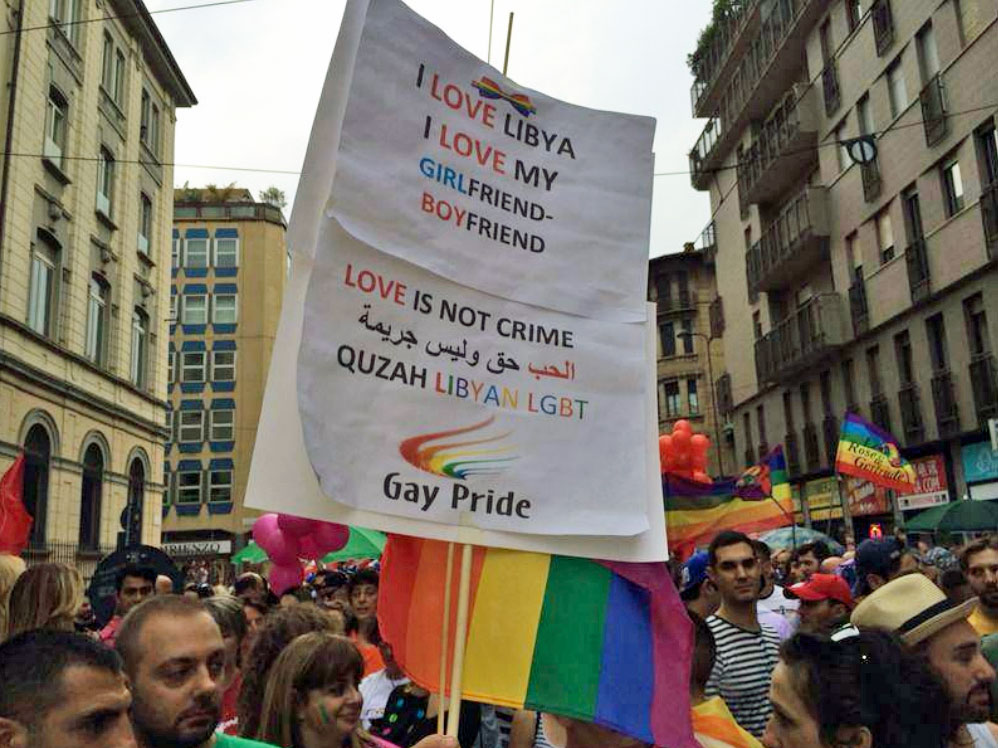
Quzah
The small Libyan LGBTQ advocacy group Quzah, founded in 2014, worked to establish an underground movement for LGBTI rights. Quzah told Kuchu Times about human rights abuses that LGBTI people in Libya suffered during 2014-2016.
In a draft report for the U.N. Human Rights Council (excerpted and modestly edited below), Quzah wrote:
“There is no government or non-government organization to protect the rights of sexual minorities. … The new government is still weak. Courts and statutory bodies are ineffective in conducting investigations and prosecutions. Because same-sex relationships are not legal in Libya, LGBT people can’t go to the police to protect themselves from violence. In fact, if the police know that you were a victim of violence because you are homosexual, they will rape you. It has happened to many gay men inside the prison. It happened to a lesbian girl who fled from Libya as a refugee.
“In Libyan society, to be gay means you are against the laws of God and Islam, because homosexuality is taboo in Islam. As a result, LGBT people act as if they were straight in order to avoid social stigma and the threat of beatings.”

