

Spotlight on Egypt: Repression, discrimination, online entrapment


Survey of nations with anti-homosexuality laws
This is one of a series of short articles on LGBTQ human rights advocacy and abuses in nations with anti-LGBTQ laws, including Egypt’s de facto anti-homosexuality laws. The articles are based on Outright International’s country overviews, which track each nation’s record on LGBTQ rights. In a small way, those overviews fill the gap that the Trump administration created when it ended the Department of State’s annual nation-by-nation reports on the human rights of LGBT people.
Outright International’s overview report
LGBTIQ individuals in Egypt continue to experience significant repression and discrimination, aggravated by laws that indirectly target same-sex activity. While homosexuality is not explicitly criminalized, vague public morality and debauchery laws are commonly used to arrest individuals.
Authorities use dating apps such as Grindr to entrap and arrest LGBTQ people, often employing minimal evidence, like possession of condoms or small amounts of cash, to charge them with “habitual debauchery.” As a result, many LGBTQ individuals face jail time, sometimes up to twelve years, under these charges, reflecting the government’s hostility towards LGBTQ persons.
The Egyptian government does not provide a formal process for transgender individuals to change their legal gender on official documents. While there have been a few rare instances where transgender people have sought gender-affirming surgeries or legal recognition, these cases are extremely limited and face significant societal and institutional resistance.
Social attitudes towards LGBTIQ people remain highly conservative, with widespread public disapproval reinforced by government policies. Egypt does not offer protection against discrimination based on sexual orientation, gender identity, gender expression, or sex characteristics.
Anti-LGBTQ rhetoric is also prevalent in educational settings, where the Ministry of Education has integrated concepts warning against “deviant” sexual behavior, including homosexuality, into school curricula. In 2022, the government ordered posters and awareness campaigns in schools to raise the alarm over so-called abnormal sexual behaviors.
More recently, in 2024, a German school in Cairo was under threat of losing its license for allegedly promoting homosexuality through its textbooks, demonstrating the continued crackdown on any perceived LGBTQ acceptance.
In addition to criminalizing same-sex behavior through indirect laws, Egypt’s 2018 Cyber Crimes Law has been used to monitor and punish online content that the government claims threatens family values, often targeting LGBTQ individuals.
Nevertheless, LGBTQ activists continue to advocate for their rights amid significant risks, including harassment, arrest, and social ostracism. The government’s ongoing crackdown shows no signs of easing, as proposals to explicitly criminalize homosexuality continue to emerge, further marginalizing LGBTQ communities.
Outright research indicates that bodily autonomy of intersex people is not respected and protected.
Recent news coverage

For decades, Egypt has been engulfed in a sustained human rights crisis, marked by arbitrary arrests, repression of political opposition, censorship, and widespread abuses against vulnerable communities. What has become increasingly apparent under President Abdel Fattah el-Sisi’s rule is a tightening grip not only on political dissent but also on cultural and personal expression. In recent months, this campaign has intensified, with Egyptian authorities targeting online creators-ranging from TikTok influencers and vloggers to belly dancers and tattoo artists-under vague charges of violating “public morals” and “family values.”
Perhaps the most disturbing element of Egypt’s campaign is its deliberate targeting of particularly vulnerable groups: LGBT individuals and children. Authorities have long persecuted LGBT people, but activists say the current crackdown is “very, very harsh” compared to previous regimes. Reports indicate that police have used fake profiles on gay dating apps to entrap and arrest individuals, a practice that has been ongoing for years but has intensified under the latest campaign.
“Is Egypt safe for LGBT travellers?” (July 2025, The Times)
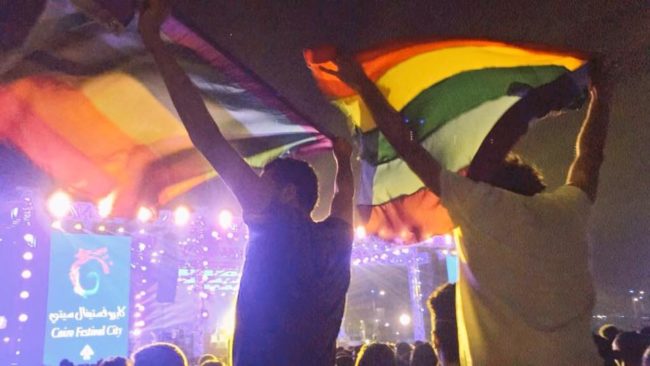
It can be problematic for LGBT travellers. While homosexuality is not technically illegal in Egypt, charges under “debauchery” laws have been used to prosecute LGBT people in the past, according to the Foreign Office. Some were arrested in 2017 on “debauchery” and “sexual deviance” charges after waving a rainbow flag at a concert in Cairo, for example. Again, attitudes are often more relaxed in tourist areas, but public displays of affection are likely to cause issues.
Lack of LGBTIQ rights in Egypt
Modestly edited excerpts from “10 FAQs about LGBTIQs Situation in Egypt” by the LGBTIQ rights group Bedayaa:
- Security campaigns led by the Interior Ministry typically target gay men and trans-women, whose arrest is later followed by charging them with habitual debauchery.
- The number of persons annually arrested and referred to trials in such cases has averaged 66 cases per year since 2013.
- For each criminal offense, generally, the minimum jail time is 3 months, and the maximum is 3 years.
- Looking to the fact of the conservative and patriarchal nature of the Egyptian society, which believes that being a male is the highest social status as such you must fit the social norms of what a man should look and act, abandoning such privilege by being feminine male or trans person is something that must be punished.
- The state derives its popularity from appearing as a protector of the Egyptian values, morality, and traditions. As this current administration came after disposing a right-wing religious regime, they felt the need to prove to the Egyptian society that they did not dispose a religious regime to come with a liberal one that will destroy “Egyptian values and tradition”. In this retrospective, we can see why the Egyptian legal authorities made it their policy to actively discriminate and prosecute any group of people in the society that does not fit within the Egyptian values and tradition. LGBTI community included.
- Hotel employees and neighbours usually report to police any individuals who look, act, or announce his/her affiliation to LGBTI community.

