

LGBTQ rights reports ‘mean the difference between life and death’


Bangladeshi LGBTQ rights activist addresses European asylum conference.
Factual reporting on LGBTQ rights abuses is crucial when refugees from violence-plagued nations seek asylum in more peaceful lands.
That was a message delivered by Bangladeshi human rights advocate Shahanur Islam at last month’s conference Shaping Tomorrow: Queer Asylum in Europe.
The conference, held in late November in Amsterdam, was organised by the LGBTQ rights group COC Netherlands with support from the European Union’s Asylum, Migration and Integration Fund.
Authoritative reporting on LGBTQ rights abuses has diminished worldwide because the Trump administration has stopped publishing country-by-country reports on the status of LGBTQ rights as part of congressionally required international human right reports.
LGBTQ advocacy organizations such as Outright Action International have tried to plug that gap by publishing their own nation-by-nation reports, which are less detailed than those that the U.S. Department of State formerly published.
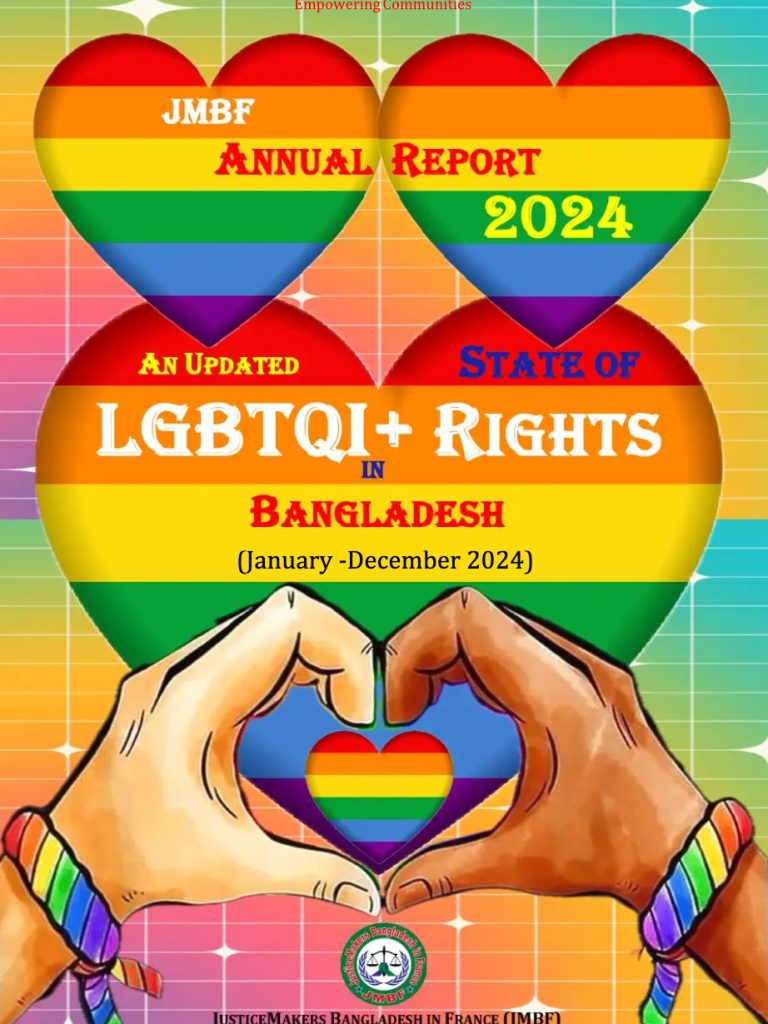
In Bangladesh, the LGBTQ rights advocacy group JusticeMakers Bangladesh Foundation (JMBF) now compiles its own “State of LGBTQI+ Rights in Bangladesh” reports, which Islam said “have emerged as landmark country-of-origin information (COI) resources for Bangladeshi asylum seekers in Europe, particularly in France.”
Islam told the conference that Bangladesh lacks any official or independent persecution report dedicated exclusively to LGBTQI+ communities.
Despite constitutional guarantees of equality in Bangladesh, the nation’s LGBTQI+ citizens face “entrenched discrimination, criminalization under Section 377 of the Penal Code, widespread social stigma, police harassment, arbitrary arrests, and life-threatening violence”, he said.

Islam added:
“French asylum authorities — including OFPRA (Office français de protection des réfugiés et apatrides) and the CNDA (Cour nationale du droit d’asile) — are increasingly relying on JMBF’s rigorously documented evidence. These reports provide detailed accounts of police abuse, state inaction, and pervasive societal hostility, and are used to assess credibility, risk, and the likelihood of future persecution.
“The reports have already contributed to positive refugee determinations, offering life-saving protection to Bangladeshi LGBTQI+ individuals who would otherwise face severe harm if returned to their country of origin. Rights-based, verifiable documentation can bridge evidentiary gaps, strengthen legal advocacy, and enhance fairness within European asylum systems.”
“Queer asylum is not only a migration issue; it is a human rights imperative,” Islam told conference participants. “When states fail to document persecution, civil society must step in. Accurate, verifiable reporting can mean the difference between life and death.”


